
Physical symptoms of anxiety are real bodily reactions, not something a person imagines. The most common ones include a racing or pounding heart, shortness of breath, chest tightness, dizziness, stomach trouble, muscle tension, sweating, shaking, tingling, and exhaustion.
They happen because anxiety flips on the body’s stress response, which releases adrenaline and cortisol and puts every major system on high alert. Most of these sensations are harmless and ease once that response calms down. Still, several of them overlap with heart, lung, thyroid, and other medical problems, so anything new, severe, or persistent deserves a proper medical check.
When Your Body Sounds The Alarm Before Your Mind Does
You’re standing in line at the pharmacy. Nothing is wrong. Then, out of nowhere, your heart starts thumping, your palms go damp, and taking a full breath suddenly feels like work. The first thought usually isn’t “I’m anxious.” It’s closer to “What is happening to me?”
For a lot of people, this is how anxiety first introduces itself – not as a worried thought, but as a body that seems to be acting on its own. Anxiety’s physical symptoms often get noticed long before the emotional side does, which is exactly why they’re so confusing.
Common moments when people first feel it:
- Lying in bed at night with a buzzing, jittery feeling in the chest
- Sitting in a work meeting when a wave of heat or nausea hits
- Sitting in a doctor’s office, sure that something is wrong with the heart
- Getting through a hard week, only to wake up with a stiff neck and a pounding head
The Body’s Stress Response In Plain Terms
When the brain senses danger, it doesn’t wait for permission. It sends signals that release stress hormones, and within seconds the whole body shifts into protection mode:
- Breathing speeds up and gets shallow to pull in more oxygen
- Heart rate climbs so blood reaches the muscles faster
- Digestion slows down or gets thrown off, since food isn’t a priority in an emergency
- Muscles tighten, ready to run or push back
The catch? This alarm can’t tell a looming deadline from an actual threat. That’s why the physical signs of anxiety can appear in perfectly safe moments, like answering an email or driving to a family dinner.
Why Does Anxiety Cause Physical Symptoms?
Anxiety causes physical symptoms because the brain treats worry as a threat and responds with the same chemistry it would use in real danger.
How The Fight-Or-Flight Response Affects Your Body
Fight-or-flight is the body’s built-in survival program. Once it starts, adrenaline and cortisol move through the bloodstream and prepare you to act fast. Here’s what that looks like, system by system:
- Heart and blood vessels: a faster heartbeat, higher blood pressure, and blood pulled toward big muscles, which is why hands and feet can feel cold
- Lungs: quicker, shallower breaths
- Stomach and gut: digestion gets put on hold, leading to nausea, cramps, or a sudden urge to use the bathroom
- Skin: extra sweating to keep the body cool
- Muscles: tightening across the neck, shoulders, jaw, and back
In short bursts, this reaction is useful. The trouble starts when it stays switched on for weeks at a time, and the body never gets a clear signal that the danger has passed.
The Connection Between The Brain And Physical Anxiety
The brain and body talk in both directions. The amygdala works like a smoke detector, the hypothalamus passes its warning to the rest of the body, and nerves such as the vagus nerve carry messages from the heart and gut back up to the brain.
That two-way line can create a loop:
- A worry, memory, or stressful moment sets off the alarm.
- The body reacts with a pounding heart or a tight chest.
- The brain notices the sensation and reads it as proof that something is wrong.
- More stress hormones flow, and the sensations get stronger.
This cycle explains why a panic attack can go from zero to overwhelming in just a few minutes.
Why Physical Anxiety Symptoms Can Feel So Real
Because they are real. The heart truly beats faster, the muscles really do tighten, and the stomach actually churns. Nothing about it is “all in your head,” even though the head is where it starts.
Research also shows how tricky these sensations can be to sort out. A 2025 study in Dialogues in Clinical Neuroscience compared 208 outpatients with either panic disorder or somatic symptom disorder. Both groups reported overlapping complaints such as palpitations, shortness of breath, and dizziness. Yet the emotional drivers behind them differed: anxiety sat at the center of panic disorder, while depression played a bigger role in somatic symptom disorder.

The practical lesson? Physical symptoms caused by anxiety can look almost identical to those linked with depression or other health problems. That’s why a careful evaluation matters more than guessing.
10 Common Physical Symptoms Of Anxiety And What They Mean
Anxiety can touch almost every part of the body, but some reactions show up far more often than others.
1. Racing Heart And Heart Palpitations
Adrenaline speeds up the heartbeat and makes each beat feel stronger. Some people notice a fluttering, skipped, or “flipping” sensation. It usually settles within minutes once the body calms down.
2. Shortness Of Breath And Chest Tightness
Fast, shallow breathing makes it feel like air isn’t getting in, even when oxygen levels are normal. Tight chest muscles add a heavy or squeezing feeling.
3. Dizziness And Lightheadedness
Over-breathing lowers carbon dioxide in the blood, which can leave a person feeling woozy, floaty, or unsteady. Standing up quickly during a stressful moment can make it worse.
4. Stomach Pain, Nausea, And Digestive Problems
The gut has its own large network of nerves, so it reacts strongly to stress. Common complaints include:
- Butterflies or a knot in the stomach
- Nausea or a loss of appetite
- Diarrhea, constipation, or bloating
- A sudden need to find a bathroom
5. Muscle Tension, Aches, And Headaches
Muscles brace for action and often forget to let go. Over time, that leads to sore shoulders, jaw clenching, back pain, and tension headaches that wrap around the forehead like a band.
6. Sweating, Hot Flashes, And Chills
The body heats up to prepare for effort, then sweats to cool down. Some people swing between feeling flushed and shivery within a single episode.
7. Trembling, Shaking, And Restlessness
Extra adrenaline fuels the muscles with energy that has nowhere to go. The result might be shaky hands, a bouncing leg, or an urge to pace the room.
8. Tingling, Numbness, And Pins-And-Needles Sensations
Rapid breathing and shifting blood flow can cause tingling in the fingers, toes, lips, or face. It’s one of the more alarming anxiety physical symptoms, yet it’s usually harmless and passes once breathing slows.
9. Fatigue, Weakness, And Sleep Problems
Staying on high alert burns a lot of energy. Many people feel drained even after a full night in bed, and racing thoughts can make falling or staying asleep hard. For more on this, see these common causes of nighttime anxiety and ways to find relief.
10. Dry Mouth, Throat Tightness, And Difficulty Swallowing
Stress reduces saliva and tightens the throat muscles. Some people describe a “lump” in the throat that makes swallowing feel awkward, even though nothing is physically blocking it.
These physical signs of anxiety rarely show up one at a time. A tight chest often arrives with shaky hands, or a sour stomach with a headache, and that clustering is one clue that the stress response may be behind them.
Can You Have Physical Symptoms Of Anxiety Without Feeling Anxious?
Yes – and it happens more often than most people expect.
Why Your Body May React Before You Recognize Anxiety
The stress response runs on autopilot. It can fire off in a fraction of a second, long before the thinking part of the brain puts a name to the feeling. So the body may already be sweating and racing while the mind is still busy with the grocery list.
Physical Anxiety Without Obvious Worry Or Fear
Some people carry stress so steadily that it stops feeling like stress. It just feels like “normal.” In these cases, physical anxiety symptoms may be the only visible sign. Common hidden triggers include:
- Ongoing pressure at work or at home
- Too little sleep over several weeks
- Lots of caffeine or energy drinks
- Unresolved grief, loss, or major life changes
- A habit of pushing feelings aside instead of dealing with them
People who grew up being told to “just get on with it” often fall into this group. Their bodies keep score even when they don’t.
How Long Can Physical Symptoms Of Anxiety Last?
It depends on the type of anxiety behind them:
- A single panic attack: usually peaks within about 10 minutes and fades within half an hour
- A stressful event: tension, stomach upset, or poor sleep may linger for hours or a few days
- Generalized anxiety: muscle aches, fatigue, and restlessness can stick around for weeks or months if left untreated
The good news is that anxiety physical symptoms tend to ease once the root cause is addressed through therapy, lifestyle changes, medication, or a mix of these. Long-lasting tension, on the other hand, is a sign that the nervous system needs more support, not more patience.
Anxiety Or Something Else? When To Get Checked
Many physical symptoms caused by anxiety overlap with real medical conditions, so it’s never safe to assume. A doctor can rule out problems such as heart rhythm issues, asthma, thyroid disease, low blood sugar, or anemia.
Sensation | Often anxiety-related when… | Needs urgent care when… |
Chest pain | It comes with fear, fades with rest or calm breathing | It spreads to the arm, jaw, or back, or comes with sweating and nausea during effort |
Shortness of breath | It improves when breathing slows | It’s severe, worsens with activity, or comes with blue lips |
Dizziness | It follows fast breathing or a stressful moment | It comes with fainting, slurred speech, or weakness on one side |
Numbness | It’s in both hands or around the mouth | It affects one side of the body or the face |
Call 911 right away for crushing chest pain, fainting, or sudden weakness. When in doubt, get checked – ruling out a medical cause can also make the physical signs of anxiety easier to manage, because the fear of “something serious” no longer feeds the loop.
Can Deep TMS Help When Anxiety Causes Physical Symptoms?
Deep TMS can help a specific group of people: adults whose anxiety shows up alongside major depression, also known as anxious depression.
To be clear, Deep TMS isn’t a direct fix for physical anxiety symptoms such as a pounding heart or a sour stomach, and it isn’t a stand-alone treatment for every anxiety disorder. Its role is to treat the underlying depression and the anxiety that rides along with it, which can, in turn, quiet the body’s constant state of alarm.
Understanding The Relationship Between Anxiety And Depression
Anxiety and depression often travel together. When they do, each one tends to make the other harder to treat. Signs that both may be present include:
- Ongoing worry plus low mood or loss of interest in things that used to feel good
- Exhaustion that doesn’t improve with rest
- Trouble focusing or making decisions
- Physical tension combined with a heavy, flat feeling
- Several medications tried without enough relief
This overlap is explored further in the LifeQuality TMS article on what to do if you have both anxiety and depression.
How Deep TMS Works For Anxious Depression
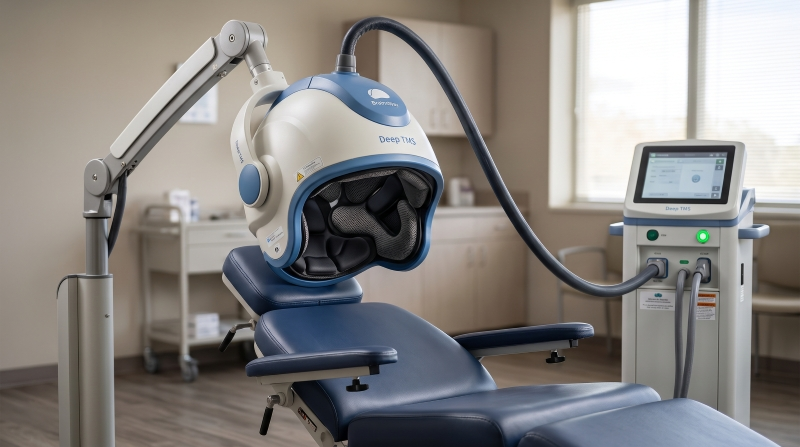
Deep TMS uses magnetic pulses, delivered through a padded helmet, to stimulate brain areas involved in mood regulation. The BrainsWay H1 coil reaches deeper and wider regions than traditional TMS, and it is FDA-cleared for major depressive disorder, including the reduction of anxiety symptoms that come with it. Sessions are non-invasive, require no anesthesia, and allow patients to drive and return to work right after.
Recent findings point in the same direction. A 2025 retrospective study in Frontiers in Psychiatry followed 86 adults with treatment-resistant depression and co-occurring anxiety who received standard TMS. Anxiety scores dropped by about 45% on average, and improvements in anxiety and depression moved closely together – as one eased, so did the other. The study wasn’t randomized, so the results need confirming, but they support TMS as a real option for this group.
Exploring Treatment At LifeQuality TMS In Brooklyn
LifeQuality TMS offers Deep TMS for depression at 26 Court Street in Downtown Brooklyn. The process is simple:
- Evaluation: a licensed psychiatrist reviews symptoms, history, and past treatments to confirm eligibility.
- Insurance support: the team handles prior authorization with most major insurers.
- Treatment: short sessions, usually five days a week for several weeks, with no downtime.
Curious whether it fits your situation? Learn more about how TMS works or schedule a consultation.
Understanding What Your Body Is Telling You
The physical symptoms of anxiety are not imagined. A racing heart, tight breathing, an upset stomach, sore muscles, and tingling hands are all real effects of a stress response that’s working overtime.
A few points are worth holding on to:
- These sensations often come from the body’s alarm system, even when a person doesn’t feel emotionally anxious.
- Physical symptoms caused by anxiety can mimic heart, lung, thyroid, and other medical problems, so new or severe ones should always be checked by a doctor rather than brushed off.
- Ongoing symptoms are a signal to seek support, not something to simply push through.
When anxiety comes packaged with depression and standard treatments haven’t done enough, Deep TMS at LifeQuality TMS may be worth a conversation.
Frequently Asked Questions
Can anxiety cause physical symptoms every day?
Yes. People with generalized anxiety or long-term stress often deal with daily muscle tension, fatigue, headaches, or stomach trouble. Daily symptoms are a good reason to talk with a doctor or mental health professional.
Can anxiety make you feel physically sick?
It can. Nausea, dizziness, chills, and a general “coming down with something” feeling are common during anxious periods, largely because stress hormones disrupt digestion and body temperature.
How do I know if it’s anxiety or something more serious?
There’s no reliable way to tell on your own. Anxiety-related sensations often ease with calm breathing and come with worry or tension, but only a medical exam can rule out other causes. Sudden chest pain, fainting, or one-sided weakness always need emergency care.
Can anxiety cause pain in different parts of the body?
Yes. Constant muscle bracing can lead to headaches, jaw pain, neck and shoulder stiffness, back pain, and even chest wall soreness.
What can calm the body down when anxiety hits?
A few simple steps can help the nervous system settle:
- Slow breathing, with the exhale longer than the inhale
- Relaxing one muscle group at a time, from feet to head
- A short walk or light movement to burn off extra adrenaline
- Cutting back on caffeine and alcohol
- Grounding the senses by naming things you can see, hear, and touch
If these aren’t enough, a mental health professional can help find longer-term relief, including options for generalized anxiety disorder.