
Nighttime anxiety is worry, fear, or physical tension that gets stronger in the evening or jolts you awake after you fall asleep. The most common causes are built-up daily stress, anxiety or panic disorders, irregular sleep habits, stimulants like caffeine and alcohol, depression, fear of not sleeping, and medical or sleep disorders.
Relief usually starts with slow breathing, a steady sleep schedule, and a simple plan for handling worries before bed. If symptoms keep coming back, a mental health professional can find the root cause and recommend the right treatment.
Why Worries Get Louder After Dark
The day goes fine. Work gets done, messages get answered, dinner happens. Then the lights go off – and the brain decides it’s the perfect moment to replay an awkward conversation from years ago or wonder whether that headache means something serious.
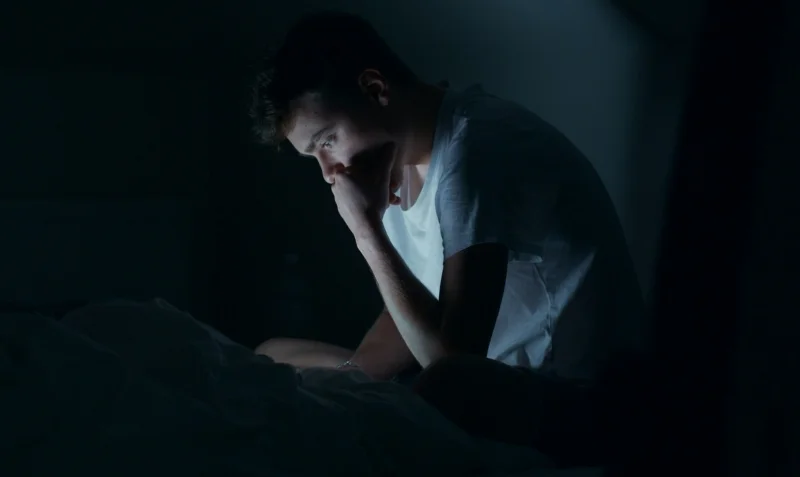
This flip isn’t random. A few things change once the house goes quiet:
- Distractions disappear. No emails, errands, or conversations are left to fill mental space.
- Shelved worries come back. Whatever got pushed aside at noon finally takes the floor.
- Fatigue lowers your defenses. A tired brain is worse at putting fears in perspective.
Two Ways Anxiety Shows Up At Bedtime
Anxiety at night doesn’t look the same for everyone. It usually follows one of two patterns:
- Before sleep: lying awake with a racing heart and thoughts that refuse to slow down.
- During sleep: drifting off easily, then waking at 2 a.m. with a pounding chest and a sense of dread that seems to come from nowhere.
Both patterns are real, both are common, and both have causes worth understanding.
What Is Nighttime Anxiety, And What Does It Feel Like?
Nighttime anxiety isn’t a separate diagnosis – it’s a way of describing anxiety symptoms that peak in the evening or during the night. For some, it’s a mild unease that makes falling asleep take longer. For others, it turns into full-blown panic that breaks up rest several times a week.
It can even happen below full awareness. People who feel anxious during sleep may wake up tense, with a clenched jaw or stiff shoulders, after a night of shallow, broken rest they barely remember.
Common Emotional And Physical Symptoms Of Anxiety At Night
The signs usually mix the mental with the physical, which is part of why they feel so overwhelming:
- Racing thoughts. The mind hops from one worry to the next, and switching it off feels impossible.
- Restlessness before bed. A nervous, uneasy feeling makes it hard to lie still or get comfortable.
- A fast or pounding heartbeat, often noticed only once the room goes quiet.
- Shallow breathing or a tight chest, as if a full breath won’t quite land.
- Sweating, trembling, or hot and cold flashes with no obvious reason.
- Waking up suddenly with dread, often in the first few hours of sleep.
- Fearing bedtime itself because of how the last few nights went.
Bedtime Worry Or Nocturnal Panic Attack? How To Tell The Difference
The two overlap, but they aren’t the same thing – and knowing which one you’re dealing with shapes what kind of help works best.
Bedtime worry | Nocturnal panic attack | |
When it happens | Before falling asleep, while lying awake | Wakes a person out of sleep |
How it builds | Slowly, one thought at a time | Suddenly, peaking within minutes |
Main feeling | Rumination and “what if” thinking | Intense fear, racing heart, shortness of breath |
What follows | Trouble falling asleep | Trouble getting back to sleep and fear of another episode |
One detail surprises many people: an anxiety attack while sleeping usually isn’t triggered by a nightmare. It tends to start during non-dreaming sleep, which is why people often wake up confused, with no memory of anything frightening.
7 Common Causes of Nighttime Anxiety
Most cases trace back to one of seven triggers, and plenty of people deal with two or three at once.
1. Accumulated Stress And Unresolved Daily Worries
Stress that gets brushed off at noon doesn’t disappear – it waits. Packed days leave little room to process problems, so they stack up and arrive together at bedtime. Common culprits include:
- Work deadlines and unfinished tasks
- Money worries or family conflict
- Health concerns that got pushed aside during the day
How hard this hits depends partly on the person. When researchers followed university students for two weeks in a 2025 Journal of Sleep Research study, more stressful days led to busier minds before bed and more broken sleep – especially in people whose sleep is easily thrown off by stress. Interestingly, it was the racing thoughts, not a faster heart rate, that tied stress to poor rest.
2. Anxiety Disorders And Panic Disorder
People with generalized anxiety disorder often notice their worry swells when there’s nothing left to distract them. Panic disorder adds another layer: some people have panic attacks mostly at night, while others get them around the clock.
Repeated episodes of anxiety while sleeping are one of the signs a clinician looks at when checking for panic disorder. When standard approaches haven’t helped, some patients also explore advanced treatment options for anxiety.
3. Poor Sleep Habits And Irregular Sleep Schedules
The body clock runs on routine, and it’s surprisingly easy to throw off. Habits that confuse it include:
- Going to bed at 11 p.m. on weekdays and 2 a.m. on weekends
- Scrolling on a phone in bed
- Long afternoon naps
- Late-night work sessions
The schedule may matter even more than total hours. Among nearly 80,000 UK Biobank participants who wore wrist sensors, people with the most regular sleep had a 33% lower risk of developing anxiety than the most irregular sleepers, according to 2025 findings published in Psychological Medicine. Irregular sleepers kept a higher risk even when they got the recommended amount of sleep.
4. Caffeine, Alcohol, Nicotine, And Certain Medications
What goes into the body during the day can echo well into the night:
- Caffeine from an afternoon coffee or energy drink may still be active at bedtime.
- Alcohol can help people doze off, but as it wears off, it often triggers awakenings with a pounding heart.
- Nicotine acts as a stimulant and keeps the nervous system on alert.
- Some medications, such as certain decongestants, steroids, asthma inhalers, and ADHD stimulants, can raise anxiety at nighttime.
Before changing any prescription, it’s worth asking a doctor or pharmacist whether a dose could be taken earlier in the day.
5. Depression And Other Mental Health Conditions
Depression and anxiety often travel together. Depression can cause early-morning waking, with heavy, hopeless thoughts that make drifting back off nearly impossible. Other conditions also tend to get louder after dark:
- Obsessive-compulsive disorder (OCD): intrusive thoughts and checking rituals that stretch past midnight
- Post-traumatic stress disorder (PTSD): trauma-related nightmares and a body that stays on guard
- Bipolar disorder: mood shifts that scramble normal sleep patterns
Any of these can leave someone feeling anxious during sleep and long after waking up.
6. Fear Of Not Sleeping And Sleep-Related Anxiety
This one works like a trap, and it tends to run in a loop:
- A few bad nights create worry about the next one.
- That worry raises alertness at bedtime.
- Higher alertness makes sleep harder.
- Another rough night seems to prove the fear right.
Clock-watching and mental math about how many hours are left keep the cycle spinning. Over time, the bed itself can start to feel like a place of stress instead of rest – a pattern sleep specialists treat directly with cognitive behavioral therapy for insomnia (CBT-I).
7. Sleep Disorders And Underlying Medical Conditions
Sometimes the body sounds the alarm first. Sleep apnea causes pauses in breathing that can jolt a person awake gasping, which easily passes for panic. Other possible contributors include:
- An overactive thyroid
- Acid reflux
- Low blood sugar
- Heart rhythm problems
- Chronic pain
- Hormonal shifts during perimenopause
If anxiety while sleeping comes with loud snoring, choking sounds, or morning headaches, a sleep study may help far more than any relaxation tip.
What To Do If You Wake Up With An Anxiety Attack At Night
Calm the body first – the mind tends to follow once the heart rate comes down. These steps work best when practiced during calm moments, so they feel familiar when panic hits:
- Name what’s happening. A panic attack feels dangerous, but it usually peaks within about 10 minutes and then fades. Telling yourself this is panic, and it will pass, takes away some of its grip.
- Slow down your breathing. Breathe in through the nose for four counts, then out slowly for six to eight. A longer exhale tells the nervous system it’s safe to settle.
- Ground yourself in the room. Notice five things you can see, four you can feel, and three you can hear. Press your feet into the floor or the mattress.
- Release tension one muscle group at a time. Squeeze the shoulders for five seconds, then let go. Work down through the hands, stomach, and legs.
- Get up if 20 minutes pass. Move to another room, keep the lights dim, and do something quiet, like reading a paper book. Head back to bed once you feel sleepy.
- Leave the phone and the clock alone. Bright screens and checking the time both wake the brain up further.
- Write down whatever is looping. A notepad by the bed lets worries land on paper instead of circling until morning.

When To Seek Urgent Or Professional Help
Most nighttime panic passes on its own, but some signs call for a different response:
- Go to the emergency room if an anxiety attack while sleeping brings chest pain, fainting, or breathing trouble that doesn’t ease. A heart or lung problem needs to be ruled out.
- Book an appointment if episodes happen more than once in a while or start shaping how you feel about bedtime.
A mental health professional can walk through nocturnal anxiety attack treatment options, which usually include:
- Cognitive behavioral therapy (CBT) for panic
- CBT-I for ongoing sleep problems
- Medication when appropriate
- Care for any condition sitting underneath the panic
Can TMS Therapy Help With Anxiety That Gets Worse At Night?
TMS isn’t a first-line treatment for nighttime anxiety, but it may play a role when that anxiety is tied to depression or OCD that hasn’t improved with standard care. For most people, therapy, sleep-focused strategies, and medication come first.
How TMS Works In Mental Health Treatment
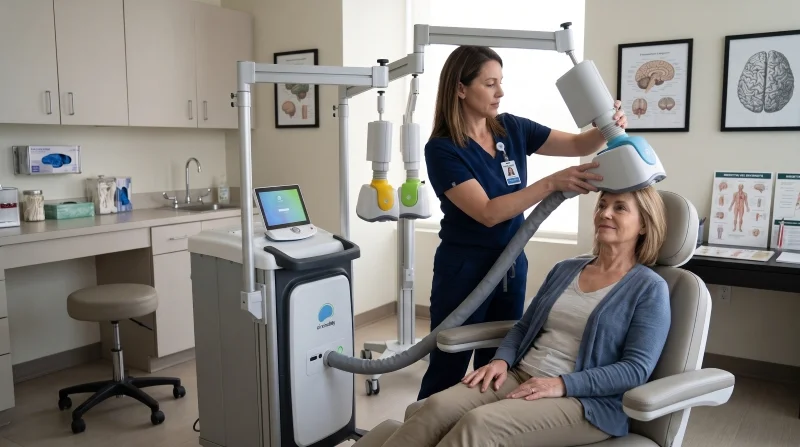
Transcranial magnetic stimulation (TMS) uses magnetic pulses to stimulate specific brain regions involved in mood and thought patterns. Here’s what that looks like in practice:
- Noninvasive: no surgery, no anesthesia, no implants.
- Done while awake: the patient sits in a chair while a coil rests against the head.
- Little downtime: most people drive home and return to normal activities right after.
The FDA has cleared TMS for major depression and OCD, among other uses. For a closer look at the technology, see this guide to the key differences between rTMS and deep TMS.
Addressing Anxiety And Depression That Disrupt Sleep
When nighttime distress grows out of an untreated psychiatric condition, sleep tips alone rarely go far enough. Depression can pull someone awake before dawn with dark, repetitive thoughts. OCD can turn bedtime into a cycle of checking locks, replaying conversations, or wrestling with intrusive thoughts well past midnight.
In cases like these, a person who feels anxious during sleep may be dealing with one symptom of a bigger picture. Treating the condition itself – through medication, psychotherapy, and, for some patients, TMS – can be one part of a broader care plan. When mood lifts, or obsessive thoughts lose their intensity, nights often become quieter, too.
Exploring Treatment Options At LifeQuality TMS In Brooklyn
LifeQuality TMS is the TMS division of Good Health Psychiatric Services P.C., a psychiatric practice in Brooklyn, New York. The team uses BrainsWay Deep TMS technology, whose H-coil design reaches deeper and broader brain areas than older figure-8 coils.
TMS isn’t offered in isolation. Alongside it, patients can access:
- Psychiatric evaluation and diagnosis
- Medication management
- Evidence-based therapy as part of a combined plan
- Deep TMS for depression and OCD
That mix lets one treatment plan address both the underlying condition and the sleep problems that come with it. For anyone whose depression or OCD keeps showing up as anxiety at nighttime, a consultation can clarify whether TMS makes sense or whether a different path fits better.
Managing Nighttime Anxiety And Improving Sleep
Nighttime anxiety almost always has a source: unprocessed stress, an anxiety or panic disorder, irregular sleep, caffeine or alcohol, depression or OCD, fear of sleeplessness, or a medical issue like sleep apnea. Pinning down which one is at play matters, because the right fix depends on it. A breathing exercise won’t treat sleep apnea, and a new pillow won’t resolve panic disorder.
Small Daily Habits That Make Nights Calmer
Still, for many people, a few simple changes noticeably ease anxiety at night:
- Going to bed and waking up at the same time every day, weekends included
- Cutting caffeine after early afternoon and keeping evening alcohol to a minimum
- Setting aside 15 minutes before dinner to write down worries and one next step for each
- Practicing slow breathing or progressive muscle relaxation before lights out
- Keeping the bedroom cool, dark, and free of work
When these steps aren’t enough, it’s time for professional support – whether that means therapy, medication, or nocturnal anxiety attacks treatment built around the real root cause.
If depression, OCD, or hard-to-treat anxiety keeps stealing your sleep, the team at LifeQuality TMS in Brooklyn is ready to help. Schedule a consultation to talk through your symptoms and find out which treatment options fit your situation best.
Frequently Asked Questions
Why does my anxiety get worse at night?
With fewer distractions, worries take center stage. Fatigue also weakens the brain’s ability to calm itself down, so anxiety at nighttime can feel much heavier than the very same thoughts would at noon.
Can you have a panic attack in your sleep?
Yes. Nocturnal panic attacks wake a person with sudden fear, a racing heart, sweating, or shortness of breath. They aren’t caused by dreams. An anxiety attack while sleeping is more likely in people who also have daytime panic attacks, though it can happen on its own.
How do I stop overthinking when I go to bed?
Give worries a time slot earlier in the evening: write each one down along with a single next step. Keep the last hour before bed calm and low on screens. If thoughts still race once you lie down, slow breathing or a body scan gives the mind something neutral to hold onto.
Is it normal to feel anxious every single night?
Occasional anxiety at night during a stressful stretch is very common. Feeling it every night for weeks, though, isn’t something to simply put up with. Persistent anxiety while sleeping can point to an anxiety disorder, depression, or a sleep problem – all of which respond well to treatment.
What is the most effective treatment for nighttime panic attacks?
There’s no single answer that fits everyone. Cognitive behavioral therapy has the strongest track record, and some people also benefit from medication. Because the causes vary so much, effective nocturnal anxiety attack treatment starts with an evaluation that screens for anxiety disorders, depression, sleep apnea, and other medical issues.