
Yes, in most cases. Is TMS covered by insurance? For adults with major depressive disorder, most US commercial plans and Medicare pay for transcranial magnetic stimulation once certain medical criteria are met.
Those criteria usually include a confirmed diagnosis, a record of antidepressants that did not work, and an approved prior authorization. Coverage is never automatic, though. Even a psychiatrist’s recommendation is not enough on its own until the insurer signs off.
Six Weeks Of Daily Visits Starts With One Phone Call
A standard TMS course often means 30 or more sessions, usually five days a week. That is a real commitment of time, travel, and energy. So it makes sense that the first question many patients ask is not about magnets or brain circuits. It is about money.
The worry is practical. Nobody wants to rearrange their schedule, start feeling hopeful, and then get a surprise bill halfway through. A few minutes spent on coverage questions up front can prevent that.
Coverage Exists, But The Insurer Sets The Rules
Here is the part that often catches people off guard: a plan can cover TMS and still deny a specific patient. The decision depends on how well the medical records match the insurer’s written policy.
Before booking a single session, it helps to know:
- Which conditions the plan actually covers for TMS
- How many failed medication trials the insurer expects
- Whether therapy records are required
- What the deductible, copay, or coinsurance will look like
- Whether the clinic is in network
The sections below walk through each of these, step by step.
Is TMS Covered By Insurance In The United States?
For depression, yes: TMS is a standard, FDA-cleared treatment that Medicare and most large commercial insurers include in their medical policies.
Why Insurance May Cover TMS For Depression
Insurers pay for treatments that have strong evidence behind them, and TMS has plenty. In February 2025, a consensus review published in Clinical Neurophysiology and endorsed by the Clinical TMS Society screened 2,396 papers. The authors concluded that TMS keeps showing broad evidence of safety and benefit for depression. They also stressed clear provider roles and good documentation, which is exactly what insurers look for.

That track record is the main reason the answer to “is TMS therapy covered by insurance” is usually yes for depression. Other factors help too:
- TMS has been FDA-cleared for depression since 2008
- It is non-invasive and needs no anesthesia
- Patients can drive home and return to work the same day
- It offers a clear option when several medications have failed
Does Insurance Cover TMS For Every Mental Health Condition?
No. Major depressive disorder is the condition most plans cover. Beyond that, the picture gets patchy.
- OCD: Some plans cover deep TMS for OCD, since it has FDA clearance, but many still do not.
- Anxiety alone: Usually not covered, because TMS is not cleared for anxiety on its own.
- Smoking cessation: FDA-cleared with certain devices, yet rarely included in medical policies.
- PTSD, bipolar depression, and other conditions: Generally treated as investigational.
So is TMS covered by insurance for something other than depression? Sometimes, but it is worth asking the plan directly and getting the answer in writing. Readers curious about other options can also compare alternative depression treatments on the LifeQuality TMS blog.
What Requirements Must You Meet For TMS Insurance Coverage?
Most insurers check four things: the diagnosis, past medications, therapy history, and medical safety. Each plan words them a little differently, but the core list is surprisingly similar.
A Documented Diagnosis Of Major Depressive Disorder
The starting point is a formal diagnosis of major depressive disorder from a licensed clinician. Many policies ask for moderate to severe symptoms, measured with a standard scale such as the PHQ-9 or the Hamilton Depression Rating Scale. A vague note saying “patient feels down” will not get TMS covered by insurance. Scores, dates, and clinical notes will.
Previous Antidepressant Treatment History
This is where most requests stand or fall. Insurers want proof that medication alone has not been enough. Requirements vary a lot:
- Some Medicare contractors, such as Novitas, accept one failed medication trial for severe depression
- Many commercial plans ask for two to four failed trials
- Some require drugs from at least two different classes
- Each trial usually needs an adequate dose taken for six to eight weeks
- Side effects that forced a patient to stop a drug often count as a failed trial
Pharmacy records can fill gaps when old prescriptions are hard to remember.
Psychotherapy And Other Treatment Records
Many plans, including several large commercial insurers, want to see that a patient tried talk therapy, such as CBT, without full recovery. Helpful records include:
- Therapist names and approximate dates of care
- A summary of the approach used
- Notes showing symptoms remained after treatment
Medical Necessity And Safety Assessment
Finally, the clinic has to show that TMS is both needed and safe for this person. That means screening for metal implants near the head, a history of seizures, and other conditions that could make treatment risky. Without this step, even strong TMS insurance paperwork can be sent back.
How To Check Your TMS Insurance Coverage Before Treatment
Five steps, done in order, take most of the guesswork out of approval.
Step 1 – Contact Your Insurance Provider
Call the member services number on the back of the insurance card. Keep the questions short and specific:
- Is TMS for major depressive disorder a covered benefit on this plan?
- Is prior authorization required?
- How many sessions are approved in an initial course?
- What will the deductible, copay, or coinsurance be?
- Is the chosen clinic in network?
Write down the date, the representative’s name, and a call reference number. That small habit can save a lot of back-and-forth later.
Step 2 – Schedule A Clinical TMS Assessment
A phone call answers “Is TMS therapy covered by insurance?” in general. Only a clinical assessment shows whether a specific patient qualifies. During the visit, a psychiatrist reviews symptoms, past treatments, and safety factors. This guide to preparing for a TMS assessment explains what to bring.
Step 3 – Prepare Your Treatment Records
Gathering documents early is one of the simplest ways to get TMS therapy covered by insurance without delays. Useful items include:
- A list of past antidepressants, doses, and how long each was taken
- Notes on side effects or reasons each drug was stopped
- Therapy records or a summary letter from a therapist
- Recent depression rating scale scores
- The insurance card, member ID, and group number
Step 4 – Complete The Prior Authorization Process
The clinic sends the insurer a request with clinical notes and a letter of medical necessity. Review times vary by plan, from a few days to a couple of weeks. If something is missing, the insurer may ask for more information, so a complete packet the first time matters.
Step 5 – Verify Approval Details And Patient Costs
An approval letter is good news, but read the fine print. Check:
- The number of approved sessions and the date range
- Whether tapering sessions are included
- The exact out-of-pocket cost per visit
- What happens if more sessions are needed later
Asking these TMS insurance questions before day one keeps billing predictable.
Starting TMS Treatment At LifeQuality TMS
LifeQuality TMS in Downtown Brooklyn handles the insurance side so patients can focus on getting better.
Insurance Verification And Initial Evaluation
The clinic checks benefits, confirms network status, and runs the clinical assessment in one coordinated process. According to the clinic, its team prepares and submits prior authorization paperwork for patients. When a plan is out of network, staff can still work with the insurer to request approval.
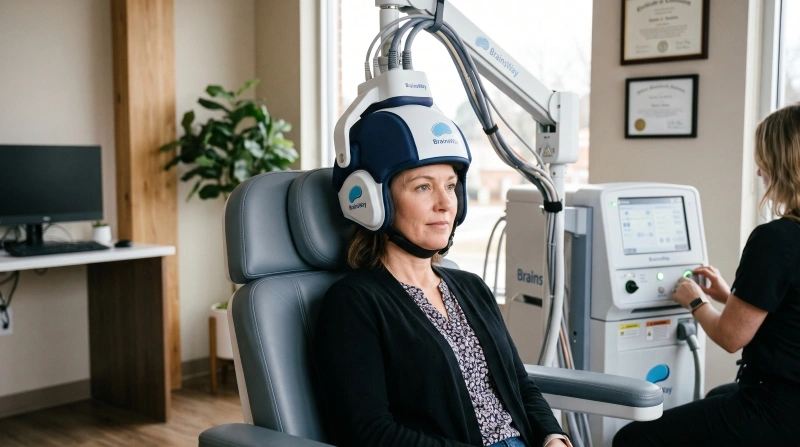
Why does this support matter so much? Cost and paperwork stop many people from ever trying TMS. An August 2025 report in European Psychiatry named high cost and lack of insurance coverage among the main reasons eligible patients were not offered TMS. After that hospital added a nurse-led TMS counselling service and other changes, 31% of eligible patients took up treatment, and every patient who started finished the course.
What Happens After Coverage Is Confirmed?
Once the approval arrives, the clinic reviews it with the patient and schedules sessions. Typical next steps:
- Confirming the approved number of sessions and the start date
- Setting up a daily schedule that fits work or family life
- Planning progress check-ins with rating scales
- Discussing what happens after the acute course ends
That last point deserves attention. A 2025 randomized trial in JAMA Network Open, called MAINT-R, followed 75 adults with treatment-resistant depression. It found that maintenance rTMS worked about as well as lithium at preventing relapse, with fewer side effects. Still, many plans limit or exclude maintenance sessions, so getting longer-term TMS covered by insurance often needs a separate request.
Preparing For Your First Appointment
A little planning makes the first visit easier:
- Bring a photo ID and the insurance card
- Remove metal jewelry, hairpins, and magnetic cards
- Wear comfortable clothing
- Bring a current medication list
- Plan to stay a bit longer for motor threshold mapping
Patients with questions about TMS therapy covered by insurance at this stage can raise them during this visit, before treatment starts.
Which Insurance Providers Does LifeQuality TMS Accept?
As of November 2026, LifeQuality TMS publicly lists the following plans among those it accepts.
Insurance Provider | LifeQuality TMS Information |
Aetna | Dedicated insurance acceptance page |
Medicare | Listed as accepted |
Blue Cross Blue Shield (BCBS) | Listed as accepted |
Fidelis Care | Listed as accepted |
Empire | Listed as accepted |
1199SEIU | Listed as accepted |
Healthfirst | Dedicated insurance acceptance page |
Oscar | Listed as accepted |
UnitedHealthcare | Dedicated insurance acceptance page |
GHI | Listed as accepted |
Optum | Dedicated insurance acceptance page |
HIP | Listed as accepted |
EmblemHealth | Dedicated insurance acceptance page |
Cigna | Dedicated insurance acceptance page |
Carelon Behavioral Health | Listed as accepted |
Beacon Health Options | Listed as accepted |
A few points to keep in mind:
- The clinic’s site also mentions Anthem and MetroPlus, so patients with those plans should confirm directly
- Being on this list does not guarantee TMS insurance coverage for every member, since each plan has its own criteria
- Employer plans under the same insurer brand can differ, so it pays to check the specific policy
Anyone unsure whether their plan qualifies can call the clinic at (718) 400-0867 for a TMS insurance check.
Confirm Your TMS Coverage Before Treatment Begins
Many health plans do cover TMS for adults with major depressive disorder who meet the medical criteria. The approval, however, rests on details. Before the first session, it is worth having clear answers on:
- The diagnosis and how symptom severity is documented
- The number of medication trials the plan requires
- Therapy history and supporting records
- Prior authorization status and approved session count
- Network participation and expected out-of-pocket costs

Getting these pieces lined up early is what turns a general yes into TMS therapy covered by insurance for a specific patient. LifeQuality TMS can verify benefits, complete the assessment, and manage authorization from start to finish. Reach out to the Brooklyn clinic to check coverage and book an evaluation.
Frequently Asked Questions
Is TMS therapy covered by insurance for anxiety?
Usually not on its own. TMS is not FDA-cleared for anxiety alone, so most plans exclude it. When anxiety occurs alongside major depression, however, the depression diagnosis may still qualify.
How much does TMS cost without insurance?
Self-pay prices vary by clinic, device, and number of sessions. A full course can run into several thousand dollars, which is why checking coverage first makes such a difference. Some clinics offer payment plans.
Does Medicare cover TMS?
Yes. Medicare Part B covers TMS for depression when the local coverage criteria are met. After the Part B deductible, patients typically pay 20% coinsurance unless a supplemental plan covers that share.
How many TMS sessions does insurance cover?
Most initial approvals fall around 30 to 36 sessions over six to nine weeks, sometimes with a few tapering sessions. If more are needed, the clinic can submit a new request with progress notes.
What happens if insurance denies TMS?
A denial is not always the final word. Common next steps include:
- Asking the insurer for the exact reason in writing
- Sending missing records, such as medication or therapy history
- Requesting a peer-to-peer review between the psychiatrist and the plan’s reviewer
- Filing a formal appeal
Many patients still get TMS covered by insurance after a well-documented appeal.