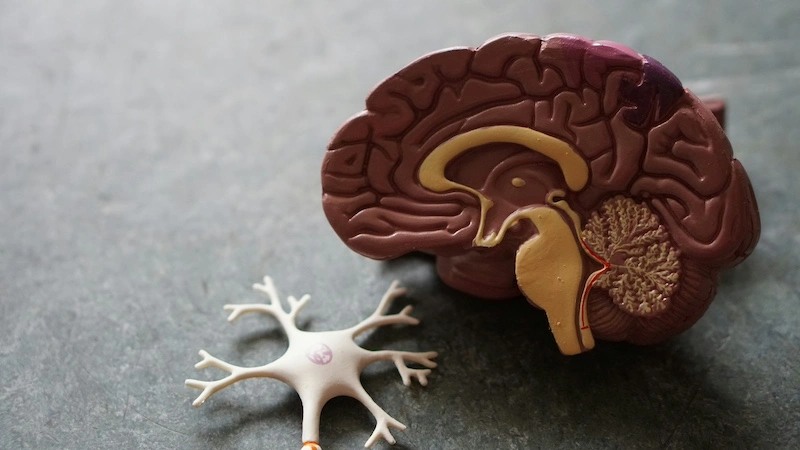
According to the U.S. Food and Drug Administration, TMS has received FDA clearance for major depressive disorder, obsessive-compulsive disorder, smoking cessation, and anxious depression, while MeRT, as of 2025, has not yet received FDA clearance for any specific condition, with its pivotal PTSD trial still under review (FDA Device Database, 2025).
That single fact frames everything meaningful about the difference between TMS and MeRT. Both are non-invasive, drug-free therapies that use magnetic stimulation to influence brain activity. Both have generated genuine patient interest. But they stand at very different points on the clinical evidence spectrum, and understanding that distinction matters when you are making decisions about your mental health care.
This article offers a clear, balanced comparison of MeRT vs TMS: what each therapy is, how they differ in practice, where the evidence stands, and how to think about which might be relevant to your situation.
What Is TMS and How Does It Work?
TMS, or transcranial magnetic stimulation, uses a magnetic coil placed against the scalp to deliver focused pulses to specific brain regions involved in mood regulation, most commonly the left dorsolateral prefrontal cortex (DLPFC) for depression, and the anterior cingulate cortex for OCD.
A Standardized, Protocol-Driven Treatment
TMS follows a clinically established protocol. Before treatment begins, a provider identifies the correct coil placement using standardized anatomical measurements. The frequency, intensity, and pulse count are defined by the FDA-cleared protocol for the patient’s diagnosis. This standardization is a feature, not a limitation: it is precisely what enabled the large-scale controlled trials that produced TMS’s evidence base.
A standard TMS course involves one session per day, five days a week, over four to six weeks. Each session lasts 20 to 40 minutes. Patients need no sedation, experience no systemic side effects, and return immediately to daily activities after each session.
What TMS Is Cleared to Treat
TMS has FDA clearance for major depressive disorder (since 2008), OCD (2018), smoking cessation (2020), and anxious depression (2021). Real-world data consistently shows response rates of 60 to 70% for treatment-resistant depression and remission rates of 45% or more. These outcomes are backed by more than 15 years of post-clearance safety data across hundreds of thousands of treatment sessions.
For patients in Brooklyn dealing with depression, anxiety, or OCD, explore TMS treatment at LifeQuality TMS to understand how FDA-cleared protocols are applied in practice.
What Is MeRT and How Does It Differ?
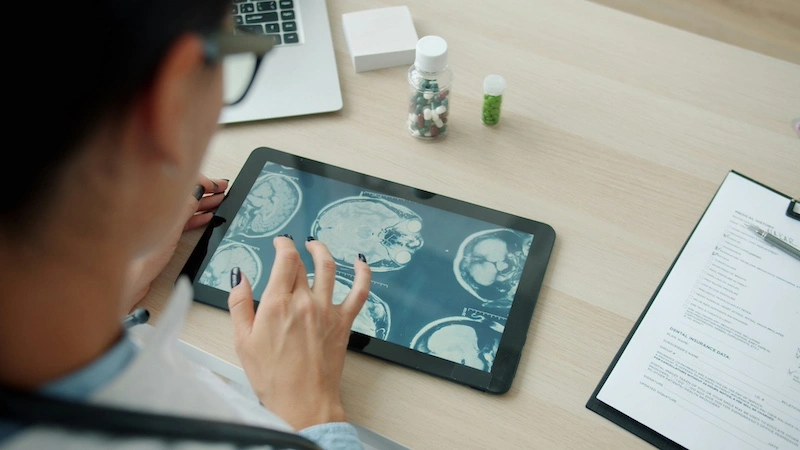
MeRT, which stands for Magnetic EEG/EKG-Guided Resonance Therapy, is a proprietary protocol that uses TMS equipment as its delivery mechanism. The key distinction is in how treatment parameters are determined. Rather than applying a standardized protocol, MeRT begins with a quantitative EEG (qEEG) and an EKG to map each patient’s brainwave patterns. Those recordings are then analyzed to generate a personalized stimulation frequency and target location.
How the Personalization Works
In TMS vs MeRT, this is where the two approaches most visibly diverge. Standard TMS applies a population-derived frequency, typically 10 Hz for depression. MeRT attempts to match the stimulation frequency to the patient’s own dominant brainwave frequency, identified through the qEEG. The protocol is then adjusted every 9 to 10 sessions based on follow-up EEG recordings.
Proponents argue this individualization could produce more precise targeting and, in theory, better outcomes for patients whose neurological profile differs from the population average. The premise is biologically plausible and the technology is genuinely interesting.
What MeRT Is and Is Not Cleared For
This is the critical distinction in any honest MeRT vs TMS comparison. While MeRT uses FDA-cleared TMS equipment, the MeRT protocol itself is not FDA cleared for any condition. Wave Neuroscience, the company behind the MeRT system, received FDA Breakthrough Device Designation for PTSD treatment in 2024, which is an important milestone that accelerates the review process. However, Breakthrough Designation is not the same as clearance: it signals promise and speeds development, but does not confirm efficacy or safety for clinical use.
MeRT is currently being studied in an FDA-IDE pivotal randomized controlled trial for PTSD. That trial is ongoing. Until it concludes and clearance is granted, MeRT remains investigational for PTSD and off-label for all other conditions, including depression and anxiety.
MeRT vs TMS: Side-by-Side Comparison
| Factor | TMS | MeRT |
| Mechanism | Standardized magnetic stimulation | EEG/EKG-guided personalized stimulation |
| FDA status | Cleared for MDD, OCD, smoking cessation, anxious depression | Not FDA cleared; equipment uses cleared TMS hardware |
| Evidence base | 15-plus years; large RCTs, post-market registries | Early-stage; trials ongoing; limited peer-reviewed data |
| Conditions treated | Depression, OCD, anxiety, smoking cessation | Marketed for PTSD, TBI, autism, ADHD, depression (off-label) |
| Session structure | Standardized protocol per diagnosis | Individualized per qEEG/EKG readings |
| Insurance coverage | Broadly covered for qualifying diagnoses | Generally not covered; out-of-pocket |
| Typical cost | Covered by most major insurers | Typically several thousand dollars out of pocket |
How to Think About the Difference Between TMS and MeRT
When TMS Is the Clearer Choice
For patients with a primary diagnosis of depression, OCD, or anxiety who have not responded adequately to medication, TMS is the evidence-supported, insurance-covered, FDA-cleared option. The clinical trial record is extensive, the safety profile is well-characterized, and the treatment is available at established psychiatric clinics with trained providers.
TMS is not a treatment of last resort. It is a mature, mainstream intervention with a documented efficacy record that most mental health professionals can speak to directly.
When MeRT Might Come Up in the Conversation
MeRT tends to attract interest from patients with conditions where TMS does not yet have FDA clearance, such as PTSD, traumatic brain injury, or autism spectrum disorder. For those patients, the absence of a cleared option makes any promising investigational approach worth investigating. The ongoing FDA-IDE PTSD trial is a serious research effort, and the Breakthrough Device Designation suggests the FDA finds the underlying science credible enough to prioritize review.
The honest framing: MeRT is an intriguing approach with a sound neurological premise that has not yet cleared the evidentiary bar that TMS has. Patients exploring it should understand they are working with a protocol that is still building its evidence base, is not covered by insurance, and carries a higher out-of-pocket cost. Those are practical considerations, not disqualifiers, but they matter in making an informed decision.

MeRT vs TMS: Final Thoughts
TMS and MeRT share a technological foundation but occupy very different positions on the clinical evidence spectrum.
TMS has earned its FDA clearances through large-scale, peer-reviewed, randomized controlled trials. MeRT is a personalized extension of that same technology that is still in the process of building an equivalent evidence base. For patients with depression, OCD, or anxiety, TMS is the established, insured, and clinically validated path. For patients with conditions not yet covered by TMS’s cleared indications, MeRT may be worth discussing with a qualified provider who can give an honest account of where the evidence currently stands.
If you are evaluating brain-based therapy options in the Brooklyn or New York City area, contact LifeQuality TMS to schedule a consultation and discuss which approach is appropriate for your specific situation.
Frequently Asked Questions
What is the main difference between TMS and MeRT?
TMS follows a standardized, FDA-cleared protocol calibrated by diagnosis. MeRT uses TMS equipment but tailors the stimulation frequency and target to each patient’s individual EEG and EKG data. The core technology is the same; the protocol design and regulatory status differ significantly. TMS has FDA clearance for multiple conditions; MeRT does not yet have clearance for any.
Is MeRT FDA approved?
No. As of 2025, MeRT is not FDA cleared for any condition. The MeRT system uses FDA-cleared TMS hardware, but the proprietary MeRT protocol itself remains investigational. Wave Neuroscience received FDA Breakthrough Device Designation for MeRT for PTSD treatment in 2024, which accelerates the review process but does not constitute clearance or approval.
Is TMS or MeRT covered by insurance?
Standard TMS is covered by most major insurance plans for qualifying diagnoses, primarily treatment-resistant depression and OCD. MeRT is generally not covered by insurance because it is not FDA cleared, meaning patients typically pay out of pocket, which can amount to several thousand dollars for a full course of treatment.
Can MeRT help with conditions TMS does not treat?
MeRT is marketed for a broader range of conditions than cleared TMS protocols, including PTSD, TBI, autism spectrum disorder, and ADHD. However, the evidence for these applications is limited and largely preliminary. Patients considering MeRT for these conditions should ask their provider specifically what peer-reviewed data supports the approach for their diagnosis.
Is MeRT safer than TMS, or vice versa?
Both use the same underlying TMS technology and share a comparable safety profile in terms of known side effects, primarily mild scalp discomfort or headache that resolves over the course of treatment. Neither requires sedation or carries systemic side effects. TMS has the larger post-market safety record due to its longer clinical history.
Should I choose MeRT or TMS for depression?
For depression, TMS is the clinically validated, FDA-cleared, and insurance-covered option with response rates of 60 to 70% in treatment-resistant populations. MeRT, while intriguing in concept, is not cleared for depression and has a much smaller evidence base for this condition. Most qualified providers would recommend beginning with a cleared TMS protocol before exploring investigational alternatives.