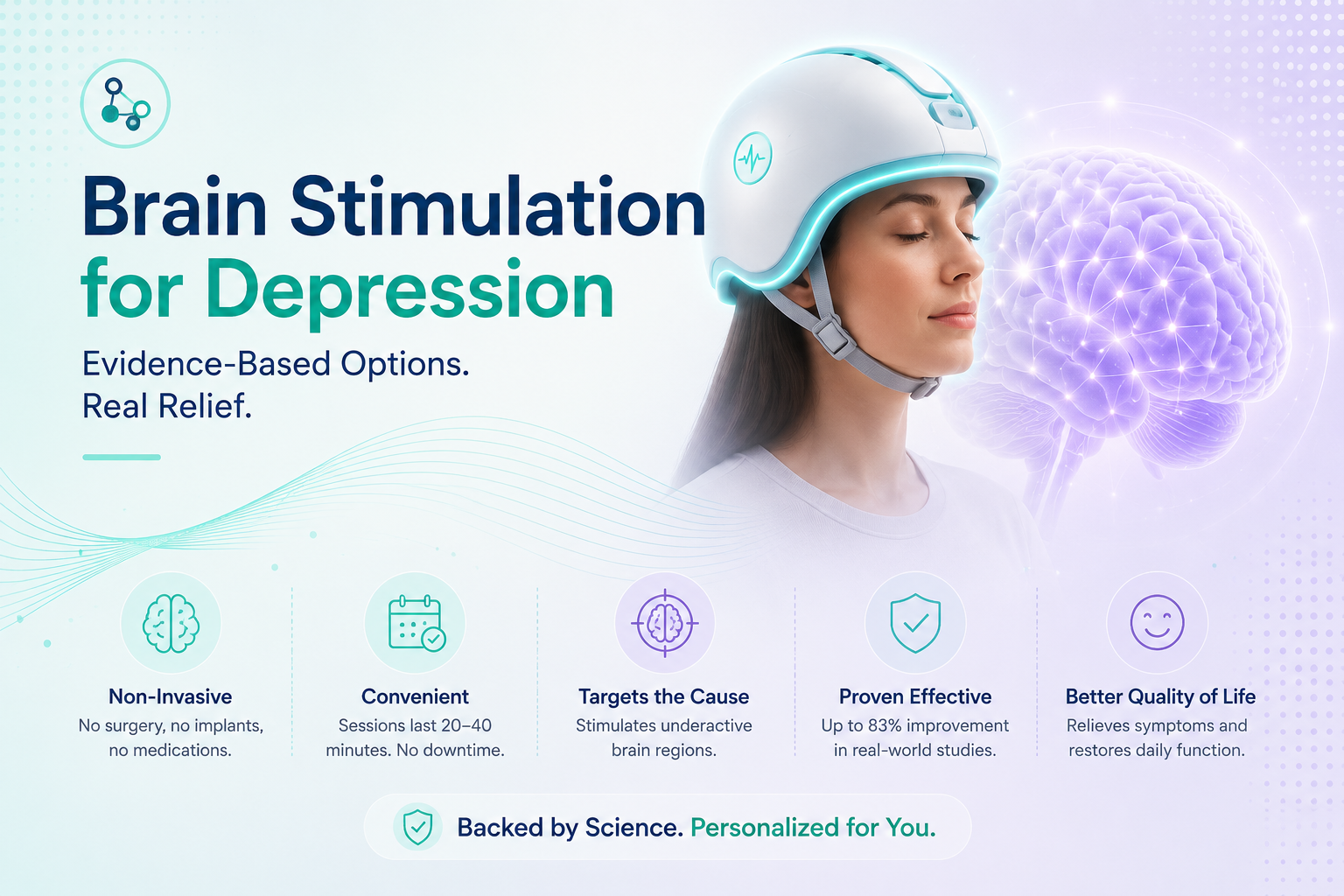
According to a scoping review published in the Journal of Clinical Medicine (July 2026), electroconvulsive therapy and repetitive TMS are the two most evidence-supported brain stimulation therapies for treatment-resistant depression, with TMS increasingly preferred for its comparable efficacy and significantly cleaner side effect profile.
That comparison looks very different in 2026 than it did even three years ago. Brain stimulation for depression has expanded: new FDA clearances, expanded age indications, accelerated protocols, and a growing integration with psychiatric care have reshaped what patients can access and when. If you have been researching options, the landscape has moved.
This article maps the current state of brain stimulation treatment for depression across all major options, with the data behind each one, so you can walk into a clinical conversation prepared.
2026 Brain Stimulation Options for Depression: Quick Comparison
| Treatment | Invasive? | FDA Status for Depression | Speed of Relief | Best Suited For |
| TMS (standard) | No | Cleared (adults + adolescents 15+) | Weeks 2-4 | First-line after medication failure |
| Deep TMS | No | Cleared (MDD, anxious depression) | Weeks 2-4 | Depression + anxiety; OCD |
| Accelerated TMS | No | Off-label protocol; cleared equipment | Days 3-5 | Scheduling barriers; acute need |
| ECT | No (but requires anesthesia) | Cleared | Days to 1 week | Severe, acute, life-threatening depression |
| Spravato (esketamine) | No | FDA-approved (TRD + suicidal ideation) | Hours to days | Rapid stabilization; acute suicidality |
| VNS | Yes (implant) | Cleared for TRD | Months | After TMS and ECT have failed |
| DBS | Yes (neurosurgery) | Investigational for depression | Months | Severe refractory; research settings |
Why Brain Stimulation Is Now a First-Line Conversation, Not a Last Resort
The Shift in How Depression Is Treated
For most of the past two decades, brain stimulation and depression treatment meant a referral that came only after years of failed medication trials. That framing has changed. TMS in particular is increasingly being positioned at an earlier stage in the treatment pathway, especially for patients who have not responded to one or two antidepressants and want to avoid accumulating side effects from additional medication switches.
A key driver of that shift: the 2024 FDA clearance of TMS for adolescents aged 15 to 21. Real-world evidence from 1,120 adolescents across 35 U.S. TMS centers showed a 66.1% response rate after 36 sessions, as reported by Neurology Advisor (November 2025). Patients also showed meaningful reductions in co-occurring anxiety symptoms. Expanding access to a younger population signals that the medical community no longer views TMS as a treatment of last resort.

What “Brain Stimulation” Actually Covers in 2026
The term brain stimulation therapies for depression covers a wider range than most patients realize:
- Non-invasive, no anesthesia: TMS, deep TMS, accelerated TMS, tDCS
- Non-invasive, but requires anesthesia: ECT
- Non-invasive pharmacological (acts on brain chemistry directly): Spravato
- Minimally invasive (implanted device, no cranial surgery): VNS
- Neurosurgical (electrodes implanted in brain tissue): DBS
For most patients reading this article, the relevant options are in the first two rows.
TMS: The Standard of Care for Non-Invasive Brain Stimulation and Depression
How TMS Works and What to Expect
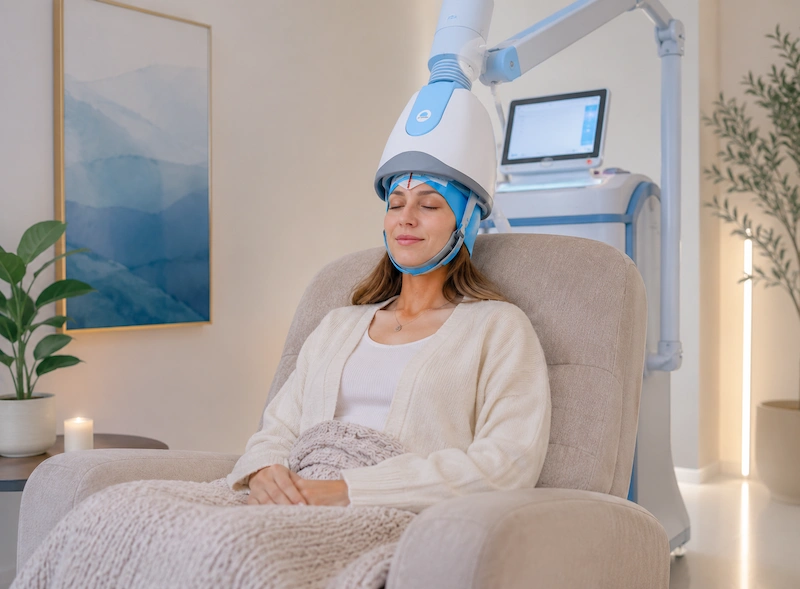
Brain stimulation to treat depression with TMS works by directing focused magnetic pulses at the prefrontal cortex, the brain region most consistently underactive in depression. Repeated stimulation across a course of 20 to 30 sessions rebuilds neural connectivity through neuroplasticity, the brain’s capacity to form new functional pathways.
What makes TMS the starting point for most patients:
- No surgery, no anesthesia, no drugs entering your body
- Sessions run 20 to 40 minutes; you drive yourself home immediately after
- No systemic side effects: no weight changes, no sexual dysfunction, no memory disruption
- FDA-cleared for MDD, anxious depression, OCD, and smoking cessation
- Covered by most major insurance plans for qualifying diagnoses
- Available now for adults and adolescents aged 15 and older
The 2026 clinical picture supports early use. A consensus review endorsed by the National Network of Depression Centers, drawing on nearly 2,400 studies, found real-world improvement rates up to 83% in medication-resistant populations.
TMS for Depression and Anxiety Together
One of TMS’s practical advantages for patients managing comorbid symptoms is its simultaneous effect on anxiety. The 2025 BrainsWay adolescent dataset showed meaningful anxiety reductions alongside depression improvement. This matters because depression and anxiety co-occur in a significant proportion of patients, and targeting both through a single non-pharmacological intervention is a meaningful clinical benefit.
Accelerated TMS: Compressing the Timeline When It Matters
When Weeks of Daily Sessions Are Not Feasible
Standard TMS requires five appointments per week for four to six weeks. That schedule works for many patients but creates real barriers for others: demanding work schedules, caregiving responsibilities, or living far from a clinic. Accelerated TMS addresses this by delivering two to five sessions per day, completing a full treatment course in five to fourteen days.
A Phase IV multi-site study published in ScienceDirect (2023) found that accelerated deep TMS achieved an 80.2% response rate and 50.5% remission rate within the first month, with patients receiving two daily sessions showing the highest response at 89.6%. The side effect profile is comparable to standard TMS.
Accelerated TMS protocols use FDA-cleared equipment but apply an off-label schedule. Insurance coverage is less consistent than for standard TMS. To understand how accelerated TMS compares to the standard approach, read our detailed breakdown.
ECT and Spravato: When Speed Is the Priority
ECT: The Most Effective Option for Severe, Acute Depression
ECT remains the most effective single intervention for severe depression, particularly when the situation is acute or life-threatening. It delivers faster relief than TMS, typically within one to two weeks, and produces higher remission rates in the most severe presentations. The trade-offs are real:
- General anesthesia is required for every session
- Temporary memory disruption is a well-documented side effect
- Sessions require two to three hours including recovery time, and you cannot drive afterward
- Treatment is typically hospital-based, not outpatient
ECT is not a competitor to TMS for most patients. It occupies a different clinical situation: acute psychiatric crisis, severe suicidal ideation, or cases where rapid response is medically necessary.
Spravato: Fast Pharmacological Brain Stimulation
Spravato (esketamine) is FDA-approved for treatment-resistant depression and major depression with active suicidal ideation. It produces relief within hours through a different mechanism than TMS, blocking NMDA receptors to trigger rapid neuroplasticity. Like ECT, it requires supervised administration, a two-hour monitoring period, and arranged transportation. Unlike TMS, it requires ongoing dosing to maintain its effect.
For most patients weighing brain stimulation for depression and anxiety, TMS offers a more practical and durable path. Spravato and ECT remain important options when the clinical situation calls for speed over schedule.
What Choosing a Brain Stimulation Treatment Actually Looks Like
The right sequence for most patients follows this logic:
- Confirm the diagnosis with a psychiatric evaluation. The wrong diagnosis leads to the wrong treatment, regardless of which brain stimulation method is selected.
- Start with TMS if you have not responded to one or more medications. It is the FDA-cleared, insurance-covered, evidence-based first step, now available for adults and adolescents.
- Consider accelerated TMS if a standard six-week schedule is not feasible. The evidence is strong, and the flexibility is real.
- Discuss ECT or Spravato with your psychiatrist if your situation is acute. Speed of response changes the clinical calculus.
- Reserve VNS and DBS for after TMS and other options have failed. These are not starting points. They are options for a small subset of patients with severe, refractory depression who have genuinely exhausted everything else.
If you are in Brooklyn or greater New York City and want to find out where you fit in this picture, contact LifeQuality TMS to schedule a psychiatric consultation.
Frequently Asked Questions
What is the most effective brain stimulation treatment for depression in 2026?
ECT produces the highest single-treatment response rates for severe and acute depression. For most patients, however, TMS is the recommended first-line brain stimulation option: it is FDA-cleared, insurance-covered, produces no systemic side effects, and achieves real-world improvement in 60 to 83% of patients. The right answer depends on how severe your depression is and how quickly you need relief.
Is brain stimulation for depression covered by insurance?
Standard TMS is covered by most major insurance plans for qualifying diagnoses, primarily treatment-resistant depression where at least one antidepressant trial has not produced adequate relief. ECT is also broadly covered. Spravato (esketamine) coverage varies by plan. Accelerated TMS and DBS are less consistently covered. A clinical consultation can help clarify your specific coverage before you start.
Can brain stimulation treat both depression and anxiety?
Yes. TMS is FDA-cleared for anxious depression specifically, and real-world data consistently shows improvements in anxiety symptoms alongside depression improvement. The 2024 adolescent clearance dataset demonstrated meaningful anxiety reductions in parallel with depression outcomes. For patients managing both conditions, TMS addresses overlapping neural circuitry simultaneously.
How long do the effects of brain stimulation for depression last?
TMS response typically lasts six to twelve months or longer for most patients without additional treatment. Maintenance sessions can extend that window. ECT effects are comparable in duration but require more intensive logistics to sustain. Spravato requires ongoing dosing to maintain its benefit. Building protective habits after TMS, including therapy and regular follow-ups, is the most reliable way to extend results.
Is TMS brain stimulation for depression safe for teenagers?
Yes. TMS received FDA clearance for adolescents aged 15 to 21 in 2024. Real-world data from 1,120 adolescents across 35 U.S. TMS centers showed a 66.1% response rate and meaningful anxiety improvements, with a safety profile consistent with adult populations. It is now an available option for younger patients who have not responded adequately to first-line treatments.
What happens if brain stimulation for depression does not work?
If a standard TMS course does not produce adequate response, options include a second TMS course, accelerated TMS with a different protocol, combination with Spravato or medication, or ECT depending on severity. A psychiatrist overseeing your care can assess early response patterns and adjust the plan. Most patients who do not respond fully to a first TMS course still have meaningful options available.