
According to a systematic review and meta-analysis published in the Journal of Affective Disorders (Rakesh et al., August 2024), active TMS combined with antidepressant medication produced significantly greater improvement in major depressive disorder than sham TMS combined with the same medications, with a large effect size that held across multiple trials.
That finding points to something many patients intuitively sense but rarely hear confirmed: the combination of biological treatment and personalized psychiatric care is more powerful than either piece working alone.
For too long, mental health treatment has been divided into separate lanes: therapy over here, medication management there, and newer tools like TMS somewhere off to the side. Integrative psychiatry and TMS are changing that. It brings these approaches into the same room, under the same clinical team, guided by the same understanding of each patient’s full picture.
This article explains what combining psychiatry and TMS actually looks like for patients, why it produces better results, what a psychiatric assessment for TMS therapy involves, and why this model is increasingly where serious mental health care is heading.

Why Does TMS Work Better Alongside Psychiatric Care?
The Brain Does Not Respond to Fragments
TMS rewires neural circuits. Psychiatry understands which circuits are involved, what is driving the dysfunction, and what else in a patient’s life is reinforcing it. When the two work together, TMS becomes a precisely targeted intervention deployed within a broader plan.
A Lancet eClinicalMedicine meta-analysis published in July 2024 found that combining TMS with SSRIs produced significantly superior outcomes compared to SSRI monotherapy, and that the type of medication mattered. Patients on SSRIs during TMS showed stronger and more consistent response than those on other antidepressant classes. That is exactly the kind of nuance a psychiatrist manages, and it directly affects how well TMS works.
What “Integrated” Actually Means in Practice
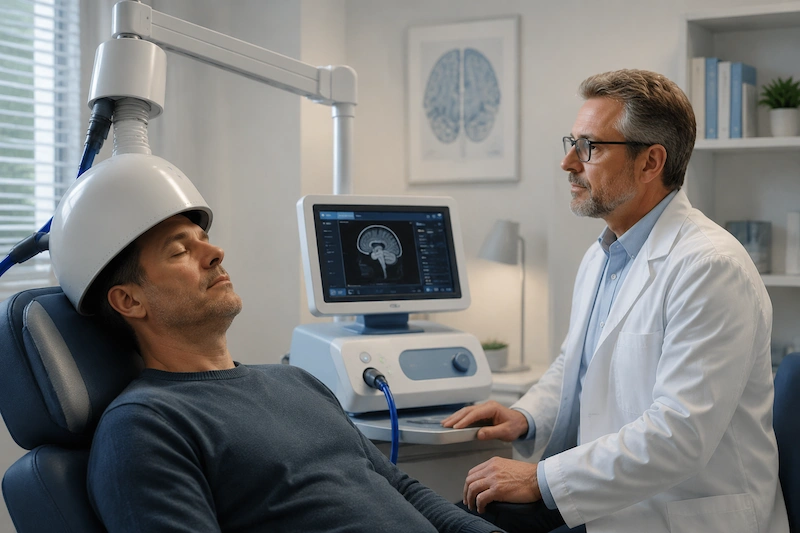
Integrated psychiatric and TMS therapy approaches are not simply about having both available in the same building. Integration means a psychiatrist evaluates the patient before TMS begins, helps design the treatment plan, monitors response as sessions progress, adjusts medications or therapy recommendations in real time, and remains involved after the TMS course ends.
This is different from a patient receiving TMS at one location while their prescribing doctor, who has never seen the TMS setting, continues managing their medications separately. Coordination without communication is not integration.
| What You Get With TMS Alone | What You Get With Psychiatry + TMS |
| Magnetic stimulation of targeted brain circuits | Stimulation guided by a confirmed, accurate diagnosis |
| Standardized protocol per condition | Protocol tailored to your medication history and response |
| Sessions delivered by a trained technician | Psychiatric check-ins throughout the treatment course |
| Results that depend on correct candidacy screening | Candidacy confirmed by a psychiatrist before day one |
| Post-treatment care left to another provider | Post-treatment monitoring integrated into the same plan |
| Strong outcomes for the right patient | Stronger, more durable outcomes across a broader range of patients |
What Happens During a Psychiatric Assessment for TMS Therapy?
The Evaluation
Before any TMS treatment begins, a psychiatric assessment for TMS therapy is an important step. According to the American Psychiatric Association, a psychiatrist evaluates each patient to determine whether TMS is appropriate for their specific situation. This includes ruling out conditions that might look like treatment-resistant depression but require a different approach, such as bipolar disorder, undiagnosed PTSD, or medical contributors to mood symptoms.
Getting this right matters enormously. A patient who appears medication-resistant may actually be experiencing what clinicians call pseudo-resistance: inadequate response caused by the wrong diagnosis, an undertreated comorbid condition, or lifestyle factors that are neutralizing the medication. TMS applied to the wrong presentation will underperform. A thorough psychiatric evaluation prevents this.
What the Assessment Covers
A typical psychiatric assessment before TMS at a clinic like LifeQuality TMS covers:
- Full mental health and medical history, including all prior treatments and their outcomes
- Current diagnosis confirmation and screening for comorbid conditions
- Review of current medications and any interactions relevant to TMS
- Safety screening for TMS contraindications such as metal implants or seizure history
- Discussion of the patient’s goals, concerns, and what a realistic treatment course looks like
This conversation is also the patient’s opportunity to ask everything. How many sessions? What will it feel like? What happens if symptoms return after treatment ends? A psychiatrist who integrates TMS into their practice can answer all of these from direct clinical experience.
What Does TMS in Psychiatry Look Like Going Forward?
An Evolving Standard of Care
TMS in psychiatry has moved steadily from a specialist referral option to a standard tool in the psychiatric toolkit. The American Psychiatric Association, the American Medical Association, and most major insurers now recognize TMS as a mainstream treatment. Psychiatric training programs are increasingly incorporating TMS competency.
Why This Model Fits Brooklyn Patients Especially Well
At LifeQuality TMS in Downtown Brooklyn, TMS therapy with a psychiatrist is how every patient’s course begins and how it is overseen throughout. Patients from Brooklyn Heights, DUMBO, Fort Greene, Cobble Hill, and Boerum Hill, as well as those commuting from Manhattan and Queens, have access to an integrated clinical model, structured around the kind of continuity that produces better outcomes.
Integrated care is how TMS is supposed to work. Patients who receive TMS within a psychiatrically supervised framework consistently show stronger, more durable results than those who receive stimulation as a standalone procedure disconnected from their broader care.
What to Expect if You Are Considering Combined Treatment
If you are thinking about combining psychiatry and TMS, here is what the process typically looks like:
- Initial consultation: A psychiatrist reviews your history, confirms your diagnosis, and determines whether TMS is indicated for your situation.
- Treatment planning: Medication management, therapy recommendations, and TMS scheduling are coordinated into a single plan.
- TMS course: Sessions run five days a week for four to six weeks, with psychiatric check-ins to monitor your response and adjust the plan as needed.
- Post-treatment support: Your psychiatrist remains involved after the final session to protect your results and identify early signs of relapse if they emerge.
The Single Most Important Takeaway
TMS is most effective when it is part of a psychiatric relationship. The research is clear, and the clinical logic is straightforward: a treatment that rewires brain circuits works best when a psychiatrist understands those circuits in the context of your full history, your current medications, and your life.
This is the model LifeQuality TMS is built around. If you are in Brooklyn or greater New York City and want to understand whether integrated TMS therapy is right for you, contact us to schedule a consultation.
Frequently Asked Questions
What does combining psychiatry and TMS mean for me as a patient?
It means your TMS treatment is not happening in a vacuum. A psychiatrist evaluates your history, confirms the right diagnosis, helps select the right TMS protocol, monitors how you respond, and coordinates any medication adjustments throughout the process. You get the neurological benefit of TMS and the clinical judgment of psychiatric oversight working together.
Do I need a psychiatric assessment before starting TMS therapy?
Yes. A psychiatric assessment for TMS therapy is required before treatment begins. The evaluation confirms that TMS is appropriate for your diagnosis, screens for contraindications, reviews your medication history, and ensures the treatment plan is built around your specific situation rather than a generic protocol.
Can I continue seeing my current therapist or psychiatrist while doing TMS?
Absolutely. TMS works alongside existing therapy and medication management. If you already have a treating psychiatrist or therapist, your TMS provider will coordinate with them to ensure your full care team is aligned. Continuity of care is a feature of integrated treatment.
Will the psychiatrist change my medications when I start TMS?
Not necessarily, but it is possible. Research shows that certain medications, particularly SSRIs, work synergistically with TMS and can meaningfully improve outcomes. If your current medication regimen is not optimal for TMS, your psychiatrist may discuss adjustments. Any changes would be made carefully, with your input and full understanding.
How is TMS with a psychiatrist different from TMS at a standalone clinic?
At a standalone TMS clinic without psychiatric integration, the stimulation is delivered, but the broader clinical picture may not be actively managed. When a psychiatrist oversees your TMS course, your diagnosis, medications, therapy, and treatment response are all coordinated by someone who understands the full context. That coordination is what the research shows produces stronger and more durable results.
Is integrated psychiatry and TMS covered by insurance?
TMS for qualifying diagnoses, such as treatment-resistant depression, is covered by most major insurance plans. Psychiatric evaluation and medication management are also typically covered. Whether a single clinic provides both under one billing structure or coordinates across providers depends on the clinic. Confirming coverage specifics with your insurer before beginning is always the right first step.