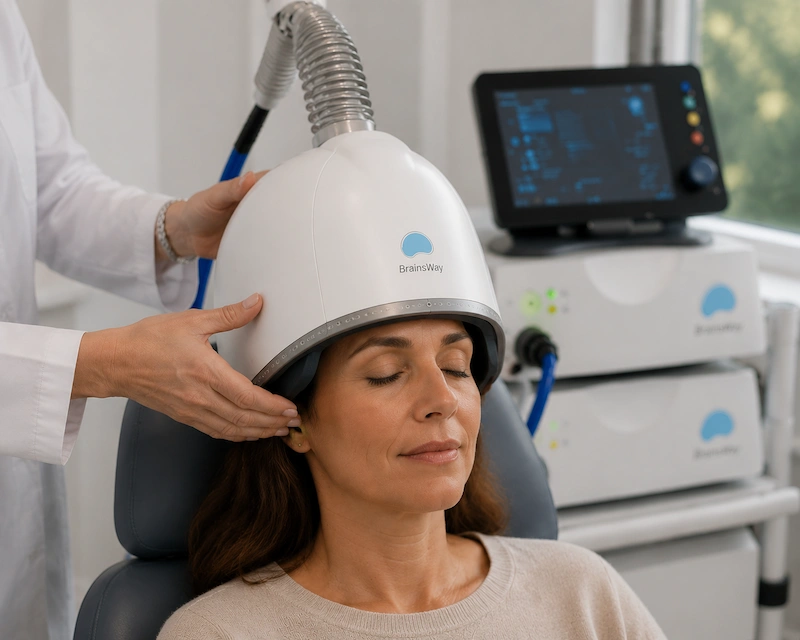
For most people considering TMS therapy, the practical question comes before the clinical one: “what will it actually feel like?” That uncertainty is completely understandable. TMS uses magnetic pulses to stimulate specific areas of the brain, and when described that way, it sounds far more dramatic than the reality.
The honest answer is that what does TMS feel like is often one of the most pleasant surprises of the treatment process. Most patients describe their sessions as manageable, unremarkable, and far less intimidating than they expected. This article walks through what happens during a session, what sensations to anticipate, how the experience typically changes over time, and what to expect in the days and weeks after treatment.
What Happens During a TMS Session
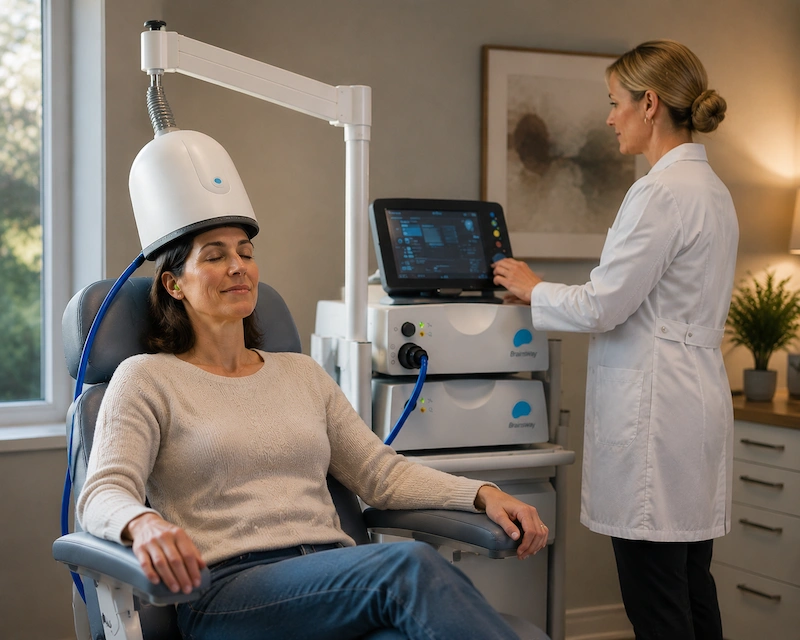
Before getting into sensations, it helps to understand the physical setup. You sit in a reclining chair: fully awake, fully clothed, while a trained clinician positions a small electromagnetic coil against your scalp, typically near the front-left of your head. The coil is held in place by a positioning arm and does not enter the body in any way.
The session itself then proceeds as a series of magnetic pulses delivered in a defined pattern. Depending on the protocol, a standard session lasts between 20 and 40 minutes; BrainsWay Deep TMS sessions at LifeQuality TMS take approximately 20 minutes. There is no anesthesia, no sedation, and no recovery time. Most patients bring headphones, read, or simply sit quietly. When the session ends, they leave and go directly back to their day.
What Does a TMS Session Feel Like? The Sensations Explained
The Tapping Sensation
The most universal description across patients is a rhythmic tapping or knocking on the scalp where the coil rests. Some compare it to a woodpecker; others say it feels like someone gently tapping their fingertips against the head in a quick, repeated pattern. It is not painful for most people, though the intensity varies from person to person based on individual sensitivity and scalp anatomy.
The sensation is most noticeable during the first one or two sessions. As treatment progresses, the vast majority of patients report that the tapping becomes background noise – something they barely register by the second week.
Sound
Along with the physical sensation, the machine produces an audible clicking or tapping sound synchronized with the pulses. Patients often describe it as similar to a metronome or a rapid typewriter. Ear protection is standard practice at most clinics, and patients are encouraged to wear earplugs during sessions to protect against any risk of temporary hearing sensitivity from prolonged exposure to the sound.
Scalp Discomfort and Muscle Twitching
A subset of patients, particularly in early sessions, experience mild scalp sensitivity or pressure at the treatment site. This is the most commonly reported side effect, and it almost always diminishes within the first week as the scalp adapts to the stimulation.
Some patients also notice brief, involuntary twitching in the scalp, jaw, or eyebrow muscles. This happens because the magnetic field stimulates nearby peripheral nerves in addition to the target brain region. It is a normal physiological response and not a sign of anything going wrong. The twitching typically stops the moment the pulse sequence ends.
Mild Headache After Sessions
A mild headache following a TMS session is fairly common, particularly in the first few days of treatment. It usually resolves within an hour or two and responds well to over-the-counter pain relief if needed. Staying hydrated before and after sessions tends to reduce the likelihood and severity of post-session headaches. Like scalp discomfort, this side effect tends to lessen or disappear entirely as the course progresses.
What Does TMS Therapy Feel Like Emotionally in the First Sessions?
The physical sensations are relatively predictable. The emotional experience is more variable and worth addressing honestly.
Many patients feel a quiet sense of hope during early sessions, simply because they are finally taking concrete action after months or years of inadequate treatment. Others feel anxious at first, particularly those who are generally sensitive to new medical procedures. That initial anxiety typically eases quickly once patients see how straightforward the experience actually is.
Some patients also report a mild sense of fatigue after their early sessions. This is thought to reflect the brain adapting to a new pattern of stimulation – a kind of neurological adjustment period. It is usually mild and resolves within a day or two. For most patients, energy levels stabilize and often improve by the end of the second week.
How Do You Feel After TMS: A Week-by-Week Picture
This is where patient experiences diverge most meaningfully. TMS does not produce immediate relief – the antidepressant effects build gradually as the brain accumulates sessions and begins to form new neural connections.
| Week | What Many Patients Report |
| Week 1 | Adjusting to sensations; mild scalp sensitivity; some fatigue; no mood change yet |
| Week 2 | Scalp discomfort fades; some patients notice slightly improved sleep or energy |
| Weeks 2-3 | The “TMS dip” may occur for some patients (see below) |
| Weeks 3-4 | Many patients begin noticing mood shifts: less reactive, more present, small return of interest in daily activities |
| Weeks 4-6 | Most significant improvements; clearer mood lift, reduced symptom burden for many patients |
| After treatment | Brain continues adjusting; some patients report ongoing improvement for weeks after final session |
Clinical studies suggest that the majority of patients receiving standard TMS therapy report substantial symptom reduction by the fourth to sixth week of treatment. That said, some patients notice changes earlier, and others benefit most toward the very end of their course. Neither is unusual.
Can TMS Make You Feel Worse at First?
Yes, for some patients, temporarily.
Around weeks 2-3 of treatment, some patients experience a temporary worsening of depression or anxiety symptoms – a period clinicians often call the “TMS dip.” This is understood to be a sign that the treatment is working.
One theory suggests that as TMS stimulates specific brain regions, it may initially disrupt existing neural pathways, causing a temporary exacerbation of depressive symptoms before positive changes take hold. Think of it as a period of neurological reorganization. The brain is actively changing, and that process is not always smooth or linear.
The dip is not universal, and it is not severe for most patients who experience it. It typically lasts three to seven days before mood begins to stabilize and then improve. Knowing that it can happen is itself protective: patients who are prepared for a temporary worsening are far less likely to interpret it as treatment failure and discontinue prematurely.
That said, two situations warrant contacting your provider rather than waiting the dip out:
- Symptoms that feel worse than at any point before treatment began
- Any emergence or intensification of suicidal thoughts
Neither of these is a predicted part of normal treatment response. If either occurs, reach out to your care team or call the 988 Suicide and Crisis Lifeline directly. There is no documented link between TMS and increased suicidal ideation. In fact, research suggests TMS may reduce suicidal thoughts over the course of treatment, but any concerning change in this area deserves immediate attention.
After the Full Course: How Do You Feel After TMS?
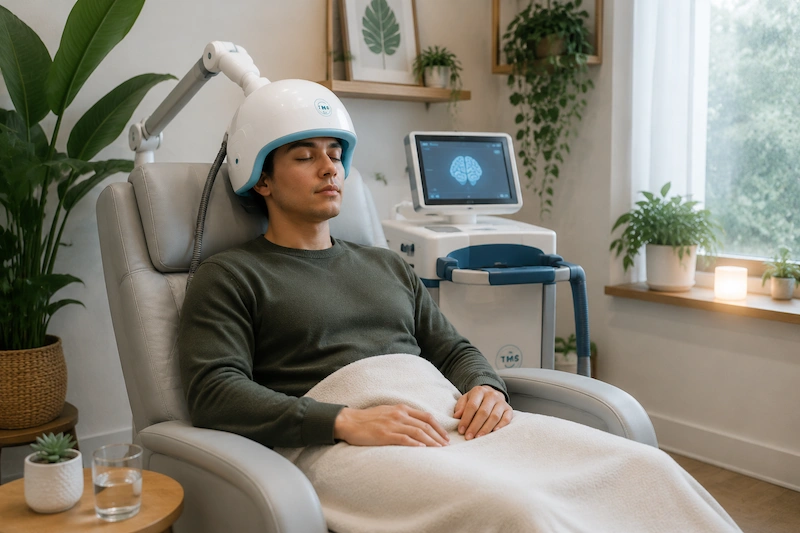
For patients who respond, the shift that emerges by the end of a standard course is often described less as a dramatic event and more as a quiet return to a self that had been absent for a long time. Patients describe:
- Re-engagement with activities and hobbies that had lost their appeal
- Better sleep and more consistent energy throughout the day
- Reduced emotional reactivity: feeling less overwhelmed by situations that previously triggered spiraling
- Clearer thinking and improved ability to concentrate or follow through on tasks
- A return of humor and spontaneity that depression had muted
Friends and family often notice these changes before the patient does. Clinicians at LifeQuality TMS track progress throughout the course using standardized symptom rating scales at regular intervals, which can help patients see changes they might not perceive day-to-day.
An important detail: the brain continues to adjust after the final session. Some patients report that their best improvement comes in the weeks after completing treatment, as the neuroplastic changes initiated during TMS continue to consolidate. Completing the full course, even during the weeks when progress feels slow, is essential to getting the full benefit.
Practical Notes for Your First Session at LifeQuality TMS
Before you arrive:
- Eat normally. TMS requires no fasting.
- Remove jewelry and hair accessories near the scalp before the session.
- You can drive yourself to and from appointments – no sedation is involved.
- Wear comfortable clothes you can sit in for 20 minutes without shifting.
During your first session, the clinician will also determine your motor threshold – the minimum level of magnetic stimulation needed to produce a small finger movement. This individual calibration step, which takes 10 to 15 minutes, ensures your treatment intensity is personalized to your brain’s responsiveness rather than based on a population average.
Frequently Asked Questions About the TMS Experience
1. Is TMS painful?
For the vast majority of patients, TMS is not painful. The most common sensation is a rhythmic tapping on the scalp, which can feel mildly uncomfortable in the first few sessions but is not described as sharp or severe. Scalp sensitivity and mild post-session headaches are the most frequently reported side effects, and both typically resolve within the first one to two weeks of treatment.
2. What does a TMS session feel like compared to what I expected?
Most patients report that their first session was significantly less intimidating than they had anticipated. The setup is straightforward: a reclining chair, a coil placed on the scalp, a series of clicking pulses, and the session passes quickly. Many patients are surprised by how routine the experience becomes after just a few appointments.
3. Can I do anything during a TMS session?
Yes. Patients can listen to music, podcasts, or audiobooks, or simply sit quietly. Conversation with the clinician is also possible between pulse sequences. The one restriction is keeping the head still during stimulation, which is easy once patients are settled in the chair.
4. How do you feel after TMS on the same day?
Most patients feel normal immediately after a session and return directly to work, errands, or other activities. Some experience mild fatigue or a slight headache in the early sessions, both of which typically resolve within an hour or two. There is no grogginess, disorientation, or impaired driving ability.
5. When do most patients start noticing mood improvements?
Most patients begin noticing early mood changes between weeks two and four of treatment. These initial changes are often subtle: slightly better sleep, a bit more energy, feeling less reactive. More meaningful improvements typically emerge between weeks four and six, with some patients continuing to improve after the final session as the brain’s neuroplastic changes continue to consolidate.
6. What is the TMS dip and how long does it last?
The TMS dip is a temporary period of symptom worsening that some patients experience around weeks two to three of treatment. It is thought to reflect an intermediate phase of neurological reorganization and typically lasts three to seven days. It does not predict whether TMS will ultimately be effective. Patients experiencing a dip are encouraged to communicate with their care team and continue treatment rather than stopping.
7. Does TMS feel different for OCD versus depression treatment?
The physical sensations are broadly similar, but the OCD protocol at LifeQuality TMS includes a “symptom provocation” step before each session – a brief, supervised exposure to OCD-related triggers designed to activate the relevant brain circuits before stimulation begins. This is a clinical feature of the OCD protocol; patients are prepared for it and supported by the clinician throughout.
If you are curious about whether TMS is right for you, the team at LifeQuality TMS in Downtown Brooklyn is here to answer your questions – including the ones that feel too small to ask. Schedule a consultation at our Downtown Brooklyn clinic, serving patients from Brooklyn Heights, DUMBO, Fort Greene, Manhattan, Queens, and across New York City.