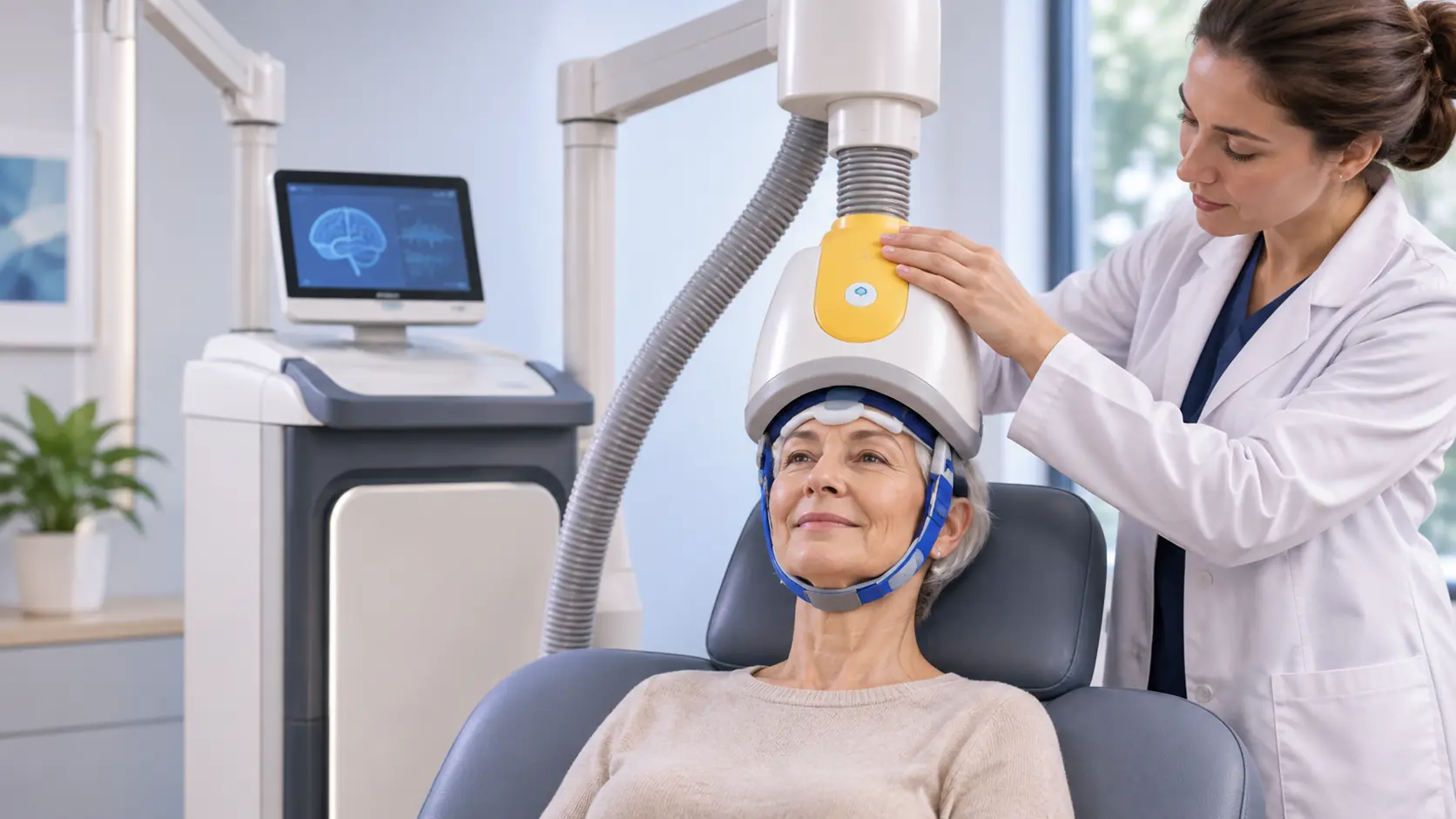
Personalized TMS care means your treatment is built around you rather than a one-size-fits-all protocol. Five factors shape it most: your diagnosis and symptoms, your brain’s motor threshold, your treatment history, the stimulation protocol chosen, and your health and daily schedule.
Two people can walk into the same clinic with the same diagnosis and leave with noticeably different treatment plans. That isn’t inconsistency. It’s how good TMS is supposed to work. Brains differ in structure, sensitivity, and the way symptoms show up, and the details of each plan reflect that.
This guide walks through each factor, explains the science in plain language, and shows how your plan can keep evolving once treatment begins.
What Does Personalized TMS Care Actually Mean?
Personalized TMS care means the settings, schedule, and goals of treatment are matched to one person’s brain and symptoms, then adjusted as that person responds. The device may be the same for every patient, but the way it’s used is not.
Why does this matter? Because people respond to TMS differently. A literature review on PubMed Central notes that individualized approaches can improve response by matching each patient to the protocol that fits their profile, especially when depression comes with other conditions such as anxiety.
A useful comparison is eyeglasses. Everyone may need lenses, but a pair made for someone else’s prescription won’t help much. In the same way, TMS works best when its strength, target, and timing are calibrated to the individual.
Why One-Size-Fits-All TMS Falls Short
A fixed approach assumes every brain reacts the same way to the same dose, which simply isn’t true. Skull thickness, the distance between scalp and brain, and natural differences in nerve-cell sensitivity all change how much stimulation actually reaches the target. Personalized TMS care accounts for these differences from the first visit, so your dose is strong enough to work without being uncomfortably high.
Factor 1: Your Diagnosis and Symptom Profile
Your diagnosis determines which brain circuits are targeted and which type of coil is used. Depression, OCD, and smoking addiction involve different networks, so the BrainsWay Deep TMS system uses a different H-coil for each.
| Condition | Typical Deep TMS Coil | Brain Area Targeted |
| Major depression, including anxious depression | H1 coil | Left prefrontal cortex, linked to mood |
| Obsessive-compulsive disorder | H7 coil | Medial prefrontal and anterior cingulate cortex, linked to repetitive thoughts |
| Smoking addiction | H4 coil | Insula and prefrontal areas, linked to cravings |
Within one diagnosis, the details still matter. Someone whose depression comes with heavy anxiety may need a different emphasis than someone whose main struggle is exhaustion and low motivation. A 2025 study in Frontiers in Psychiatry found that both single-sided and two-sided stimulation improved depression and anxiety in patients with both conditions, giving clinicians room to tailor the approach.
You can read more about TMS for OCD and how its protocol differs from depression treatment.
Factor 2: Your Brain’s Motor Threshold and Coil Placement
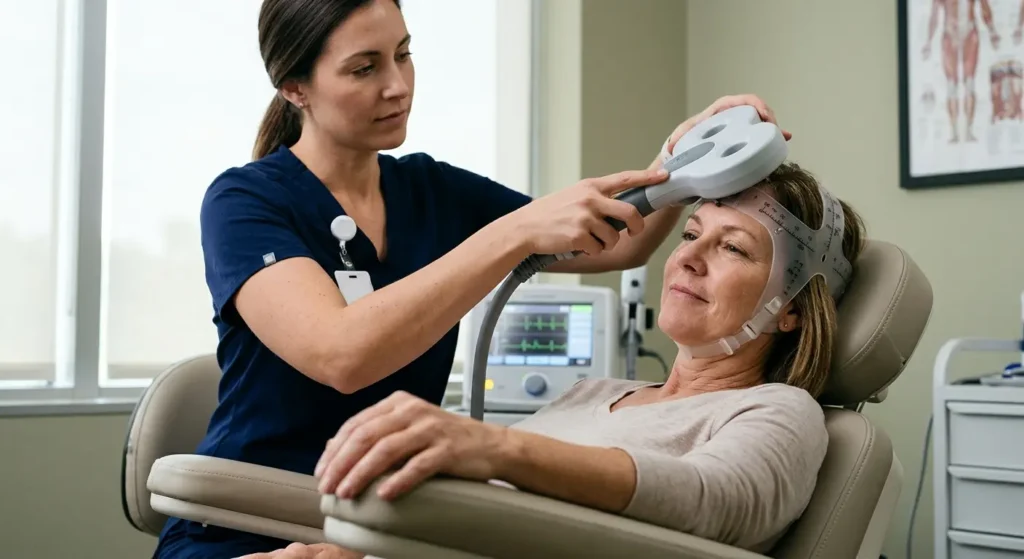
Before the first full session, your clinician measures your motor threshold, the lowest magnetic strength that makes your hand or fingers twitch slightly. This number becomes the reference point for your treatment dose, because brain sensitivity varies a lot from person to person.
Why does a hand twitch matter for treating mood? The motor cortex is the easiest brain area to measure directly, because its response is visible. Clinicians use it as a practical benchmark, then apply that calibrated strength to the mood-related target.
According to research published in Frontiers in Human Neuroscience, both standard FDA-cleared depression protocols deliver stimulation at 120% of each patient’s resting motor threshold. In other words, everyone gets the same relative dose, but the absolute strength is set individually.
Coil placement is personalized too. During this first mapping visit, the team marks the exact position for your head size and shape so every session lands in the same spot. Many people find this the most interesting appointment: it’s quick, painless, and shows how precisely the treatment is tailored.
Your threshold isn’t fixed for life. Starting or stopping certain medications, or changes in sleep, can shift it, so clinicians may recheck it during your course.
Factor 3: Your Treatment History and Current Medications
What you’ve already tried says a lot about what your brain needs next. Before building personalized TMS treatment plans, the clinical team reviews your full psychiatric and medical history, including:
- How many antidepressants or other medications you’ve tried, at what doses, and for how long
- Which treatments helped partially, and which caused side effects
- Current medications, since some can raise or lower seizure risk or affect your motor threshold
- Past experience with therapy, ketamine, ECT, or earlier TMS courses
- Use of alcohol, caffeine, or other substances that influence brain excitability
Most people continue their current medications during TMS. Your psychiatrist may suggest timing adjustments, but changes should always be gradual and supervised. This review also matters for insurance, since most plans require proof of earlier treatment before approving TMS for major depressive disorder.
Factor 4: The Stimulation Protocol That Fits Your Needs
The protocol is the “recipe” for each session: how fast the pulses are delivered, how many are given, and how long the session lasts. Choosing it is one of the clearest ways clinicians create personalized TMS sessions.
Two FDA-cleared options are most common for depression. Standard high-frequency stimulation delivers rapid pulses over about 20 minutes with Deep TMS. Intermittent theta burst stimulation (iTBS) uses short bursts that mimic the brain’s natural rhythms and takes only a few minutes. The Clinical TMS Society considers iTBS a valid alternative to the standard approach, since a large trial found similar results.
Which one is right for you? It depends on your schedule, how well you tolerate the sensation, and your clinician’s judgment about your symptoms. Research also continues to push personalization further. An accelerated, imaging-guided protocol described in Psychiatric News produced remission in 78.6% of patients in a small trial, showing how much precise targeting may matter.
Factor 5: Your Health, Lifestyle, and Daily Schedule
A treatment plan only works if you can follow it. Personalized TMS therapy takes your real life into account, including:
- Medical safety factors, such as metal implants near the head, implanted devices, or a history of seizures
- Work, school, and family commitments that determine the best time of day for sessions
- Sleep habits, since poor sleep can affect both mood and brain excitability
- Commute and transportation, which influence how easily you can attend five days a week
- Comfort needs, such as sensitivity to the tapping sensation or noise
Because sessions are short and require no recovery time, most patients fit them around a workday. Life Quality TMS is located in Downtown Brooklyn near several subway lines, which makes daily visits more manageable. That flexibility is part of what makes personalized TMS care practical, not just precise.

How Personalized TMS Care Adapts During Treatment
A personalized plan isn’t set once and left alone. Your care team tracks progress with standardized questionnaires and adjusts treatment based on how you respond.
| Tool | What It Measures | How It’s Used |
| PHQ-9 | Depression severity | Repeated regularly to track mood changes |
| GAD-7 | Anxiety severity | Shows whether anxiety is easing alongside mood |
| Y-BOCS | OCD symptom severity | Tracks obsessions and compulsions during OCD treatment |
| Check-ins with your clinician | Side effects, sleep, daily function | Captures changes numbers alone can miss |
If scores aren’t moving as expected, the team has several options. Adjustments may include:
- Rechecking the motor threshold to confirm the dose is still accurate
- Fine-tuning coil position if comfort or response suggests a better spot
- Changing the protocol, for example, switching between standard stimulation and iTBS
- Extending the course when progress is steady but incomplete
- Planning maintenance sessions after the main course to help protect results
Progress is rarely a straight line. Many people notice better sleep or energy first, with mood following later. Sharing honest feedback at each check-in gives your clinician the information needed to keep personalized TMS care on track.
Questions to Ask About Your Personalized TMS Care
Clear communication makes personalization work. At your consultation or early sessions, consider asking:
- Which protocol and coil are recommended for me, and why?
- How was my motor threshold set, and will it be rechecked?
- Which questionnaires will track my progress, and how often?
- What would lead you to adjust my plan?
- Will I need maintenance sessions after the main course?
The answers help you understand your plan and feel more confident as treatment unfolds.
Start Your Personalized TMS Care in Downtown Brooklyn
Personalized TMS care comes down to five factors: your diagnosis, your motor threshold and coil placement, your treatment history, the protocol chosen, and the realities of your daily life. When each is handled carefully, treatment fits your brain and your schedule rather than the other way around.
Life Quality TMS offers BrainsWay Deep TMS at 26 Court Street, Suite 1510, convenient for patients from Brooklyn Heights, DUMBO, Fort Greene, Boerum Hill, Cobble Hill, Manhattan, and Queens.
Schedule a consultation or call (718) 400-0867 to start building a plan around your needs.
Frequently Asked Questions
The core technology is the same, but key settings differ from person to person. Stimulation strength is based on your own motor threshold, coil placement fits your head, and the protocol and schedule reflect your diagnosis, history, and response. Two patients with the same diagnosis can have noticeably different plans.
After a psychiatric evaluation, the first treatment visit includes mapping. The clinician finds the spot that makes your fingers twitch slightly, measures your motor threshold, and records your coil position. Treatment usually begins the same day, and the whole visit tends to take under an hour.
Yes. Your team reviews progress regularly with questionnaires such as the PHQ-9 and check-ins about sleep, side effects, and daily function. Based on that, they may recheck your threshold, adjust coil position, switch protocols, extend the course, or plan maintenance sessions later.
Not necessarily. Session length depends mainly on the protocol. Standard Deep TMS sessions take about 20 minutes, while theta burst sessions can take only a few minutes. Personalization affects how the session is set up, not how much time you need to set aside.
Usually not. Most people continue their current prescriptions throughout treatment. Your psychiatrist reviews every medication beforehand, because some can affect seizure risk or your motor threshold, and any adjustments are made gradually and under supervision.
Most major insurers cover TMS for depression when certain criteria are met, such as previous medication trials. Mapping and individualized dosing are part of standard treatment, not costly add-ons. Learn more about how the clinic handles insurance and patient support.