Bipolar II disorder is one of the most undertreated conditions in psychiatry. Because its hallmark – hypomania – is often subtle and even pleasurable, many people with bipolar II spend years being misdiagnosed with unipolar depression and cycling through antidepressants that provide incomplete relief or destabilize their mood further. For those patients, TMS for bipolar II is emerging as a clinically meaningful and well-tolerated option for managing the depressive episodes that dominate the illness.
This guide explains what the current evidence shows, how TMS for bipolar 2 depression differs from standard depression treatment, what safety considerations apply, and what patients can expect when they pursue this path at a clinic like LifeQuality TMS in Brooklyn.
Understanding Bipolar II: Why Depression Is the Central Problem
Bipolar II disorder is defined by at least one hypomanic episode and at least one major depressive episode, with no history of full manic episodes. The less-intense elevated moods in bipolar II disorder are called hypomanic episodes, and most people with bipolar II disorder have episodes of depression more often. That asymmetry matters clinically: while hypomania often goes unrecognized or even feels functional, the depressive phase is where bipolar II causes the most impairment, the most lost time, and the most significant suicide risk.
According to Eur Psychiatry 2025 open-label investigation, bipolar disorder is a complex psychiatric condition marked by severe mood swings, including prolonged depressive episodes that constitute approximately 50% of the illness duration. Standard antidepressants are problematic in bipolar II: used without a mood stabilizer, they risk triggering hypomania, rapid cycling, or mixed states. Mood stabilizers alone often provide insufficient relief from depression. This treatment gap is exactly where TMS therapy for bipolar 2 becomes relevant.
Is TMS FDA-Approved for Bipolar II?
TMS is currently FDA-cleared for major depressive disorder (MDD) and OCD, not specifically for bipolar. When used in bipolar II, TMS is considered an off-label application – meaning it is used based on clinical evidence and physician judgment rather than a dedicated FDA clearance for that diagnosis.
In 2020, the FDA granted breakthrough device status for TMS as a therapeutic option for bipolar depression, signaling that the evidence is promising enough to warrant expedited development and review. Breakthrough status is not the same as full clearance, but it reflects regulatory recognition that existing treatments are inadequate and that TMS shows meaningful potential. Full clearance for bipolar depression may follow as larger clinical trials complete their work.
This is an important distinction for patients to understand. Off-label use is common and legitimate in psychiatry (many established treatments are used this way), but it does affect insurance coverage, which is discussed further below.
What Does the Clinical Evidence Show?
The evidence base for TMS and bipolar 2 has grown substantially in recent years, and the picture is consistently encouraging.
A comprehensive meta-analysis incorporating data from 56 studies found that active TMS had superior antidepressant efficacy relative to sham stimulation, with response and remission rates on par with those seen in unipolar depression. Rates of treatment-emergent mania or hypomania were low and equivalent to those found in sham-treated patients. That last point is particularly important: TMS did not meaningfully increase the risk of hypomanic switch compared to placebo, one of the central concerns providers have when treating bipolar depression.
A 2025 open-label multicenter study examined an accelerated rTMS protocol specifically in patients with bipolar II disorder during a depressive phase. The findings underscored the rapid onset and sustained effectiveness of accelerated rTMS for bipolar depression, with improvements observed immediately after treatment and continuing over subsequent months. Importantly, accelerated rTMS did not result in any significant increase in mania rating scores, and no hypomanic switches were reported.
A separate 2024 pilot study of high-frequency TMS in bipolar depression, published in the Journal of Clinical Psychiatry, found that treatment with rTMS was safe and well tolerated, with preliminary findings described as encouraging regarding safety and effectiveness for this patient population.
Taken together, the available evidence supports TMS therapy for bipolar 2 as both effective and safe when conducted under appropriate clinical oversight.
Key Safety Considerations: What Makes Bipolar II Different
The Hypomanic Switch Risk
The primary clinical concern with any antidepressant treatment in bipolar disorder is the risk of triggering a hypomanic or manic switch – a shift from depression to an elevated mood state. TMS is no exception to this concern, though the evidence suggests the risk is lower than with many antidepressant medications.
Current recommendations advise the use of a mood stabilizer for a minimum of two weeks before initiating TMS in patients with bipolar disorder, to reduce the risk of treatment-emergent mania. This is a standard clinical precaution, not a disqualifying requirement. Patients who are already stabilized on lithium, lamotrigine, quetiapine, or another mood stabilizer are generally considered better candidates for TMS.
In clinical practice, patients with bipolar disorder undergoing TMS are typically required to be on at least one mood stabilizer at an effective dose for a minimum period, and psychomotor agitation must be closely monitored throughout treatment.
Why Bipolar II May Actually Carry Lower Risk Than Bipolar I
An important nuance: bipolar II may actually be a safer candidate group for TMS than bipolar I. Because bipolar II patients experience hypomania rather than full mania, the ceiling of any potential mood elevation is lower. The switch risk, when it does occur, is less likely to result in severe or dangerous manic behavior. This makes TMS and bipolar 2 a clinically reasonable pairing when appropriate safeguards are in place, even more so than TMS in bipolar I.
How TMS for Bipolar 2 Depression Differs From MDD Treatment
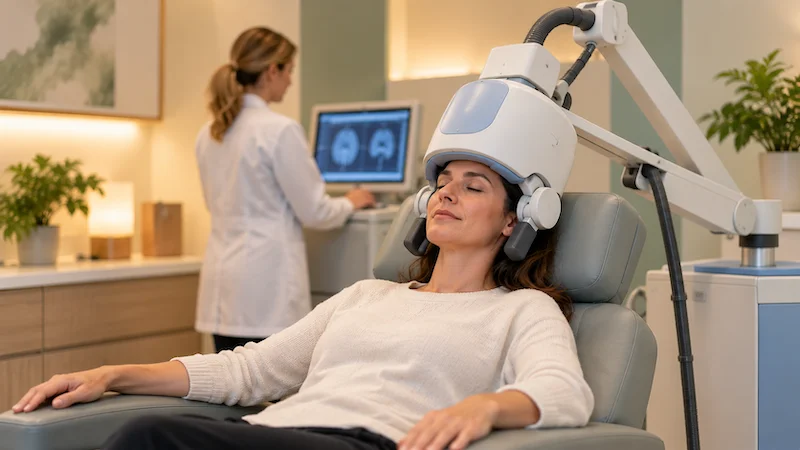
The TMS protocol used for bipolar II depression is generally the same as that used for unipolar depression – high-frequency stimulation to the left dorsolateral prefrontal cortex (L-DLPFC) – but the clinical management around it differs in several important ways:
| Clinical Factor | TMS for MDD | TMS for Bipolar II Depression |
| FDA clearance status | Cleared | Off-label use |
| Mood stabilizer requirement | Not required | Required before and during treatment |
| Hypomania monitoring | Standard safety checks | Active monitoring at every visit |
| Antidepressant co-use | Common | Avoided or used with caution |
| Insurance coverage | Usually covered | Variable; prior auth more complex |
| Protocol selection | Standard or Deep TMS | Same, with additional clinical oversight |
Patients pursuing TMS for bipolar 2 depression at LifeQuality TMS undergo a comprehensive psychiatric evaluation that includes confirming current mood stabilization, reviewing their medication history, and establishing a clear monitoring plan for the duration of treatment. The treating psychiatrist tracks mood state at every visit using validated rating scales for both depression and hypomania.
What to Expect at LifeQuality TMS
The Assessment
Before any sessions begin, patients undergo a full psychiatric assessment. For bipolar II patients, this assessment places particular emphasis on:
- Confirming the bipolar II diagnosis and ruling out rapid cycling or current hypomanic symptoms
- Verifying that a mood stabilizer is in place and at an adequate dose
- Reviewing previous treatment history, including any prior antidepressant-induced switches
- Completing a TMS safety screening questionnaire for contraindications
- Establishing a baseline mood measurement using validated depression and hypomania scales
Patients who are currently in a hypomanic phase are not candidates for TMS at that time. TMS is specifically targeting the depressive pole of the illness, and starting treatment during a mood elevation would be both clinically inappropriate and potentially counterproductive.
The Treatment Course
Once approved and stabilized, the treatment course for bipolar II follows the same general structure as for MDD. At LifeQuality TMS, sessions use the BrainsWay Deep TMS system: approximately 20 minutes per session, five days per week, for four to six weeks. The BrainsWay H1-coil reaches deeper and broader areas of the brain than standard figure-eight coils, which may be particularly relevant for bipolar depression given the involvement of subcortical mood circuits.
Throughout the course, mood state is monitored at each visit. If any signs of hypomania emerge, the treating psychiatrist reviews the case and may adjust the protocol, modify medication, or temporarily pause treatment.
After Treatment
Post-treatment planning for bipolar II patients mirrors the approach for MDD, with additional emphasis on mood stabilizer continuation and vigilance for hypomanic symptoms in the months following the course. Maintenance TMS sessions and integration with ongoing psychotherapy, particularly approaches that address the interpersonal and behavioral dimensions of bipolar II, form the foundation of a durable aftercare plan. For more detail on what post-TMS support looks like, see our guide to preventing relapse after TMS.

Insurance Coverage for TMS in Bipolar II
Because TMS for bipolar II is an off-label use, insurance coverage is more variable than it is for MDD. Some major insurers, including select Blue Cross Blue Shield plans, have begun approving TMS for bipolar depression in cases where:
- A formal bipolar II diagnosis is documented
- Multiple prior treatments have failed
- The patient is currently on a mood stabilizer
- Medical necessity is clearly supported by the treating psychiatrist
LifeQuality TMS handles all prior authorization submissions on behalf of patients, including cases that require a more detailed clinical narrative to support coverage. Even when insurance does not cover the full course, partial coverage or appeals may be possible. Our team reviews each patient’s specific plan before treatment begins.
Is TMS Right for You if You Have Bipolar II?
TMS therapy for bipolar 2 is most likely to be appropriate when:
- The current episode is clearly depressive, not hypomanic or mixed
- At least one mood stabilizer is in place and well-tolerated
- Standard treatments – mood stabilizers, atypical antipsychotics approved for bipolar depression – have provided insufficient relief
- There is no history of severe or rapid switch responses to prior antidepressant treatments
- The patient is committed to close monitoring throughout the treatment course
TMS is not a replacement for mood stabilization, it works alongside it. For the right patient, it offers a medication-free path to meaningful depression relief without the antidepressant-related switch risks that often make pharmacological management of bipolar II so complicated.
If you are in Brooklyn or the wider New York City area and want to explore whether TMS is a viable option for your bipolar II depression, the team at LifeQuality TMS can help. Schedule a consultation and we will review your history, current medications, and goals to determine whether TMS is clinically appropriate for you.
Frequently Asked Questions
1. Is TMS FDA-approved for bipolar II depression?
Not specifically. TMS is FDA-cleared for major depressive disorder and OCD. Its use in bipolar II depression is currently off-label. However, the FDA granted breakthrough device status for TMS in bipolar depression in 2020, and a growing body of clinical evidence supports its safety and efficacy in this population. Off-label use under psychiatric supervision is standard practice in this context.
2. Can TMS trigger hypomania or mania in bipolar II patients?
The risk exists but appears to be low. A large meta-analysis found that rates of treatment-emergent hypomania or mania with TMS were equivalent to those seen in sham-treated patients. The standard precaution is to ensure patients are stabilized on a mood stabilizer for at least two weeks before beginning TMS, and to monitor mood state closely throughout the treatment course.
3. Do I need to be on a mood stabilizer to receive TMS for bipolar II?
In most cases, yes. Clinical guidelines recommend that patients with bipolar disorder be on at least one mood stabilizer at an effective dose before and during TMS treatment. This is a precaution to reduce the risk of hypomanic or manic switching, not a barrier to treatment. The assessing psychiatrist at LifeQuality TMS will review your current medications as part of the evaluation.
4. How does TMS for bipolar 2 depression compare to antidepressants?
Antidepressants used without a mood stabilizer carry a recognized risk of triggering hypomania, mania, or rapid cycling in bipolar disorder. TMS appears to carry a meaningfully lower switch risk while still providing effective relief from depressive symptoms. For patients who have had poor experiences with antidepressants, including mood destabilization – TMS offers a non-pharmacological alternative that works through a different mechanism entirely.
5. Will insurance cover TMS for bipolar II?
Coverage is variable. Because bipolar II is an off-label indication for TMS, insurers apply more scrutiny to these cases. Some plans do cover it with appropriate documentation of diagnosis, prior treatment failure, and medical necessity. LifeQuality TMS handles all prior authorization work on behalf of patients and can advise on what your specific plan is likely to require.
6. How many TMS sessions are typically needed for bipolar II depression?
The acute treatment course is generally the same as for MDD: 20 to 30 sessions delivered five days per week over four to six weeks. Some patients with bipolar II may benefit from a slightly longer course depending on their response. Your treatment plan will be individualized based on your assessment findings and how your mood responds during the course.
7. Can TMS be used alongside my current bipolar medications?
In most cases, yes. TMS does not require stopping mood stabilizers. In fact, continuation of mood stabilization is a clinical requirement. Antidepressants may be tapered or discontinued before starting TMS, depending on your psychiatrist’s assessment. The treating team at LifeQuality TMS reviews all medications at the initial assessment and makes individualized recommendations before treatment begins.
If you have bipolar II disorder and are struggling with depression that has not responded adequately to medication, TMS may offer a meaningful path forward. Schedule a consultation at LifeQuality TMS in Downtown Brooklyn. We serve patients from Brooklyn Heights, DUMBO, Fort Greene, Cobble Hill, Manhattan, Queens, and across New York City.