
The short answer: sadness is a normal emotion. It usually has a cause, and it eases as life moves on. Depression is a health condition: low mood or a loss of interest that shows up most of the day, nearly every day, for two weeks or longer, along with changes in sleep, energy, appetite, focus, or self-worth. If a low mood lingers, keeps coming back, drains the joy out of things you normally like, or brings thoughts of death, it’s time to talk to a professional. There is no need to wait until things feel unbearable.
From the inside, depression and sadness can look almost the same. Both can bring crying spells, a wish to cancel plans, lower drive, and the feeling that everything is just too much. That overlap is exactly why so many people talk themselves out of getting help. Everyone gets down sometimes, after all. True enough, but it’s not the whole story.
Here is the line that matters: sadness is a human emotion, while clinical depression is a mental health condition with a wider set of symptoms that sticks around and makes work, relationships, and basic self-care harder.
Depression vs Sadness: What Is the Main Difference?
The core difference is reach: sadness colors your mood, while depression spills into how you think, sleep, eat, move, and see yourself.
Sadness Is an Emotion, Not a Diagnosis
Sadness nearly always shows up in response to something. Common triggers include:
- A breakup or ongoing relationship trouble
- The death of someone close
- Disappointment, rejection, or a failure at school or work
- Money worries or job stress
- Conflict, loneliness, or a big life change like moving or retiring
How Normal Sadness Usually Behaves
Even when it hurts a lot, ordinary sadness tends to follow a few familiar patterns:
- It’s linked to a clear cause
- It comes in waves rather than sitting still all day
- Moments of laughter, comfort, or relief still get through
- It softens as circumstances change or time passes
Depression Affects More Than Your Mood
Major depressive disorder isn’t sadness turned up to full volume. It’s a clinical condition, and it’s more widespread than many assume: a 2025 CDC data brief found that 13.1% of Americans aged 12 and older had depression in a given two-week period, up from 8.2% about a decade earlier. Depression can affect:
- Interest and pleasure
- Motivation and energy
- Sleep and appetite
- Concentration and decision-making
- Movement, either restless or noticeably slowed
- Self-image, through worthlessness or excessive guilt
- Thoughts about death or suicide

Depression Doesn’t Always Look Sad
Plenty of people with depression don’t feel sad at all. They describe feeling empty, numb, irritable, or unable to enjoy anything. Some keep working and socializing while struggling quietly, a pattern often called high-functioning depression.
Depression Can Develop Without an Obvious Reason
A trigger isn’t required. Depression can show up when life looks fine on paper, which often leaves people feeling guilty for struggling.
The reverse is true, too. A clear reason to feel low, such as grief or a new diagnosis, doesn’t rule depression out. Stress, loss, physical illness, genetics, and past experiences like childhood trauma often overlap. So the useful question isn’t: Is there a reason? It’s: Has a pattern of symptoms taken hold?
Sad vs Depressed: A Side-by-Side Comparison
Factor | Sadness | Depression |
What it is | A normal emotion | A mental health condition |
Trigger | Often easy to name | May or may not be clear |
Duration | Shifts with time and circumstances | A persistent pattern, usually assessed over 2+ weeks |
Enjoyment | Usually still possible | Interest or pleasure may drop sharply |
Daily functioning | Often stays on track | May seriously interfere with work, home, or school |
Sleep and appetite | May change briefly | Longer-lasting changes can occur |
Self-worth | Usually stays fairly intact | Worthlessness or excessive guilt may appear |
Treatment | Often eases with time and support | May need professional treatment |
Think of this as a snapshot, not a scorecard. It shows the sadness and depression difference at a glance: sadness mostly stays in its lane, while depression spreads into nearly every corner of daily life.
One more pattern is worth knowing. A milder low mood that hangs on for years can point to persistent depressive disorder, explained in this guide to dysthymia vs major depression.
Am I Depressed or Just Sad? 8 Questions to Consider
These prompts won’t hand you a diagnosis, and they aren’t meant to; they simply help you decide whether the sad vs depressed question is worth bringing to a professional.
1. How Long Have I Felt This Way?
A few hard days after bad news is expected. A low mood that’s there most of the day, nearly every day, for two weeks or more deserves a closer look.
2. Can I Still Enjoy Things When Something Positive Happens?
Sadness usually lifts a bit when something good comes along. With depression, good news can land with a thud. You know it should feel nice, but it just doesn’t.
3. Is My Low Mood Affecting Everyday Functioning?
When basic tasks start slipping, the mood is no longer just a private feeling. Watch for signs like:
- Missed deadlines or falling grades
- Unanswered texts and cancelled plans
- Dishes, laundry, or bills piling up
- Skipped meals, showers, or appointments
4. Have My Sleep or Appetite Changed?
Look for lasting shifts in either direction:
- Trouble falling or staying asleep, or waking far too early
- Sleeping much longer than usual and still waking tired
- Losing interest in food, or eating noticeably more
5. Has My Energy Changed Significantly?
Fatigue linked to depression often doesn’t improve with rest. Small chores can feel like they take double the effort.
6. Is It Harder to Think, Concentrate, or Make Decisions?
Rereading the same paragraph, freezing over what to eat, forgetting simple things. Mental fog is a common and often overlooked sign.
7. Have My Thoughts About Myself Become Unusually Negative?
Sadness tends to say this situation hurts. Depression is more likely to say I am the problem. Harsh self-blame and a sense of being worthless are worth taking seriously.
8. Am I Thinking About Death, Self-Harm, or Suicide?
If the answer is yes, reach out now rather than later. In the U.S., you can call or text 988 to reach the Suicide & Crisis Lifeline, or call 911 in an emergency.
If ” Am I depressed or just sad still feels hard to answer after these questions, that uncertainty on its own is a fair reason to book an evaluation.
When Is It Time to Seek Help for Depression and Sadness?
Sooner than most people think, and a crisis is not a requirement. Many people wait far too long; the same CDC report found that only about 4 in 10 people with depression had received counseling or therapy in the past year.
Your Symptoms Have Persisted for Two Weeks or Longer
Two weeks is the window clinicians commonly use. It isn’t a magic cutoff, but once symptoms have stayed that long, an assessment is a sensible next step.
Your Daily Life Is Becoming Harder to Manage
Work, school, parenting, and relationships are honest gauges. When they start to suffer, the mood is asking for attention.
Things You Usually Enjoy No Longer Feel Rewarding
Losing pleasure in once-loved activities, known as anhedonia, is one of the two core signs of depression. It counts even if you don’t feel especially sad.
Your Symptoms Keep Returning
Some lows lift for a while, then circle back. A repeating pattern is important information for a clinician, even if each episode seems manageable by itself.
You Are Having Thoughts About Death or Suicide
This one doesn’t wait for two weeks. Contact a crisis line, a doctor, or emergency services right away.
Where to Start
The first step doesn’t have to be big. Good places to begin include:
- A primary care doctor, who can also check for physical causes like thyroid problems
- A licensed therapist or counselor
- A psychiatrist, especially if past treatment hasn’t helped
- A trusted friend or family member who can help you book that first visit
When TMS May Be Considered for Depression
For some people, therapy and antidepressants don’t bring enough relief, and that’s where transcranial magnetic stimulation can enter the conversation.
What TMS Therapy Does
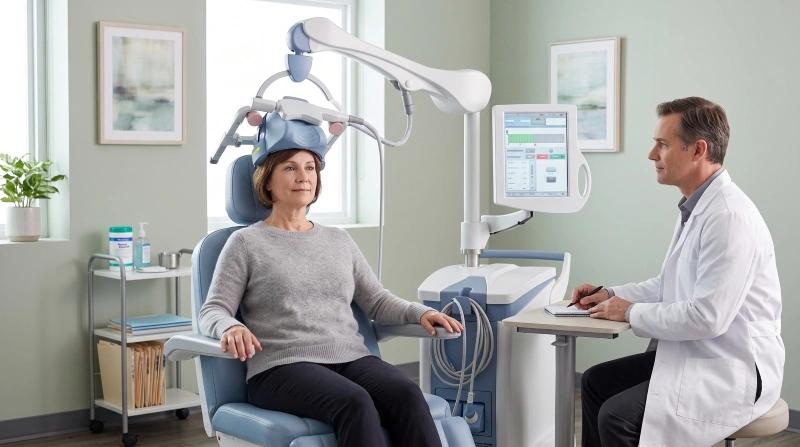
TMS uses focused magnetic pulses to wake up areas of the brain that are underactive in depression. The FDA cleared it for depression in 2008. At LifeQuality TMS in Brooklyn, TMS for depression is delivered with a BrainsWay deep TMS device.
What Treatment Looks Like
A typical course is simpler than many expect:
- Sessions run about 6 to 19 minutes
- Treatment usually happens 5 days a week for 4 to 6 weeks
- No anesthesia or sedation is needed
- You stay awake and can drive or return to work right after
- Mild scalp discomfort or a headache is possible early on
Who May Be Evaluated for TMS
TMS isn’t a first stop for ordinary sadness. An evaluation may make sense for adults who:
- Have been diagnosed with major depressive disorder
- Have tried antidepressants without enough improvement
- Couldn’t tolerate medication side effects
- Want a non-drug treatment for depression alongside their current care
- Keep having depressive episodes that return
That last group has reason for hope. In a 2026 multisite study of 177 people whose depression came back after earlier success with TMS, 82.5% responded again to a second course, and 54.2% reached remission.
Why the Depression vs Sadness Distinction Matters Before TMS
TMS treats a medical condition, not a normal emotion. A painful few weeks after a breakup call for time, support, and rest, not brain stimulation. That’s why an accurate diagnosis comes first.
Before recommending treatment, a clinician reviews:
- Symptom history and how long the episode has lasted
- Past medications and therapy
- Overall health and current prescriptions
- Safety factors, such as metal implants near the head or a seizure history
You Do Not Have to Wait Until Depression Becomes Severe

In the end, the sad and depression difference comes down to breadth and staying power. Sadness is an emotion everyone feels. Depression is a lasting cluster of emotional, mental, physical, and behavioral symptoms that makes ordinary life harder to carry.
Duration matters, but don’t lean on it alone. Someone can be struggling badly after ten days, while someone else may have milder symptoms that quietly return year after year. Consider reaching out for an evaluation when:
- Symptoms have lasted two weeks or more
- They keep coming back
- They’re interfering with work, school, or relationships
- There are any thoughts of self-harm or suicide
Anyone still stuck on ” Am I depressed or just sad deserves a clear answer from a professional, not another month of guessing. The team at LifeQuality TMS in Brooklyn works with people whose depression hasn’t improved enough with medication or therapy. Call (718) 400-0867 to ask about an evaluation and find out whether TMS may be a good fit.
Frequently Asked Questions
Can You Be Depressed Without Feeling Sad?
Yes. Many people with depression describe numbness, emptiness, irritability, or a loss of interest rather than sadness. The overall pattern of symptoms matters more than any single feeling.
Can Sadness Turn Into Depression?
It can. Long stretches of stress or grief sometimes develop into a depressive episode, especially once sleep, appetite, and self-worth start to shift. Catching that change early usually makes treatment easier.
Is It Normal to Feel Sad for No Reason?
An occasional unexplained low mood happens to everyone. When it becomes frequent, lasts for weeks, or gets in the way of daily life, it’s worth discussing with a professional.
Can Depression Go Away on Its Own?
Sometimes symptoms ease without treatment, but they often come back and can deepen over time. Professional care tends to shorten episodes and lower the chance of them returning.
How Can I Explain to Others That I’m Not Just Sad?
Focus on duration and impact. Describing how long symptoms have lasted and what they’re getting in the way of, such as sleep, work, or relationships, helps others see that sad vs. depressed isn’t a question of willpower.