
The most effective depression treatment for teenage patients usually starts with a professional evaluation, followed by talk therapy such as CBT or interpersonal therapy. For moderate to severe cases, a doctor may add an antidepressant, and the two together often work better than either alone. For teens 15 and older whose symptoms persist, FDA-cleared TMS can be added to the plan. Any talk of self-harm or suicide calls for immediate help.
The details matter, because no two teens start from the same place. Severity, safety, school, family life, and physical health all shape which option comes first.
Teenagers are allowed to be moody. Slammed doors and one-word answers come with the territory. Depression is a different animal. It hangs on for weeks and slowly takes the color out of friendships, grades, sleep, and the hobbies a teen used to love.
How Do You Know When a Teenager Needs Depression Treatment?
A professional assessment makes sense when low mood or irritability lasts two weeks or more and starts getting in the way of everyday life.

Depression Is Different From Normal Teenage Mood Changes
Ordinary moodiness and depression can look alike on a bad day. The difference shows up over time:
- Normal moodiness comes and goes, often tied to a specific event, and the teen still enjoys things.
- Depression lingers for weeks, spreads into several areas of life, and makes once-fun activities feel pointless.
Emotional Signs Parents May Notice
Some signs live on the inside, so they tend to slip out in passing comments or a change in tone:
- Persistent sadness, emptiness, or a flat “whatever” attitude
- Irritability or anger that feels out of proportion
- Harsh self-criticism, guilt, or feeling worthless
- Talk of hopelessness, death, or not wanting to be around
Take any comment about suicide seriously, even one made as a joke.
Behavioral and Social Changes
Behavior often tells the story first. Watch for:
- Pulling away from family and friends
- Slipping grades, missed assignments, or skipped classes
- Quitting sports, clubs, or hobbies
- Risky behavior or experimenting with alcohol or drugs
Physical Signs That Get Overlooked
Frequent stomachaches, constant tiredness, sleeping far more or less than usual, and big appetite changes can all point to depression, especially when a pediatrician finds no physical cause.
What Happens Before Teenage Depression Treatment Begins?
Nothing should be prescribed until a clinician has a clear, full picture of what’s going on.
What the Evaluation Covers
A good first assessment usually includes:
- Separate talks with the teen and the parents (teens often open up more one-on-one)
- Standard questionnaires, such as the PHQ-9 version for adolescents
- Questions about school, friendships, family stress, and bullying
- A safety check, which is repeated at every visit, not just the first
Conditions Doctors Rule Out
Several problems can mimic depression or travel alongside it. Clinicians commonly screen for:
- Thyroid problems and anemia
- Sleep disorders
- Anxiety, which often shows up with depression
- ADHD and substance use
- Signs of bipolar disorder, which changes the whole approach
Setting Goals Together
Next, the clinician, teen, and parents build a depression treatment plan for the teenager around severity and the teen’s own goals, whether that’s school, sleep, or friendships.
Psychotherapy for Teenage Depression
Talk therapy is usually the first step in treating depression in teenage patients with mild to moderate symptoms, and it stays central even when other options join the plan. A 2025 meta-analysis in Frontiers in Psychiatry pooled 25 trials with 2,352 adolescents and found that acceptance and commitment therapy (ACT) reduced depressive symptoms, though it didn’t outperform other active treatments. CBT and IPT-A remain the best-known choices.
Cognitive Behavioral Therapy (CBT)
CBT is practical and skill-based. Teens learn to:
- Catch thoughts like “I ruin everything” and test them against real evidence
- Solve problems one small step at a time
- Handle stress and setbacks without spiraling
Interpersonal Therapy for Adolescents (IPT-A)
IPT-A zeroes in on relationships. Fights with parents, a breakup, or a lost friendship can all feed depression. Teens learn to name those links and communicate better, and mood often lifts as relationships steady.
Behavioral Activation
Depression makes teens do less, and doing less makes them feel worse. Behavioral activation flips that loop with small, planned actions, such as:
- A 15-minute walk after school
- Texting back one friend
- Picking up a guitar or sketchbook again

Motivation tends to follow action, not the other way around.
Medication for Teens: What Parents Should Know
Medication often becomes part of teenage depression treatment when symptoms are moderate to severe or therapy alone isn’t moving the needle.
Common Medication Choices
SSRIs are the usual first pick. Fluoxetine and escitalopram both carry FDA approval for adolescent depression.
The Boxed Warning and Why Monitoring Matters
Antidepressants carry an FDA boxed warning about a possible rise in suicidal thoughts in people under 25, mostly in the first weeks. That’s a reason for close follow-up, not automatic avoidance. Call the prescriber right away if a teen shows:
- New or worse thoughts of self-harm
- Sudden agitation, restlessness, or panic
- Unusual changes in behavior or sleep
Families weighing pros and cons can read how the two approaches differ in the blog post on TMS vs medication for depression.
Why Combined Care Often Works Best
For moderate to severe depression, therapy and medication together often do more than either one alone. Here’s how the main options compare:
Approach | Often Used For | Key Point for Parents |
Psychotherapy (CBT, IPT-A, BA) | Mild to moderate depression | Builds lasting skills |
Medication (SSRIs) | Moderate to severe depression | Needs close early monitoring |
Therapy + medication | Moderate to severe or stubborn cases | Often the strongest standard option |
TMS (ages 15+, add-on) | Depression that lingers despite standard care | Non-invasive; used alongside other care |
Is TMS an Option for Teenage Depression?
For some older teens, yes, though treating depression in teenage patients with TMS should always follow a careful evaluation and fit into a broader plan.
What TMS Is
Transcranial Magnetic Stimulation uses magnetic pulses to stimulate brain areas involved in mood regulation. In plain terms, it is:
- Non-invasive, with no surgery or implanted electrodes
- Done while the patient is awake and alert, with no anesthesia
- Usually 20 to 40 minutes per session, with a return to normal activities right after
Is TMS FDA-Cleared for Adolescents?
Yes, but only for certain ages and systems. Here’s the timeline:
- 2008: TMS first cleared for adults with depression
- March 2024: NeuroStar cleared as an add-on treatment for major depressive disorder in patients aged 15 to 21
- November 2025: BrainsWay Deep TMS received a similar clearance for ages 15–21, as reported by APA Services
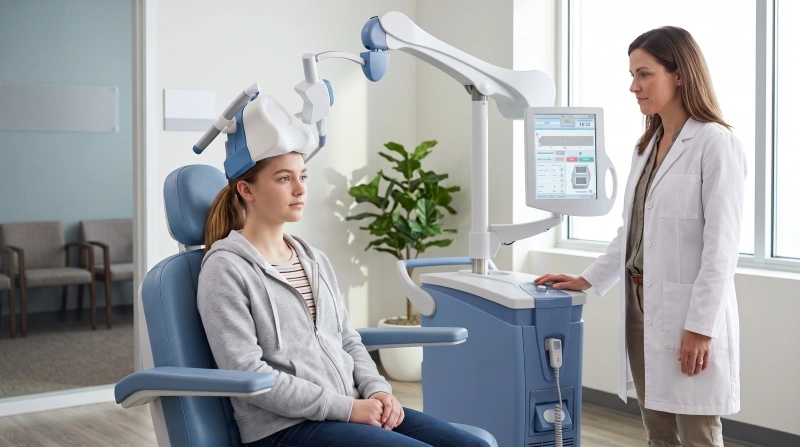
The clearance doesn’t cover children under 15, and TMS here is meant to be used alongside therapy or medication, not instead of them. Results look promising: a 2025 study in JAACAP Open tracked 682 adolescents and 601 young adults across 364 sites and found marked symptom improvement, with results similar to those seen in adults.
Safety Points Families Should Discuss
Before starting, parents should ask about:
- Seizure history or conditions that raise seizure risk
- Metal implants near the head
- Common short-term side effects, like scalp discomfort or mild headaches
When a Teen Needs More Intensive or Immediate Support
Standard outpatient treatment for depression in teenage patients isn’t always enough, and knowing the warning signs helps families act quickly.
Signs a Higher Level of Care Is Needed
Intensive outpatient programs, partial hospitalization, or an inpatient stay may be the right call when a teen:
- Can’t manage school or basic daily routines
- Has stopped eating or sleeping in a healthy way
- Isn’t improving despite several months of solid care
When to Seek Emergency Help
If a teen talks about wanting to die, has a plan, or has self-harmed, call or text 988 (the Suicide & Crisis Lifeline in the U.S.), call 911, or go to the nearest emergency room.
Teenage Depression Is Treatable, but the Plan Should Fit the Teen
Treating depression in teenage patients means more than choosing between therapy and pills. A strong plan considers:
- How severe the depression is and whether safety is a concern
- How the teen is doing at home and school
- Co-occurring conditions like anxiety or ADHD
- How earlier treatments worked
Good treatment for depression in teenage patients is rarely one-size-fits-all. Psychotherapy is usually the foundation, while medication, combined care, family support, and, for some teens 15 and older, TMS can be layered in when needed. Moving to a higher level of care is a smart step, not a failure.
If a teen in your family is struggling and standard care hasn’t brought enough relief, contact the LifeQuality TMS team for a free consultation to talk through whether TMS could fit and what the next step might be.
Frequently Asked Questions
Can a teenager get over depression without treatment?
Some mild episodes fade on their own, but untreated depression tends to last longer and come back. An early assessment is the safer route.
How long does treatment for depression in teenage patients take?
Therapy often shows progress within 8 to 16 weeks. Antidepressants usually need 4 to 6 weeks, and doctors typically continue them for months after symptoms improve.
Are antidepressants safe for teens?
They can be, with proper monitoring. The boxed warning is the reason for frequent check-ins during the first weeks.
What if a teen refuses therapy?
Pushing hard rarely works. Offering choice, like picking the therapist or starting with telehealth, often lowers resistance. Parents can also meet a clinician first for advice.
Does TMS hurt?
Most people feel a tapping sensation on the scalp and sometimes a mild headache early on. Discomfort usually fades after the first few sessions.