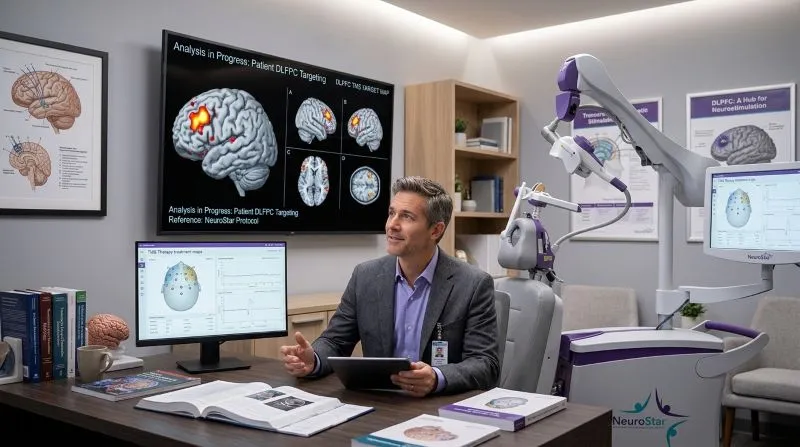
In everyday clinical practice, the TMS therapy success rate typically falls between 50% and 65% for meaningful symptom response, with remission – meaning symptoms drop to a minimal or non-existent level – occurring in roughly 30% to 40% of patients. These figures come from real-world data collected across treatment centers, not just controlled trials, which means they reflect how people actually respond once protocols, schedules, and individual health histories enter the picture. The number isn’t fixed. It shifts depending on how a clinic tracks progress, how consistent a patient is with sessions, and how “success” gets defined in the first place.
That last point matters more than most people realize before starting treatment. Someone searching for TMS therapy success rates is usually trying to answer a much more personal question: will this work for me, specifically? This article breaks down what the data says, what shapes the numbers, and what patients tend to notice as treatment progresses – without promising outcomes that no legitimate provider can guarantee.
Why TMS Is Becoming a Bigger Part of Psychiatric Care
For decades, medication was the default first response to depression and several other mood conditions. Antidepressants still play a major role, but they don’t work for everyone, and a meaningful share of patients stop responding to drugs that once helped or never respond at all. That gap is part of why interventional psychiatry – treatments that directly target brain activity rather than relying solely on chemical adjustments – has gained ground.
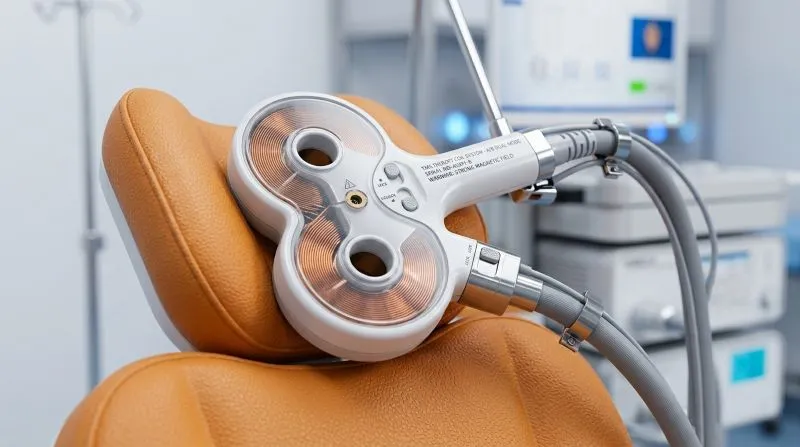
Transcranial Magnetic Stimulation fits into that shift. It’s non-invasive, doesn’t require sedation, and is generally well tolerated, which makes it a realistic option for people who’ve tried two or more medications without lasting relief. As more clinics adopt it and more outcome data gets published, one question keeps surfacing before anyone agrees to start: what is the success rate of TMS therapy, really – not in theory, but in practice?
What Is the Real-World TMS Therapy Success Rate? (Beyond Clinical Trials)
“Success” in psychiatric treatment isn’t a binary cured-or-not-cured outcome. Clinicians typically measure it in two ways: response, meaning at least a 50% reduction in symptom severity, and remission, meaning symptoms drop below a clinical threshold entirely. A patient can be considered a treatment success without being completely symptom-free, which surprises some people expecting an all-or-nothing result.
There’s also a gap between clinical trial numbers and what shows up in day-to-day practice. Trials use tightly controlled conditions – specific diagnostic criteria, strict session schedules, limited comorbidities. Real-world clinics treat a broader mix of patients, which naturally produces a wider range of outcomes.
Factor | Clinical Trial Setting | Real-World Clinic Setting |
Patient selection | Narrow inclusion criteria, fewer comorbidities | Broader mix, including complex cases |
Session adherence | Closely supervised, near-perfect attendance | Variable, affected by scheduling and life demands |
Outcome tracking | Standardized, consistent across the study | Differs by clinic and rating tool used |
Reported response rate | Often higher due to controlled conditions | Typically 50%–65%, depending on the population |
Reported remission rate | Frequently cited near 35%–40% | Generally 30%–40%, with more variation |
A 2024 multisite registry study published through the Journal of Affective Disorders examined adolescent and young adult patients treated across 364 sites and found that roughly 70% experienced clinically meaningful improvement on standardized depression scales, with fewer than 1% reporting worsening symptoms. Numbers like that line up with what most TMS providers report when they track outcomes consistently rather than relying on rough estimates, which is part of why clinics treating treatment-resistant depression place such weight on ongoing measurement rather than a single end-of-course evaluation.
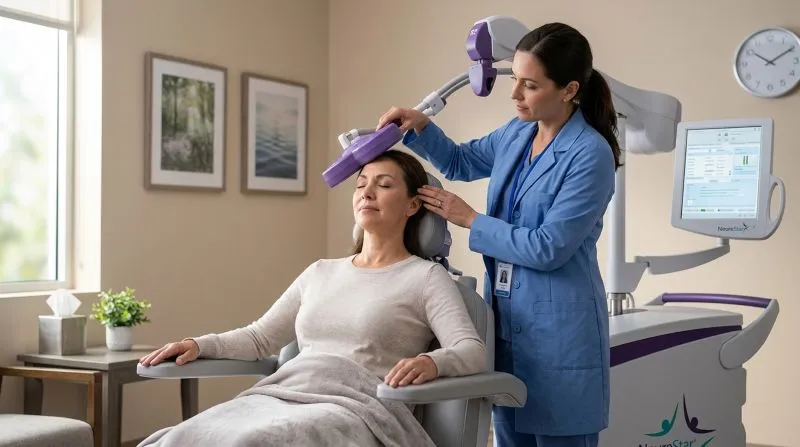
Why does the spread exist at all? A few consistent reasons show up across the literature:
- Trial populations exclude people with certain co-occurring conditions, while real clinics don’t have that luxury
- Session adherence varies more outside a research setting
- Outcome measurement tools differ between providers, which shifts how remission gets counted
- Severity at baseline differs widely from one patient group to the next
Factors That Influence TMS Therapy Success Rates
No single variable determines whether treatment works. It’s closer to a combination of clinical, personal, and procedural elements working together – or sometimes working against each other.
Clinical and Patient-Specific Predictors
Some factors are tied directly to a patient’s history and current condition. Research consistently points to a few that carry real weight.
- Treatment history – patients who’ve tried fewer medications before TMS tend to respond somewhat better than those with longer treatment-resistant histories.
- Baseline severity – moderate symptom severity often predicts a smoother response curve than very severe or very mild presentations.
- Co-occurring conditions – anxiety, sleep disorders, or substance use can complicate the picture and slow visible progress.
- Age and overall health – general physical health and age can subtly affect how the brain responds to repeated stimulation sessions.
Treatment-Related Factors
The protocol itself matters just as much as the patient profile. Coil placement accuracy, session frequency, total number of sessions, and stimulation intensity all play a role. A patient who completes a full course with consistent dosing and accurate targeting is statistically more likely to land in the “responder” category than one with gaps in attendance or inconsistent settings between sessions.
What Patients Actually Experience When TMS Is Working
Progress with TMS rarely arrives all at once. Most clinically reported timelines describe early, subtle shifts appearing around week two or three of treatment – not dramatic, but noticeable enough that patients mention them unprompted during sessions.
These changes tend to show up across a few different areas:
- Emotional changes – less heaviness in mood, more tolerance for daily stress, occasional moments of genuine relief
- Cognitive changes – clearer thinking, improved focus, less mental fog during routine tasks
- Behavioral changes – getting through a workday with less effort, re-engaging in activities that had stopped feeling worthwhile
None of this means symptoms vanish on a fixed schedule. Some patients notice cognitive clarity before mood lifts; others experience it in reverse. The pattern isn’t uniform, and that inconsistency is actually expected – brains don’t all respond at the same pace to repeated stimulation.
How Clinics Measure TMS Outcomes in Real Practice
At LifeQuality TMS, outcome tracking isn’t an afterthought tacked onto treatment – it’s built into the process from the first session, beginning with the initial evaluation and approval stage where a licensed psychiatrist establishes a clear baseline before any sessions begin. Standardized symptom rating scales, including the PHQ-9, are used at intervals throughout the treatment course rather than only at the start and end, which gives a clearer picture of how someone is trending rather than a single snapshot.
Functional and Patient-Reported Measures
Beyond rating scales, clinicians also track functional changes: sleep quality, ability to work or manage daily responsibilities, and general engagement with life. Patient-reported outcomes add another layer – sometimes a person’s own sense of improvement shows up before it’s reflected in a formal score, and sometimes the reverse happens. Both data points get factored into ongoing care decisions.
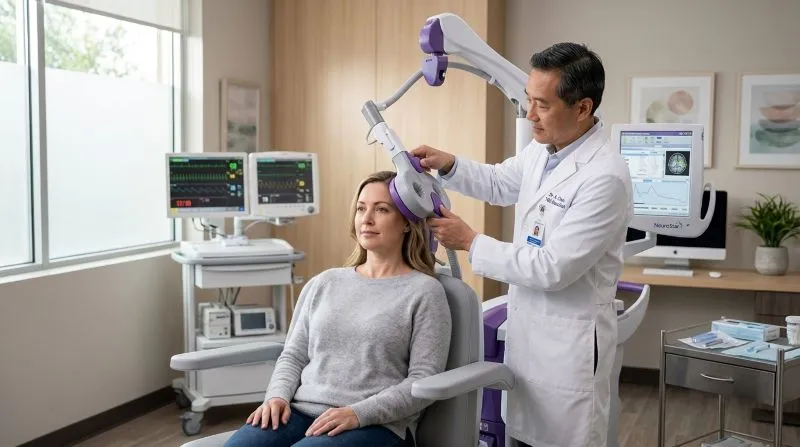
This kind of continuous monitoring also makes it possible to adjust a protocol mid-course if early data suggests a slower response. Personalization isn’t a marketing phrase here – it’s the mechanism that turns a generic protocol into one shaped around an individual’s actual progress, which research increasingly supports as a driver of better outcomes.
Putting the Numbers Into Perspective
Success rate is best understood as a probability of meaningful improvement, not a guarantee of a cure. The evidence base behind TMS is substantial and continues to grow. However, outcomes still vary from person to person based on three consistent threads: individual patient profile, precision of the treatment protocol, and the clinical expertise guiding the process.
That variability isn’t a weakness in the treatment – it’s simply how psychiatric care works across the board. What TMS therapy at LifeQuality focuses on is narrowing that variability as much as possible through personalized, outcome-tracked neuromodulation care, with protocols adjusted based on real progress data rather than a one-size-fits-all schedule. Anyone exploring treatment-resistant depression options or wondering whether their specific history fits the profile of a likely responder can schedule a consultation to review their case directly with the clinical team.
Frequently Asked Questions
What Is the Success Rate of TMS Therapy?
Most real-world data places response rates between 50% and 65%, with remission occurring in about 30% to 40% of patients. The exact TMS therapy success rate for any individual depends on treatment history, symptom severity, and how closely the protocol is followed.
How Long Does It Take for TMS Therapy to Show Results?
Many patients report early, subtle changes around the second or third week of treatment, though some notice shifts sooner and others later. A full course typically runs over several weeks, and meaningful improvement often builds gradually rather than appearing suddenly.
Does TMS Therapy Work for Everyone?
No treatment works universally, and TMS is no exception. While the success rate of TMS therapy is considered strong relative to other options for treatment-resistant cases, a portion of patients see partial improvement rather than full response, and a smaller group sees limited change.
What Factors Affect TMS Therapy Success Rates?
Treatment history, baseline symptom severity, co-occurring conditions, session consistency, and protocol accuracy all play measurable roles. Patients with fewer prior treatment failures and consistent attendance generally see stronger outcomes.
What Happens If TMS Therapy Does Not Work?
If a full course doesn’t produce the expected response, clinicians typically reassess the treatment plan – adjusting stimulation parameters, considering a different protocol, or combining TMS with other approaches such as talk therapy. A lack of full remission after one course doesn’t necessarily rule out future benefit from adjusted treatment.
THE TEXT IS ONLY INFORMATIONAL; FOR FURTHER TREATMENT, CONSULT A DOCTOR