Depression does not always respond to the treatments most people try first. For millions of adults, antidepressants help only partially – or not at all. That gap between what medication can offer and what patients actually need has pushed mental health care toward a different kind of solution: NeuroStar TMS, a non-invasive brain stimulation treatment that has become one of the most evidence-backed options available for major depressive disorder.
This article breaks down how NeuroStar TMS therapy works, what the latest research shows, who stands to benefit most, and what patients can realistically expect before, during, and after treatment. Whether someone is just starting to explore options or has already tried other paths without success, the following information can help frame a more informed conversation with a care provider.
Understanding NeuroStar TMS: What Sets It Apart
Most people are familiar with two categories of depression treatment: medication and talk therapy. NeuroStar TMS fits into neither. It works by delivering focused magnetic pulses to specific regions of the brain – particularly the left prefrontal cortex, which plays a direct role in mood regulation – without requiring sedation, surgery, or any systemic drug exposure.
The FDA first cleared NeuroStar for major depressive disorder in 2008. Since then, it has also received clearance for anxious depression and, in 2022, as an adjunct therapy for OCD in adults. In March 2024, it became the first TMS system cleared by the FDA as an add-on treatment for adolescents aged 15–21 with MDD. Most major insurance providers now cover NeuroStar TMS treatment for qualifying patients, which has significantly broadened access.
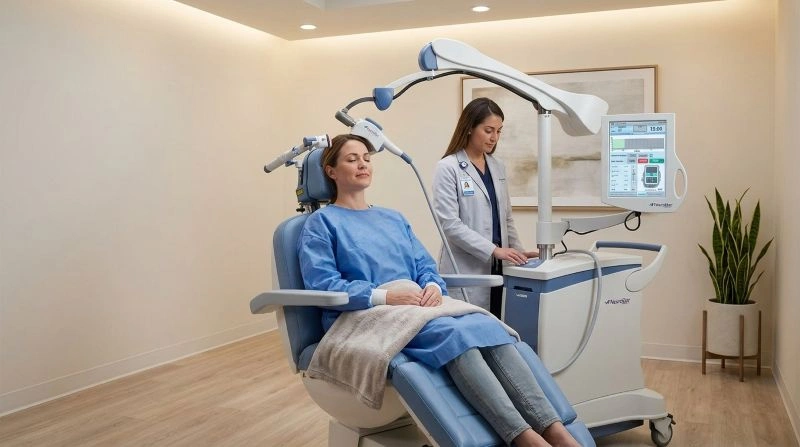
What tends to surprise people most is the safety record. Because the magnetic pulses are targeted and localized, they do not carry the systemic side effects – weight changes, sexual dysfunction, sedation – that often accompany antidepressant medications. At Life Quality TMS, patients receive personalized care throughout the process, with technicians present for the entire session to monitor comfort and adjust settings as needed.
How NeuroStar TMS Therapy Works
The Treatment Process
A typical course of NeuroStar TMS therapy runs over six to seven weeks, with sessions five days per week. Each session lasts roughly 20 minutes, and patients remain fully awake throughout – no sedation, no recovery time. Most return to normal activities, including driving and work, immediately after.
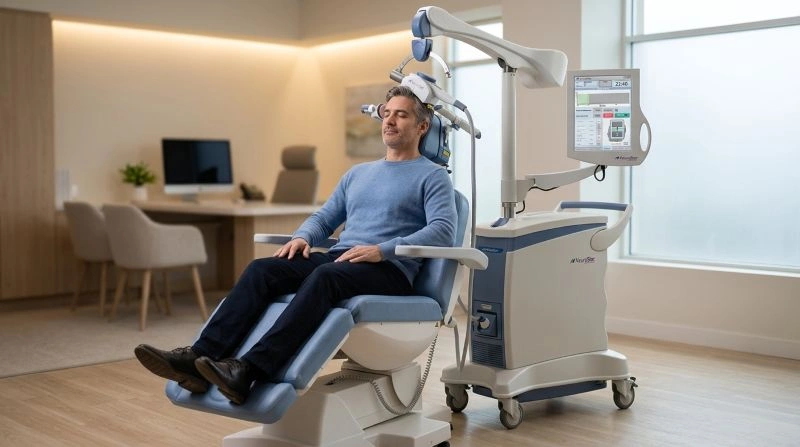
During the session, a padded helmet-style device is positioned close to the head. Patients typically describe the sensation as rhythmic tapping against the scalp. Some mild discomfort may occur in the first few sessions, but this tends to decrease notably after the initial treatments.
Mechanism of Action
The magnetic pulses used in NeuroStar TMS technology generate small electrical currents within targeted brain tissue. These currents stimulate neurons in underactive areas of the prefrontal cortex – regions consistently linked to depressive episodes in neuroimaging research. Over the course of treatment, repeated stimulation appears to restore more typical patterns of neural activity.
This is a meaningfully different mechanism than what antidepressants target. Rather than adjusting neurotransmitter balance across the entire central nervous system, TMS acts locally, which is part of why the side effect profile looks so different.
Expected Patient Experience
Results do not tend to appear immediately. Most patients begin noticing changes in mood, sleep, or energy somewhere around the second or third week of treatment. Some see improvement earlier; for others, the shift becomes apparent only near the end of the full course.
Here is what patients commonly report experiencing across the treatment timeline:
- Weeks 1–2: Mild scalp discomfort during sessions; little to no mood changes yet
- Weeks 3–4: Subtle improvements in sleep quality, energy levels, or emotional reactivity
- Weeks 5–7: More noticeable reduction in core depressive symptoms; improved daily functioning
- Post-treatment: Continued benefit that can last months; maintenance sessions may be discussed based on individual response
Comparing NeuroStar TMS with Other TMS Options
Not all TMS devices are the same – and that distinction matters more than it might initially seem.
Feature | NeuroStar TMS | Standard TMS |
FDA Clearance | 2008 (MDD), 2022 (OCD/anxious depression), 2024 (adolescents) | Varies by device |
Outcomes Registry | Largest in MDD (17,700+ patients) | Limited real-world data |
Insurance Coverage | Broadly covered | Varies widely |
Adolescent Clearance | Yes (ages 15–21, since March 2024) | Not typically |
Session Duration | ~20 minutes | 30–40 minutes (some devices) |
The NeuroStar outcomes registry –the largest dataset of its kind for any depression treatment – gives it a research advantage that most alternative TMS systems simply cannot match. A 2025 peer-reviewed publication in the Transcranial Magnetic Stimulation journal provided evidence that TMS produces broad symptom improvement across the key dimensions of depression, including mood, energy, sleep, appetite, and self-perception – not just scores on a rating scale.
Who Can Benefit From NeuroStar TMS
The clearest candidates are people with treatment-resistant depression (TRD) – adults who have tried at least one antidepressant at an adequate dose and duration without satisfactory results. But TRD is not the only qualifying scenario.
NeuroStar TMS is also worth considering for:
- Adults with major depressive disorder (MDD) who respond partially to medication but continue experiencing significant symptoms
- Patients concerned about medication side effects, particularly those with prior experiences of weight gain, sexual dysfunction, or emotional blunting
- Individuals with MDD and comorbid anxiety, given the 2022 FDA clearance for anxious depression, TMS for anxiety follows a similar protocol
- Adults with OCD who have not achieved remission through behavioral therapy or medication alone – see TMS for OCD
- Adolescents aged 15–21 with MDD, following the March 2024 FDA clearance specifically for this age group
Not everyone is a candidate. People with certain implanted metal devices, a history of seizures, or specific neurological conditions may be excluded. A thorough evaluation is the appropriate first step before beginning any course of treatment.
Making a Confident, Informed Decision About Depression Treatment
NeuroStar TMS therapy occupies a specific and increasingly important space in depression care – not as a last resort, but as a well-validated, non-invasive option that deserves serious consideration alongside medication and psychotherapy. Its FDA clearance history, substantial real-world outcomes data, and favorable side effect profile make it one of the more defensible choices for adults with MDD or TRD who want an effective path forward that does not depend entirely on systemic drug therapy.
The distinction between NeuroStar and other TMS devices is not trivial. The depth of clinical data behind NeuroStar TMS technology – built through the largest outcomes registry in MDD – gives both patients and providers a level of confidence that is difficult to replicate. Before starting, it is also worth reviewing the pros and cons of TMS therapy to set realistic expectations.
If medication has not delivered the results hoped for, or if side effects have made sustained treatment difficult, Life Quality TMS offers consultations to assess whether TMS fits a given patient’s history and goals – and to answer any specific questions that arise along the way.
Frequently Asked Questions
How many NeuroStar TMS sessions are typically needed?
A standard course involves 36 sessions over roughly six to seven weeks, five days per week. Progress is assessed regularly, and some patients may benefit from additional sessions.
Does NeuroStar TMS hurt?
Most patients describe it as tolerable – rhythmic tapping or mild pressure on the scalp. Some discomfort or jaw clenching may occur in the first few sessions, but it typically fades quickly. The clinician can adjust intensity as needed.
Is NeuroStar TMS covered by insurance?
Yes, for many patients. Major insurers have covered TMS since around 2015, and coverage typically requires documentation of prior antidepressant trials. Life Quality TMS handles prior authorization paperwork directly.
Can NeuroStar TMS be used alongside antidepressants or therapy?
Yes. TMS can be combined with medication, cognitive behavioral therapy, or other approaches. No changes to existing medications are required during treatment – adjustments can be considered later as symptoms improve.
How long do the results of NeuroStar TMS last?
Results vary by individual. Available data show a significant portion of responders maintain improvement at six months, with many still meeting response criteria at one year. Some patients benefit from periodic maintenance sessions; others remain well without additional treatment for extended periods.