
Integrating TMS with counseling means using two treatments at the same time, each aimed at a different part of the same problem. Transcranial magnetic stimulation (TMS) works on brain circuits linked to mood and obsessive symptoms. Counseling works on the thoughts, habits, relationships, and stressors that keep those symptoms going. The two don’t clash, and therapy can usually continue before, during, and after a TMS course when the treating psychiatrist agrees it fits the case.
Some people finish months of antidepressants and say the heaviness eased a little, yet life looks exactly the same. Same arguments at home. Same pile of unanswered emails. Same inner voice calling them a failure. Others spend years in therapy, understand their patterns in detail, and still wake up with a mood that refuses to move.
What Does Integrating TMS With Counseling Actually Mean?
It’s more than two appointments that happen to land in the same month, because each provider knows what the others are doing and works toward shared goals.
The Role of TMS
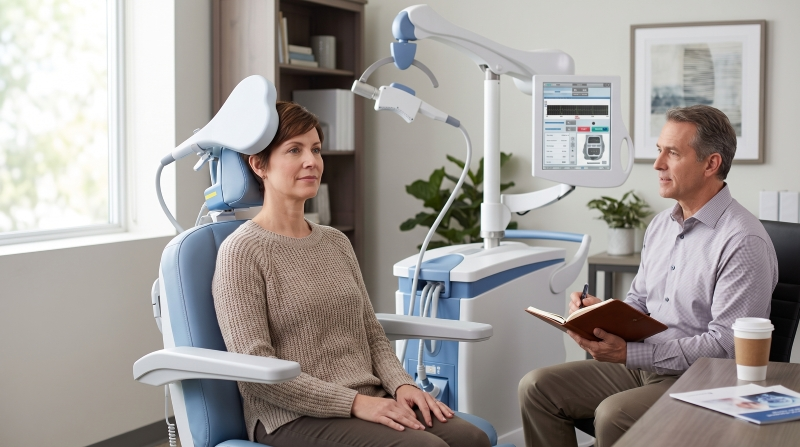
TMS uses magnetic pulses to change activity in specific brain circuits. The patient stays awake, sits in a chair, and can return to normal activities right after a session.
The Role of Counseling
Psychotherapy focuses on the psychological side of recovery:
- Thought patterns that keep a person stuck
- Behaviors like avoidance or withdrawal
- Emotional reactions and coping habits
- Relationships and daily life stress
The Role of Psychiatric Care
The psychiatrist is the one who connects the pieces. They establish the diagnosis, check whether TMS is appropriate, monitor symptoms, and manage medication when needed. Without that coordination, a patient can end up with two separate treatments that never talk to each other.
Why Combine Brain Stimulation With Talk Therapy?
The simplest reason is that each method reaches a target the other can’t.
TMS and Counseling Work Through Different Mechanisms
Think of it as two directions of change:
- TMS works “bottom-up.” It stimulates brain areas directly, such as the left dorsolateral prefrontal cortex, a region that often shows lower activity in depression.
- Counseling works “top-down.” It relies on active learning: noticing a thought, testing it, trying a new behavior, and repeating it until it sticks.

Researchers are paying closer attention to how these two directions meet. A 2025 scoping review and meta-analysis in Psychological Medicine screened thousands of papers and found that of 8,442 studies, 20 combined rTMS with aerobic exercise, bright light therapy, cognitive training or reactivation, psychotherapy, sleep deprivation, or a psychophysical task. Patients receiving active TMS alongside a psychological approach showed large improvements from their starting point, although that part of the analysis had no comparison group.
Why One Can’t Replace the Other
So why not just pick one? TMS may lift the fog enough for someone to get out of bed, but it doesn’t teach them how to handle a tense talk with a partner. Therapy can teach that skill, yet it’s hard to practice when depression drains every ounce of energy. One helps open the door. The other shows what to do once it’s open.
What Types of Counseling Can Be Combined With TMS?
Several evidence-based therapies fit well alongside a TMS course, and the right choice depends on the diagnosis.
Cognitive Behavioral Therapy (CBT)
CBT is the most common pairing, largely because it gives patients tools they can use right away:
- Spotting distorted thoughts – catching “I ruin everything” and checking it against real evidence.
- Behavioral activation – scheduling small, doable activities that rebuild energy and reward.
- Facing avoidance – slowly returning to tasks, places, or people that symptoms pushed aside.
- Building coping plans – practical steps for bad days, poor sleep, and stress spikes.
This pairing also has the strongest recent evidence. A 2026 meta-analysis in Frontiers in Psychology found that ten randomized controlled trials involving 1,320 participants met the inclusion criteria, and the pooled analysis showed a small-to-moderate benefit of the combined intervention over rTMS control for reducing depressive symptoms. LifeQuality TMS NYC’s clinical team includes psychotherapy experience with CBT-oriented approaches for depression, anxiety, and OCD.
Mindfulness-Based Cognitive Therapy (MBCT)
MBCT teaches people to watch their thoughts without reacting on autopilot. It helps with:
- Stepping back from thoughts instead of arguing with them
- Breaking the loop of repetitive negative thinking
- Noticing early signs of a mood dip before it deepens
Because of that last point, MBCT often fits best in the months after TMS, when the focus shifts to relapse prevention.
Interpersonal Therapy (IPT)
IPT focuses on the relationship side of mental health. It’s often used for:
- Ongoing conflict with a partner, family member, or coworker
- Grief after a loss
- Major role changes like divorce, retirement, or becoming a parent
- Social isolation
Here’s what people often miss: these problems don’t disappear when depressive symptoms improve. Someone can feel better and still be stuck in a strained marriage or a lonely routine.
Exposure-Based Therapy for OCD or Anxiety
Exposure-based approaches target fear and avoidance head-on. Patients face triggers step by step while learning not to escape or perform rituals. For OCD specifically, exposure and response/ritual prevention (ERP) is the first-line treatment.
TMS may lower symptom intensity, while exposure work teaches a new response to the trigger. Those are two different goals, and the exact plan should always match the diagnosis.
Which Conditions May Be Addressed Through a Combined Treatment Plan?
A combined plan can suit several conditions, though the details shift from one diagnosis to the next.
Major Depressive Disorder
TMS for depression is most often considered when symptoms persist after medication or psychotherapy hasn’t brought enough relief. This is known as treatment-resistant depression. Counseling works on the behavioral and thinking patterns that built up over months of low mood, while TMS targets the mood-related circuits.
Depression With Anxiety Symptoms
Anxious distress can make depression harder to treat. Worry keeps people awake, and avoidance shrinks their world. Counseling can target worry, avoidance, and coping directly, while TMS for anxiety and depression addresses the overall clinical picture the psychiatrist has identified.
Obsessive-Compulsive Disorder
For OCD, the roles are especially clear. The FDA cleared Deep TMS targeting the medial prefrontal cortex and anterior cingulate cortex using the H7 coil in 2018. Still, reducing symptom severity doesn’t replace learning how to resist a compulsion in the moment. ERP builds that skill. LifeQuality TMS NYC offers TMS for OCD alongside depression and anxiety care.
Other Complex or Co-Occurring Symptoms
TMS isn’t the right fit for every condition, which is why assessment comes first. A psychiatrist will typically screen for:
- Bipolar disorder, which changes how depression is treated
- Substance use, which can affect symptoms and response
- Trauma history or PTSD, which may call for a specific therapy approach
- Seizure risk or metal implants near the head, which affect TMS safety
When Should Counseling Take Place During a TMS Treatment Course?
Counseling can help at every stage, but each stage has a slightly different focus.
Before TMS Starts
Patients already in therapy usually don’t need to stop. A therapist can help set goals, explain what to expect, and note baseline patterns so later progress is easier to see.
During the Treatment Course
A standard TMS course involves sessions several days a week for several weeks. Therapy can run in parallel, often weekly. As energy returns, sessions can shift from coping with symptoms to practicing new behavior. Curious about the sessions themselves? This overview of what TMS feels like walks through the experience.
After the Final Session
The end of TMS isn’t the end of treatment. A solid aftercare plan often includes:
- Continued therapy to strengthen new habits
- Regular psychiatric check-ins
- A clear plan for early warning signs
- A discussion of maintenance sessions when appropriate
What Does TMS Therapy With Psychiatrist Oversight Involve?
Psychiatric care runs through every phase, from the first visit to long-term follow-up.
Evaluation and Eligibility
The first appointment usually covers:
- Confirming the diagnosis
- Reviewing past medications and therapy
- Checking for safety concerns
- Choosing the right protocol, since depression and OCD use different targets
Monitoring During Treatment
TMS therapy with psychiatrist involvement means symptoms are measured at regular intervals, side effects are tracked, and medication is reviewed. When a therapist is also involved, the psychiatrist can coordinate with them so both sides pull in the same direction.

Follow-Up and Long-Term Planning
After the course ends, follow-up visits help decide what’s next. That might mean continued therapy, medication changes, or maintenance sessions.
Treating More Than One Part of the Problem
TMS and counseling aren’t rivals. They play different clinical roles, and that’s exactly what makes them useful together:
- TMS offers targeted brain stimulation.
- Psychotherapy addresses thoughts, behaviors, coping skills, relationships, and daily functioning.
- Psychiatric oversight connects both through accurate diagnosis, careful treatment selection, steady monitoring, and real follow-up.
For people who feel stuck after trying one approach at a time, integrating TMS with counseling offers a more complete path forward. To find out whether a combined plan fits your situation, contact LifeQuality TMS and schedule a psychiatric consultation.
Frequently Asked Questions
Can I keep seeing my therapist while getting TMS?
Usually, yes. Counseling doesn’t interfere with TMS, and many patients continue therapy through the whole course. Just make sure the psychiatrist knows so care stays coordinated.
Is TMS a replacement for talk therapy?
No. TMS changes activity in specific brain circuits, while therapy builds skills and works through thoughts, behaviors, and relationships. They do different jobs.
Does TMS work better when combined with counseling?
Recent research suggests adding CBT to TMS may bring extra benefit for depression, though studies are still limited. Results depend on the person, the diagnosis, and the quality of both treatments.
Do I need a psychiatrist to get TMS?
TMS therapy with psychiatrist supervision is the standard approach. A psychiatrist decides eligibility, prescribes the protocol, and monitors progress and safety throughout.
How soon will I notice changes?
It varies. Some people notice subtle shifts within a few weeks, while others respond closer to the end of the course. Changes tend to be gradual, which is one reason ongoing therapy helps patients spot and build on them.