One of the most common concerns people have when considering Transcranial Magnetic Stimulation involves pain—will the treatment hurt? This worry often prevents people from exploring a therapy that might significantly improve their quality of life. Understanding what actually happens during treatment helps dispel fears and allows informed decision-making.
This article provides a comprehensive overview of the TMS session experience, including how it works, potential discomfort, benefits, costs, and how many sessions are needed to achieve the best results.
What Happens During a TMS Session?
Understanding the actual treatment process helps reduce anxiety about the unknown and sets realistic expectations.
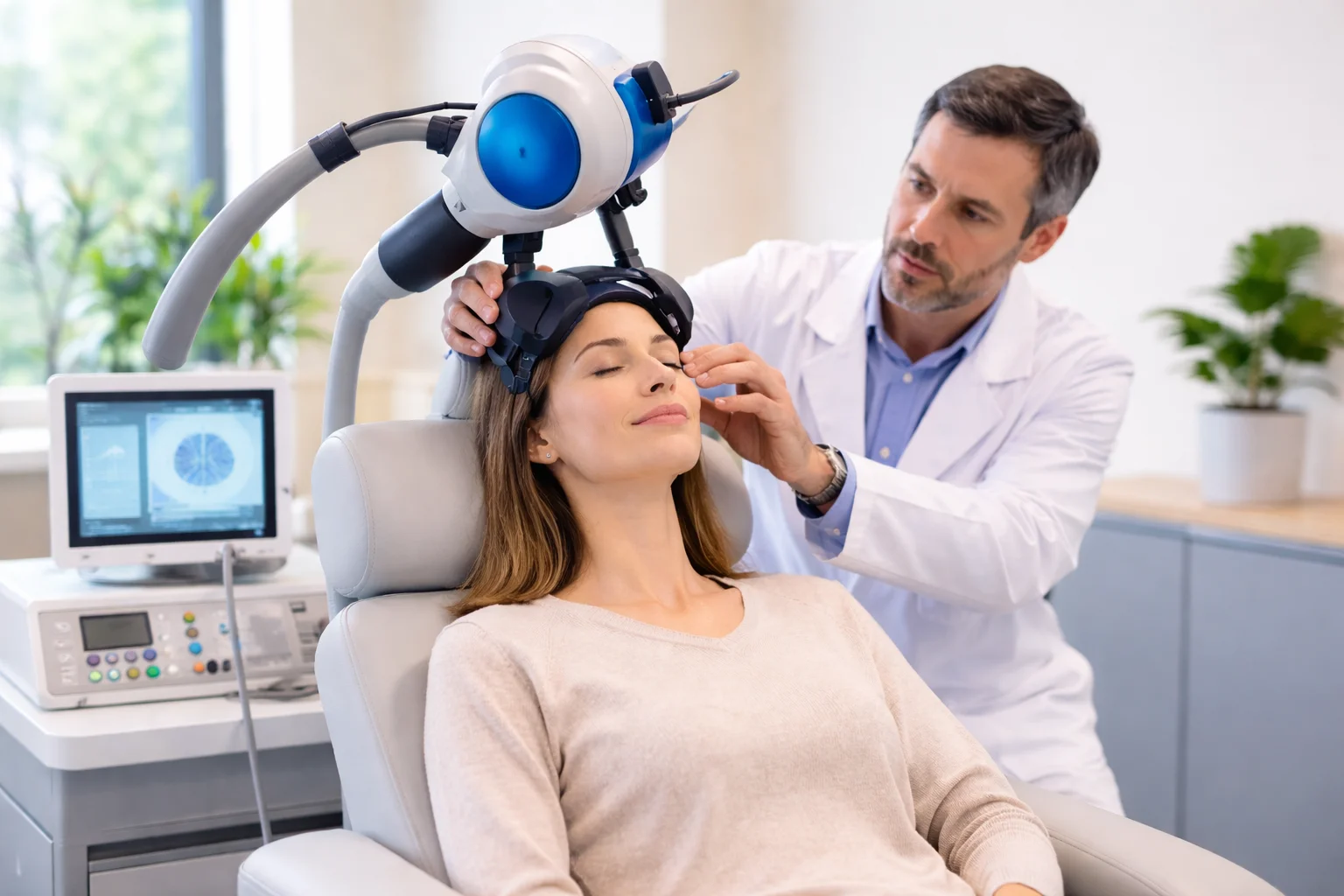
During a TMS session, you sit comfortably in a reclining chair similar to a dentist’s chair. The technician measures your head to determine the precise positioning for the magnetic coil, ensuring accurate targeting of the intended brain region. They conduct a brief test to establish the appropriate stimulation intensity for your individual brain, as this varies from person to person.
Once settings are established, the technician positions the coil against your scalp and begins treatment. You remain fully awake and alert throughout the TMS session. The device delivers magnetic pulses in patterned sequences, creating a clicking sound and a tapping sensation on your scalp.
Many patients read, listen to music, or simply relax during treatment. Sessions typically last 20-40 minutes, depending on the protocol used. Afterward, you can immediately drive yourself home and resume all normal activities—no recovery time is needed.
Is a TMS Session Painful?
The question of pain concerns most prospective patients, and the honest answer provides reassurance.
A TMS session is not painful in the traditional sense, though it does produce sensations that some people find mildly uncomfortable, particularly during initial treatments. The magnetic pulses create a tapping or knocking feeling on the scalp that feels unusual at first. Some describe it as a woodpecker tapping rapidly or someone tapping their finger against your head. The intensity depends on the stimulation strength needed for your treatment.
Most patients adapt to the sensation within the first few sessions. What feels strange or slightly uncomfortable initially becomes routine as you acclimate. Any discomfort remains superficial—limited to the scalp area where the coil contacts—rather than deep or penetrating. If you experience significant discomfort, technicians can adjust the coil position or modify stimulation parameters to improve tolerability without compromising effectiveness.
The most common side effect involves mild headaches occurring during or shortly after treatment, experienced by about 25-40% of patients. These headaches typically respond well to over-the-counter pain relievers and often diminish as treatment progresses. Serious side effects remain extremely rare, making TMS one of the safest psychiatric treatments available.

How Much Does a TMS Session Cost?
Financial considerations influence treatment decisions, making cost transparency important for planning purposes.
Cost of a Single TMS Session
When asking how much a TMS session costs, individual session prices typically range from $300-$500 when paid out-of-pocket without insurance. However, TMS is rarely purchased as a single session; treatment courses involve 20-36 sessions, creating total costs of $6,000-15,000 for a complete treatment protocol. This price variation depends on geographic location, facility type (hospital versus private practice), and specific protocols used.
Insurance Coverage for TMS Therapy
Most major insurance plans now cover TMS for FDA-approved indications, primarily treatment-resistant major depression. Coverage requires documentation that you’ve tried and failed at least two different antidepressant medications at adequate doses. Insurance typically covers 80-100% of costs after deductibles, making treatment far more affordable than out-of-pocket payments.
Prior authorization processes vary by insurer, but generally require your psychiatrist to submit treatment history demonstrating medication resistance. Many TMS clinics employ dedicated insurance coordinators who handle authorization paperwork and help patients understand their coverage and financial responsibility. For those without insurance coverage, some providers offer payment plans or reduced rates to make treatment accessible.
Benefits of TMS Sessions: What Can You Expect?
Understanding potential outcomes helps patients set realistic expectations while appreciating the therapy’s value.
Mental Health Benefits of TMS Therapy
The TMS sessions benefit the center primarily through improved mental health functioning. Studies show 50-60% of treatment-resistant depression patients experience significant symptom improvement, with 30-40% achieving complete remission.
Patients report reduced feelings of sadness and hopelessness, decreased anxiety, improved ability to experience pleasure, better concentration, and enhanced motivation to engage in activities.
These improvements often build gradually across the treatment course rather than appearing suddenly.
Most patients notice changes beginning around weeks 2-3, with continued improvement throughout treatment and sometimes even after completing the protocol as brain changes consolidate.
Increased Energy and Mood Improvement
Beyond reducing negative symptoms, TMS often increases positive functioning. Patients describe having more energy for daily tasks, feeling more engaged with family and friends, sleeping better, and experiencing improved appetite regulation. These quality-of-life improvements matter tremendously for people whose depression has stolen joy and functionality from their lives.
TMS Therapy for Treatment-Resistant Conditions
TMS particularly benefits people who haven’t responded to conventional treatments. For individuals who’ve tried multiple medications without relief, TMS offers genuine hope through a completely different therapeutic mechanism. The treatment works even when medications have failed because it directly modifies brain activity rather than relying on chemical pathways that may not function properly in treatment-resistant cases.

How Many TMS Sessions Are Needed for Maximum Effectiveness?
Treatment duration represents a significant commitment, making this information valuable for planning purposes.
Typical Treatment Course for Depression and Anxiety
When considering how many TMS sessions are needed, standard protocols for depression involve 20-36 sessions delivered daily (Monday through Friday) over 4-6 weeks. Each session lasts 20-40 minutes. This schedule allows cumulative effects to build as repeated stimulation encourages lasting neuroplastic changes in brain circuits.
Some newer accelerated protocols condense treatment into 1-2 weeks with multiple sessions daily, delivering the same total number of pulses in compressed timeframes. These intensive approaches show comparable effectiveness while requiring less overall calendar time.
For anxiety, OCD, and other off-label applications, session numbers vary based on specific protocols and individual response. Clinicians adjust treatment length based on how quickly patients improve and whether symptoms remain stable after initial courses.
Long-Term Maintenance Sessions
Many patients maintain improvement for a year or longer after completing their initial treatment course. However, some eventually need maintenance sessions to sustain benefits. Maintenance typically involves periodic single sessions—perhaps monthly or every few months—rather than complete treatment courses. These maintenance sessions help preserve the brain changes achieved during initial treatment.
What to Expect Before and After a TMS Session
Preparation and aftercare remain straightforward, but knowing what to expect reduces anxiety.
Preparing for Your First TMS Session
Preparation for a TMS session requires minimal effort. You don’t need to fast or avoid medications. Arrive with clean, dry hair without styling products that might interfere with coil positioning. Remove any metal jewelry or accessories near your head. Bring reading material, music, or other quiet entertainment if desired, though some clinics provide these.
Wear comfortable clothing since you’ll be sitting for 20-40 minutes. Consider the following for optimal comfort:
- Layers you can adjust if the temperature changes
- Comfortable shoes since you’ll walk in and out
- Glasses rather than contacts if the tapping sensation near your eyes bothers you
- A light snack beforehand if low blood sugar affects you
Most people find their first TMS session feels less intimidating than anticipated once they experience the actual process.
Post-TMS Treatment Care
After completing a TMS session, no special care is needed. You can immediately resume all normal activities, including driving, working, exercising, and taking medications. Some patients schedule sessions during lunch breaks and return to work afterward. This convenience represents a significant advantage over treatments requiring sedation or extended recovery periods.
If you develop a headache, over-the-counter pain relievers typically provide adequate relief. Contact your treatment provider if you experience unusual symptoms, though this rarely occurs. Most people leave their session feeling no different physically than when they arrived, with mental health improvements accumulating gradually over the treatment course rather than appearing immediately after individual sessions.
A Safe, Effective Treatment Option
The TMS session experience proves far less daunting than many people fear. Treatment involves manageable sensations rather than pain, takes minimal time from your day, and requires no recovery period. The benefits—significant symptom improvement for many treatment-resistant patients—justify the time and financial investment for those who haven’t found relief through conventional approaches.
Understanding costs, insurance coverage, typical treatment duration, and realistic expectations helps you make informed decisions about whether TMS suits your needs. The growing role of TMS therapy in treating treatment-resistant depression, anxiety, and other mental health disorders reflects accumulating evidence of its safety and effectiveness. For millions struggling with conditions that resist traditional treatments, TMS sessions offer hope for meaningful, lasting improvement in mental health and quality of life.