
Anxiety disorders affect millions worldwide, causing persistent worry, panic attacks, and physical symptoms that disrupt daily life. While medications and therapy help many people, some continue struggling despite trying multiple treatments. This leads to an important question: Does TMS work for anxiety?
Transcranial Magnetic Stimulation (TMS) has emerged as a promising option for those seeking alternatives to traditional anxiety treatments. This article explores whether TMS therapy is effective for anxiety, how it works, and the benefits it offers to those who suffer from anxiety disorders.
Does TMS Work for Anxiety?
Understanding the evidence behind TMS for anxiety helps clarify whether this therapy deserves consideration as a treatment option.
Exploring the Efficacy of TMS for Anxiety
Multiple studies examining whether TMS works for anxiety have produced encouraging results. Research shows that 40-60% of patients with generalized anxiety disorder, social anxiety, or panic disorder experience meaningful symptom reduction after TMS treatment. These improvements often include decreased worry, fewer panic attacks, reduced physical anxiety symptoms like rapid heartbeat, and better overall functioning.
Clinical trials specifically targeting anxiety demonstrate that TMS can reduce scores on standardized anxiety rating scales by 30-50%. While these numbers might seem modest compared to the dramatic improvements some depression patients experience, they represent clinically significant relief for people whose anxiety has resisted other treatments. Many patients report that reduced anxiety improves their quality of life substantially, allowing them to engage in activities they’d been avoiding.
Does TMS Therapy Work for Anxiety?
When asking, does TMS therapy work for anxiety? Research consistently points toward yes, particularly for certain anxiety disorders. Generalized anxiety disorder and social anxiety disorder show the most promising response rates. Post-traumatic stress disorder (PTSD) with prominent anxiety symptoms also responds well to TMS in many cases.
The therapy appears especially effective for anxiety that co-occurs with depression—a common combination affecting millions. Patients receiving TMS for depression often report that their anxiety symptoms improve alongside their mood, sometimes even more dramatically than their depressive symptoms. This dual benefit makes TMS particularly valuable for people struggling with both conditions.
How Does TMS Work for Anxiety?
Understanding the mechanism behind TMS helps explain why it can reduce anxiety symptoms even though it wasn’t originally designed for this purpose.
The Role of Brain Stimulation in Anxiety Regulation
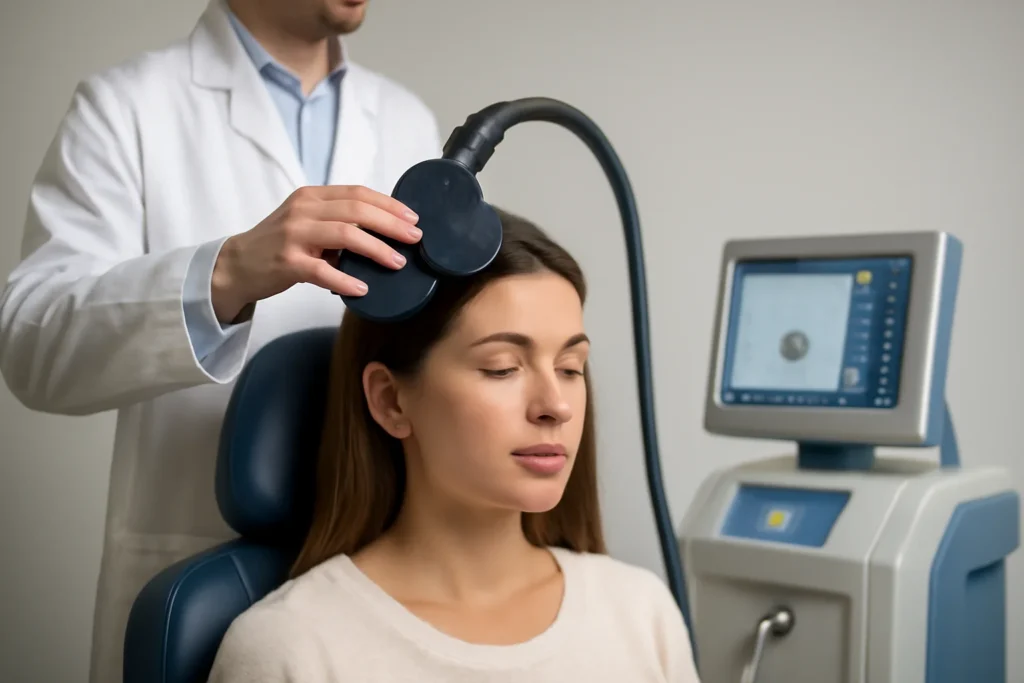
When considering how TMS works for anxiety, the answer lies in targeted brain stimulation. TMS uses magnetic pulses to stimulate specific brain regions involved in anxiety regulation. The dorsolateral prefrontal cortex, commonly targeted for depression, also plays a role in managing anxious thoughts and emotional regulation. Stimulating this area helps restore normal functioning in circuits that, when disrupted, contribute to anxiety disorders.
Additionally, some practitioners target the right dorsolateral prefrontal cortex or other brain regions more directly associated with anxiety processing. This targeted approach allows TMS to influence the neural circuits responsible for excessive worry, fear responses, and the physical symptoms of anxiety, like tension and hypervigilance.
Changes in Brain Activity with TMS Treatment
TMS promotes neuroplasticity—the brain’s ability to form new connections and modify existing ones. Over multiple treatment sessions, this stimulation encourages lasting changes in how anxiety-related brain regions communicate with each other. Overactive areas associated with excessive worry and fear responses become better regulated, while underactive areas involved in emotional control become more engaged.
Brain imaging studies show that successful TMS treatment normalizes activity patterns in areas like the amygdala (the brain’s fear center) and prefrontal regions responsible for rational thinking and emotional regulation. These physical changes in brain function explain why many patients experience sustained anxiety relief that persists long after completing treatment.
TMS for Anxiety and Depression: Does It Work for Both?
Many people struggle with both anxiety and depression simultaneously, making dual-action treatments particularly valuable.
Does TMS Work for Depression and Anxiety?
Research examining whether TMS works for depression and anxiety consistently demonstrates effectiveness for both conditions. Studies show that 50-70% of patients with comorbid depression and anxiety experience improvements in both symptom clusters. This dual benefit occurs because the brain regions and neural circuits involved in depression and anxiety overlap significantly.
Patients often report that as their depression lifts, their anxiety decreases as well. The improved mood and increased energy from reduced depression help people face anxiety-provoking situations more effectively. Conversely, decreased anxiety allows people to engage more fully in activities that support mood improvement, creating a positive cycle of recovery.
Benefits of Dual Treatment for Anxiety and Depression
Treating both conditions simultaneously offers advantages over addressing them separately. Patients avoid taking multiple medications with potentially conflicting side effects. They don’t need to choose between treating depression and anxiety when both cause significant impairment. The comprehensive brain changes from TMS address the interconnected nature of these conditions, potentially providing more complete relief than treatments targeting just one disorder.
The Benefits of TMS Therapy for Anxiety
Beyond simply reducing symptoms, TMS offers several advantages over traditional anxiety treatments.
Non-Invasive and Drug-Free Treatment Option
TMS provides relief without medications, appealing to people concerned about side effects, drug interactions, or becoming dependent on anxiety medications. The non-invasive nature means no surgery, no anesthesia, and no recovery time. Patients walk into the clinic, receive treatment, and immediately return to normal activities. This convenience matters tremendously for busy individuals who can’t afford downtime for medical procedures.
Minimal Side Effects Compared to Traditional Anxiety Treatments
When examining whether TMS works for anxiety, side effects deserve consideration alongside effectiveness. TMS produces remarkably few side effects compared to anxiety medications. The most common complaints include mild scalp discomfort during treatment and occasional headaches afterward—both typically resolve quickly. Unlike medications that can cause weight gain, sexual dysfunction, drowsiness, or cognitive dulling, TMS doesn’t produce these systemic effects.
Patients remain fully alert during and after treatment. They can drive, work, and think clearly without the foggy feeling some anxiety medications create. This clarity represents a significant quality-of-life advantage for people who’ve felt mentally sluggish on medications.
Long-Term Effectiveness of TMS Therapy for Anxiety
Studies tracking patients months after completing TMS treatment show sustained anxiety reduction for many individuals. While some eventually need maintenance sessions, others maintain improvements for a year or longer without additional treatment. This durability compares favorably to medications, which only work while you’re taking them and often lose effectiveness over time as the body adapts.

Comparing TMS to Other Anxiety Treatments
Understanding how TMS stacks up against alternatives helps patients make informed treatment decisions.
TMS vs Medication for Anxiety
Anxiety medications work quickly but require daily use and often cause side effects. Does TMS work for anxiety better than medication? The answer depends on individual circumstances. TMS takes several weeks to produce effects, but doesn’t require daily pills or produce medication side effects. For people who don’t respond to medications or can’t tolerate their side effects, TMS offers a valuable alternative.
Some patients combine TMS with medications, using lower medication doses alongside TMS to achieve better results than either treatment alone provides. This combination approach can maximize benefits while minimizing side effects.
TMS vs Psychotherapy for Anxiety
Cognitive-behavioral therapy (CBT) remains the gold-standard psychological treatment for anxiety. Do TMSs work for anxiety as well as therapy? They work through different mechanisms—therapy changes thought patterns and behaviors, while TMS directly modifies brain activity. Many clinicians recommend combining TMS with therapy for optimal results.
The biological changes from TMS can make people more receptive to therapy by reducing baseline anxiety enough to engage effectively in treatment.
TMS vs Other Brain Stimulation Therapies
Electroconvulsive therapy (ECT) treats severe anxiety in some cases but requires anesthesia and can cause memory problems. TMS offers similar brain stimulation benefits without these drawbacks. Vagus nerve stimulation requires surgical implantation. Deep brain stimulation involves even more invasive surgery. TMS provides brain stimulation benefits through a completely non-invasive approach, making it more accessible and acceptable to most patients.
A Promising Option for Anxiety Relief
When asking, does TMS work for anxiety, the evidence increasingly supports its effectiveness as a safe, viable treatment for anxiety disorders. Research demonstrates meaningful symptom reduction for many patients, particularly those who haven’t responded to traditional treatments. The therapy’s minimal side effects, non-invasive nature, and potential for long-lasting relief make it an attractive option worth considering.
TMS therapy can provide relief for those who have not found success with traditional treatments, offering a non-invasive and long-lasting solution. While more research continues clarifying which anxiety disorders respond best and optimizing treatment protocols, current evidence strongly suggests that dTMS therapy does work for anxiety—yes, particularly for people with treatment-resistant anxiety or combined anxiety and depression.