Alzheimer’s disease is a profound and progressive condition that slowly strips away the qualities of identity, memory, and independence. It begins subtly—a forgotten name, a lost set of keys, or a slight confusion with directions—but eventually matures into a state of cognitive decline that impacts every facet of daily life.
For families, the emotional toll of watching a loved one disappear while still physically present is staggering. While current medications offer some symptomatic relief, the medical community has long been searching for a way to actually slow the underlying progression of the disease. Recently, the focus has shifted toward the potential of magnetic stimulation as a biological intervention to help bridge the gaps that chemistry alone hasn’t quite filled.
How Does TMS Work for Alzheimer’s?
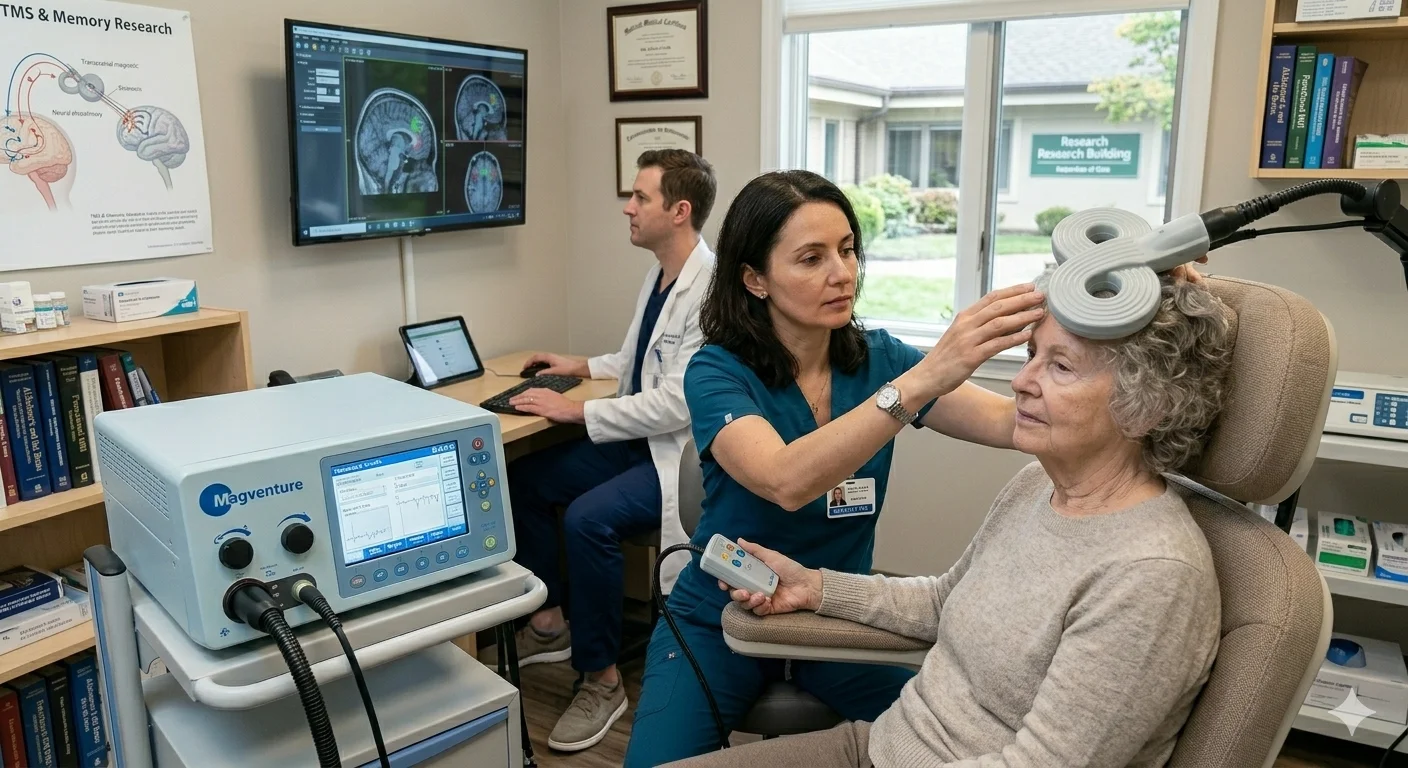
The science of Transcranial Magnetic Stimulation relies on the principle of electromagnetic induction. Instead of introducing a chemical into the bloodstream, a TMS device uses a magnetic coil to deliver focused pulses directly to specific regions of the brain. When we consider its application for memory loss, the goal is to physically “wake up” neural circuits that have become dormant or underactive due to the disease.
Brain Stimulation and Cognitive Function
In a typical Alzheimer’s brain, the communication between neurons is disrupted by the buildup of amyloid plaques and tau tangles. TMS for Alzheimer’s targets these “quiet” zones, specifically the precuneus and the dorsolateral prefrontal cortex.
These areas are central hubs for the brain’s default mode network, which is responsible for memory and self-reflection. By sending rhythmic magnetic pulses into these regions, the therapy helps re-establish the electrical signaling that is vital for clear thinking and recall.
The Role of TMS in Neuroplasticity
One of the most exciting aspects of this technology is its ability to promote neuroplasticity—the brain’s natural ability to reorganize itself and form new connections. While Alzheimer’s is a disease of loss, the brain still retains some capacity for growth, especially in the early stages.
The repetitive pulses used in a TMS Alzheimer’s treatment act as a form of “exercise” for the synapses. By repeatedly firing these neural pathways, TMS encourages the growth of new synaptic connections, potentially bypassing damaged areas and allowing the brain to maintain its functional capacity for longer.
What Research Says About TMS for Alzheimer’s
It is natural for families to approach any new treatment with a healthy dose of skepticism. However, the data surrounding TMS and Alzheimer’s has moved well beyond the experimental phase into rigorous clinical scrutiny.
Clinical Trials and Studies on TMS for Alzheimer’s
As of early 2026, several prominent studies have highlighted the efficacy of repetitive TMS (rTMS) for cognitive maintenance. For instance, a major randomized, double-blind study published in late 2025 followed patients over a 24-week period.
The results were striking: the group receiving active stimulation of the precuneus showed stable cognitive scores, while the placebo group experienced a steady worsening of symptoms. This suggests that the therapy does more than just mask symptoms; it appears to offer a stabilizing effect that is rare in the world of dementia care.
TMS for Cognitive Decline in Alzheimer’s Patients
The primary metric for success in these trials is often the “slowing” of decline rather than a total reversal of the disease. For someone with early-stage Alzheimer’s, the ability to maintain the Mini-Mental State Examination (MMSE) scores for six months or a year is a massive victory.
Research consistently shows that TMS for Alzheimer’s can help preserve word-finding abilities, executive function, and the ability to perform daily tasks like dressing or cooking, which are often the first things to slip away.
Potential Benefits of TMS for Alzheimer’s
What makes this approach stand out is the breadth of its impact. It doesn’t just target a single symptom; it addresses the patient as a whole person with emotional and physical needs.
Cognitive Improvements
The most direct benefit of TMS for Alzheimer’s is the enhancement of cognitive clarity. Patients often report feeling “less foggy” and more present in conversations. Because the magnetic pulses can be tuned to specific frequencies, clinicians can personalize the treatment to target the specific types of memory or language deficits a patient is facing.
Emotional and Behavioral Benefits
Dementia often brings with it a shadow of behavioral challenges, such as apathy, anxiety, or depression. Recent pilot studies from the VA have shown that TMS for Alzheimer’s can significantly improve levels of apathy—a common symptom where patients lose motivation and withdraw socially. By stimulating the brain’s reward and mood centers, the therapy helps patients stay engaged with their families and their hobbies, which is a vital part of maintaining quality of life.
Non-Invasive and Drug-Free Treatment
Perhaps the most significant advantage is the safety profile. Traditional medications often come with gastrointestinal issues, dizziness, or interactions with other prescriptions. TMS for Alzheimer’s is non-systemic, meaning it doesn’t enter the bloodstream. It doesn’t require anesthesia, and there is no “recovery time” involved. For an older adult who may already be taking multiple medications, a drug-free intervention is a welcome relief.
TMS as Part of a Comprehensive Alzheimer’s Treatment Plan
In modern medicine, we are moving away from the idea of a “silver bullet” and toward a more integrated model of care. The most successful outcomes for TMS alzheimer treatment usually occur when the technology is used as one piece of a larger puzzle.
- Synergy with Medication: TMS for Alzheimer’s can be used alongside standard prescriptions like cholinesterase inhibitors. While the drugs work on the chemical side, the magnetic pulses work on the electrical and structural side of the brain.
- Combined with Cognitive Training: Some of the best results in 2026 have come from “brain-mapping” protocols where patients perform memory exercises during the TMS session. This “fire and wire” approach helps solidify the new neural connections as they are being stimulated.
- Early-Stage Focus: The earlier a patient begins a TMS alzheimer’s protocol, the more “plastic” the brain is to work with. Intervening at the Mild Cognitive Impairment (MCI) stage offers the best chance to delay the onset of more severe dementia symptoms.

What to Expect During TMS Treatment for Alzheimer’s
If you or a loved one is considering this path, it helps to demystify the daily experience. It is a commitment of time, but it is far less taxing than many other medical interventions.
TMS Session Process
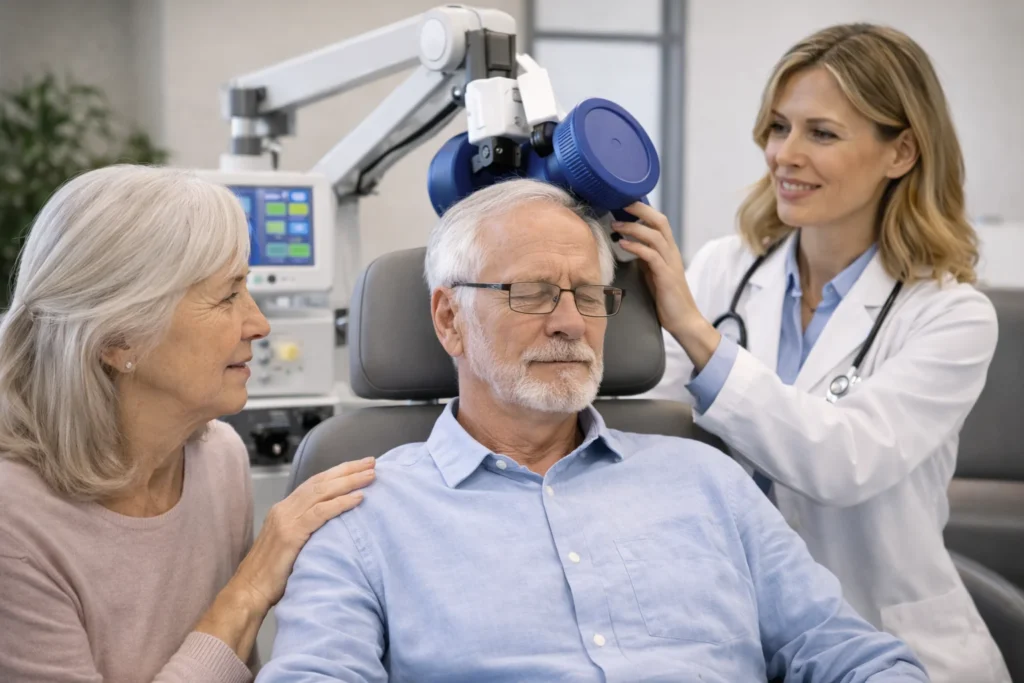
A typical session lasts between 20 and 40 minutes. The patient sits in a comfortable chair, much like one at a dentist’s office, and remains fully awake. A technician places the magnetic coil against the head, and the patient will hear a clicking sound as the pulses are delivered. Many people choose to watch a show, listen to music, or simply chat with the staff. There is no pain—most describe the feeling as a light tapping on the scalp.
Side Effects and Risks of TMS
The side effects are generally mild and temporary. The most common report is a slight headache or some scalp discomfort where the magnet was sitting. These usually fade after the first few sessions as the body adjusts. Unlike more invasive procedures, there is no risk of memory loss; in fact, the goal is the exact opposite. Because it uses the same magnetic strength as an MRI machine, it is a well-understood and safe technology for seniors.
Post-Treatment Care and Recovery
Once the clicking stops, the session is over. There is no downtime, meaning the patient can drive home or go about their day immediately. Most protocols involve daily sessions for several weeks, followed by “maintenance” sessions once a week or once a month to keep the neural pathways active. This ongoing support ensures that the gains made during the initial course are preserved as long as possible.
Conclusion: A New Tool in the Fight for Memory
The shift toward utilizing TMS for Alzheimer’s represents a more proactive, hopeful era in geriatric care. For too long, a diagnosis of cognitive decline felt like a one-way street with no turn-offs. Today, we are learning that the brain is far more resilient than we once believed and that with the right kind of physical encouragement, we can preserve the qualities that make us who we are for a longer period.
By focusing on cognitive improvements, enhancing neuroplasticity, and offering a safe alternative to traditional treatments, TMS for Alzheimer’s is carving out a vital role in modern care. It offers a way to fight back against the symptoms of the disease while respecting the comfort and dignity of the patient. While we wait for a definitive cure, these magnetic pulses are providing something just as important: more time, more clarity, and a better quality of life for families navigating the challenges of memory loss.