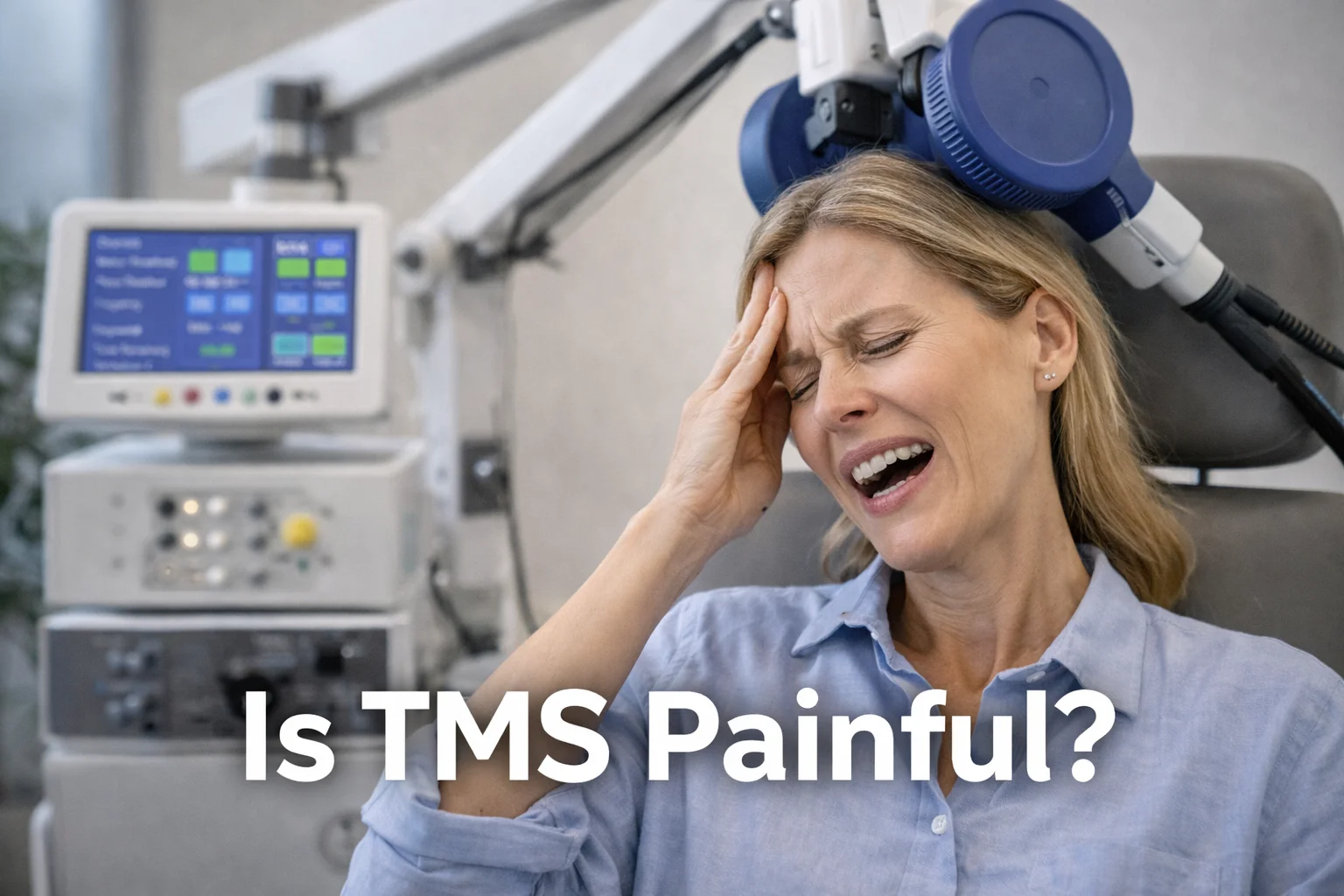
This article explores the physical experience of Transcranial Magnetic Stimulation, aiming to dispel myths and provide a realistic look at what patients feel. The primary goal is to answer the question, is TMS painful, while helping readers understand how this technology serves as a bridge to better mental and physical health without the fear of significant physical distress.
Transcranial Magnetic Stimulation, or TMS, has emerged as a beacon for those who feel they have exhausted the traditional pharmacy of antidepressants and pain medications. It is a non-invasive procedure that uses magnetic fields to stimulate nerve cells in the brain.
While it is widely recognized for its success in treating major depressive disorder and anxiety, there is a growing body of evidence supporting the use of TMS for chronic pain. Despite its clinical reputation, a lingering question often prevents people from seeking help: will it hurt?
Is TMS Painful? Debunking Common Misconceptions
The word “stimulation” paired with the idea of brain activity often conjures up images of intense medical procedures from old movies. However, the reality of modern neuromodulation is much more subtle. Most people who undergo the treatment find that the sensation is nothing like they imagined. Instead of a sharp or deep ache, the feeling is localized and superficial.
What to Expect During a TMS Session
When sitting in the treatment chair, a magnetic coil is placed against the scalp. When the machine starts, it produces a clicking sound—much like a woodpecker tapping on a tree. This is followed by a physical sensation often described as a light tapping or “tingling” on the head.
Because the magnetic pulses are aimed at specific brain regions, you might feel a slight twitch in your facial muscles or around the eye, but this is a purely mechanical reaction to the magnetic field and not a sign of distress.
Does TMS Cause Pain or Discomfort?
To be perfectly direct, the sensation of the pulses can be strange, but it is rarely described as TMS painful by the majority of patients. During the first few sessions, your scalp might feel a bit sensitive. Think of it like the sensation of a rubber band lightly snapping against your skin or a persistent tapping.
While some might find this annoying or distracting at first, the brain and the skin nerves usually desensitize quite quickly. If someone finds the start of their session slightly TMS painful, the technician can usually adjust the intensity to build up tolerance gradually.
How Long Does Any Discomfort Last?
Any physical sensation is generally limited to the duration of the active pulses. Once the machine stops clicking, the tapping stops. Some patients report a mild, dull headache after their first few appointments, similar to the feeling of a tension headache after a long day. This usually fades within an hour or two and tends to stop happening altogether as the body acclimates to the treatment schedule. It is quite rare for someone to find the long-term process of TMS painful enough to discontinue the therapy.
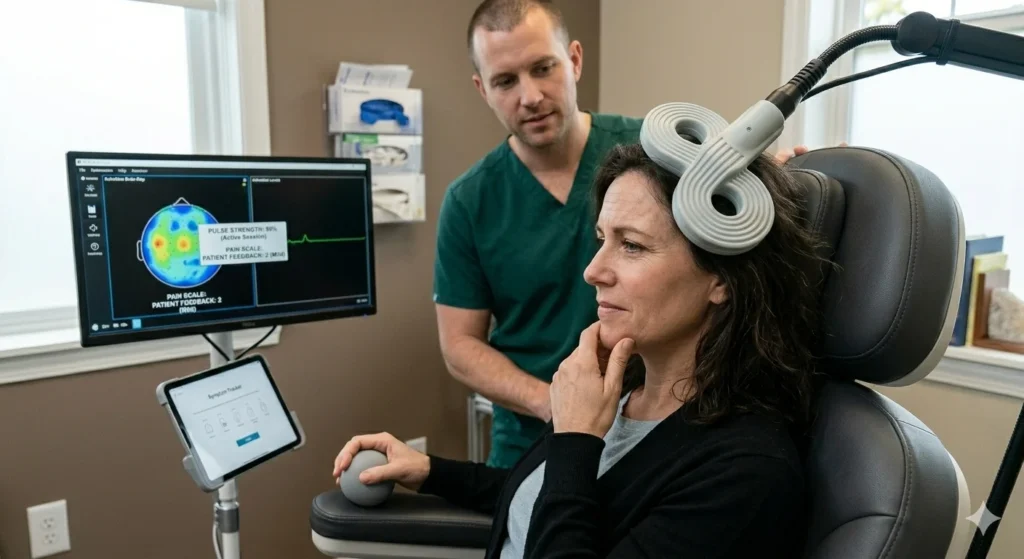
TMS for Chronic Pain: What to Expect
Beyond its applications in psychiatry, the use of TMS for pain is becoming a focal point for researchers looking for alternatives to opioid-based treatments. By targeting the motor cortex or the parts of the brain that process sensory information, the magnetic pulses can effectively “reset” the way the body perceives discomfort.
Using TMS for Chronic Pain Relief
Chronic pain is often a result of the brain getting stuck in a loop of signaling distress, even after an injury has healed. Using TMS for chronic pain relief works by interrupting these faulty signals. It encourages the brain to reorganize its neural pathways, a process known as neuroplasticity. For those who have lived with fibromyalgia or nerve pain, this can feel like a quietening of background noise that has been blaring for years.
Does TMS for Pain Cause Discomfort?
When applying the technology specifically to address physical aches, the protocol might vary slightly from the depression-focused version. However, the physical experience remains largely the same.
Patients do not usually find the specialized application of TMS painful compared to the chronic discomfort they are already living with. In fact, many describe the tapping sensation as a welcome distraction or a neutral feeling that is much easier to manage than the stabbing or burning sensations of their primary condition.
Side Effects of TMS for Chronic Pain
The side effect profile remains minimal. Unlike surgeries or high-dose medications, there is no recovery time, no grogginess, and no risk of addiction. The most frequent issue is local scalp irritation.
If you find the placement of the coil during your session for TMS painful, it can be shifted slightly without losing efficacy. This flexibility makes it a highly tolerable option for individuals whose nervous systems are already hypersensitive due to long-term physical suffering.
Managing Pain and Discomfort During TMS Therapy
A professional clinic will prioritize your comfort. You are never expected to “grit your teeth” through a session. There are several ways to ensure the experience is as pleasant as possible.
- Incremental Mapping: Technicians don’t start at 100% power. They begin with a “motor threshold” test to see how your brain responds and then slowly ramp up the intensity over several days.
- Coil Adjustments: Sometimes the angle of the coil can make a difference. A millimeter shift can take a sensation from feeling slightly TMS painful to being barely noticeable.
- Atmospheric Comfort: Many clinics allow you to watch television, listen to music, or even chat with the staff during the procedure to keep your mind off the tapping.
Adjusting Treatment Settings
The machine is not a “one size fits all” device. It is highly programmable. If a patient feels that the pulse is becoming too painful, the frequency or the “train” of pulses can be modified. The goal is to reach the therapeutic threshold, which is the level of energy required to stimulate the neurons, without crossing into the threshold of physical pain.
Relaxation Techniques During Treatment
Remaining calm can actually change how you perceive the tapping. When we are tense, our nerves are more reactive. Deep breathing or mindfulness exercises during the session can help the body relax into the chair, making it less likely that you will find the pulses of TMS painful or irritating. Some patients even find the rhythmic clicking to be somewhat meditative once they get used to the pattern.
Post-TMS Aftercare
If you do experience a mild headache after your session, standard over-the-counter pain relief usually does the trick. Drinking plenty of water and avoiding high-stress activities immediately after your appointment can also help. Most people find they can drive themselves back to work or home with no issues, as there are no lingering cognitive effects or physical impairments.
Is TMS Safe for Pain and Mental Health Treatment?
Safety is a common concern that often gets lumped in with the fear of pain. It is important to separate the two. While discomfort is a subjective feeling, safety is an objective medical standard.
Safety Profile of TMS Therapy
TMS has been FDA-cleared for years and has a very high safety rating. Unlike Electroconvulsive Therapy (ECT), TMS does not require anesthesia and does not induce a seizure. It doesn’t involve the systemic risks that come with pills, such as liver damage or weight gain. The magnetic field used is about the same strength as an MRI, which is a technology used safely in hospitals every day.
Managing Risks and Precautions
The biggest risks involve magnetic interference. Because the machine uses a powerful magnet, people with certain metal implants in their heads or necks (like aneurysm clips or cochlear implants) cannot undergo the treatment. Before your first session, a provider will do a thorough screening to ensure you are a safe candidate. By following these protocols, the clinic ensures that the treatment remains a helpful tool rather than a risk.
Conclusion: A Gentle Path to Recovery
Choosing a new medical treatment always comes with a bit of hesitation. It is natural to ask if the process will be TMS painful or if the results are worth the time commitment. However, for the vast majority of patients, any initial worry about the “tapping” disappears within the first week. The physical sensation is a small price to pay for a treatment that offers a non-invasive, drug-free way to reclaim your life from depression or the heavy weight of physical suffering.
When we weigh the mild, temporary tapping against the long-term benefits of relief, the choice becomes much clearer. The process is designed to be as easy as possible, providing an effective alternative to more invasive treatments. If you have been holding back because you fear the physical experience, take heart in knowing that the sensation is manageable, the settings are adjustable, and the path to wellness does not have to be a struggle.