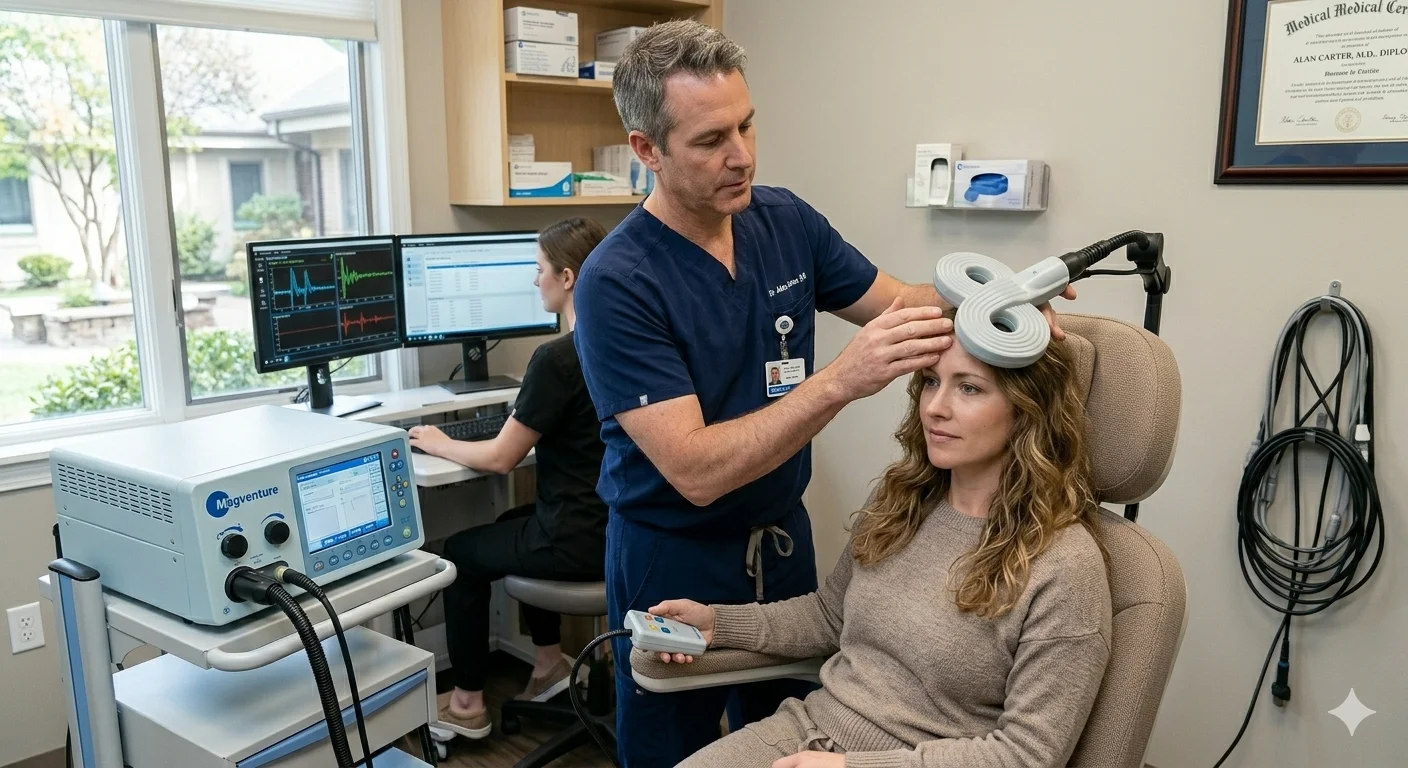
This article is designed to assist you in the process of identifying a qualified TMS doctor who can offer specialized care for your mental health. By focusing on how to evaluate qualifications, clinical experience, and the specifics of a provider’s treatment approach, we aim to help you secure the most effective results for your long-term recovery.
Selecting a clinician to manage your psychiatric health is a decision that carries significant weight. When standard treatments like medication or talk therapy fall short, Transcranial Magnetic Stimulation (TMS) offers a sophisticated, technological alternative. However, the machine is only as effective as the person directing it.
A qualified doctor does more than just operate a device; they interpret your brain’s unique patterns and adjust the biological “settings” of your recovery. Finding a professional who combines technical mastery with genuine clinical empathy is the first step toward reclaiming your quality of life.
What to Look for in a Qualified TMS Doctor
The search for the right provider can feel daunting, especially when you are already dealing with the weight of depression or anxiety. It helps to break the evaluation down into concrete categories. A great TMS doctor should be transparent about their background and willing to answer even the most granular questions about their practice.
Credentials and Certifications
At a minimum, the person overseeing your care should be a board-certified psychiatrist. While technicians often handle the day-to-day administration of the pulses, a licensed medical doctor must be responsible for the initial “mapping” of your brain and the overall prescription of the treatment.
Look for a TMS doctor who has sought out additional, specialized training in neuromodulation. The field is distinct from general psychiatry, and specific certifications from recognized TMS institutes or academic centers indicate a commitment to the latest safety and efficacy standards.
Experience and Specialization in TMS Therapy
How many patients have they treated for your specific condition? This is a fair and necessary question. A practice that treats hundreds of patients a year will naturally have a more refined understanding of how to handle subtle variations in patient response than a general practitioner who only uses the machine occasionally.
Furthermore, check if they specialize in certain types of TMS, such as deep TMS or accelerated protocols. Some doctors focus exclusively on treatment-resistant depression, while others may have a broader focus, including OCD or smoking cessation.
Reputation and Referrals
In the medical world, a doctor’s reputation among their peers is telling. If you have a primary care physician or a therapist you trust, ask them for recommendations. Word-of-mouth from other depression doctors and TMS specialists can lead you to the most respected names in the field.
Additionally, look at third-party review sites. Pay less attention to the occasional one-star rant and more to the overall themes: Does the staff communicate well? Does the doctor take time to explain the process?

How to Evaluate a TMS Doctor’s Approach and Philosophy
Once you have a list of candidates, the next step is understanding how they actually practice medicine. You aren’t just looking for a technician; you are looking for a collaborator.
Understanding Treatment Protocols
Not every clinic follows the same schedule. Some adhere strictly to the standard six-week protocol, while others might explore “theta-burst” stimulation, which significantly shortens session times. A high-quality TMS doctor will be able to explain why they chose a specific protocol for you. They should be able to discuss the “motor threshold” and how they determine the precise location on your scalp to target. If their explanation is vague or they seem to use a “one-size-fits-all” method for every patient, consider it a signal to look elsewhere.
Collaboration with Other Healthcare Providers
Mental health care should never happen in a vacuum. The best doctor for TMS will want to speak with your current therapist or referring psychiatrist. This integrated approach ensures that your talk therapy and your magnetic stimulation are working in harmony. If a doctor suggests that you should stop all other forms of care or dismisses your existing medical team, proceed with caution. The goal is to build a comprehensive support system around you.
Finding the Best Doctor for TMS: Where to Start
The logistics of treatment are just as important as the clinical outcomes. Since TMS usually requires daily visits for several weeks, the location and cost-efficiency of the clinic will impact your ability to stick with the program.
Searching for TMS Doctors Locally or Online
Start by looking for clinics within a reasonable commuting distance. Most patients find that a drive longer than thirty minutes becomes a barrier to consistency. Use online directories provided by TMS equipment manufacturers, as these lists often feature providers who use the most up-to-date technology. When browsing, look for a doctor who offers an informative website that clearly outlines their process and introduces their team.
Insurance Coverage and Cost Considerations
TMS is a significant investment. Fortunately, by 2026, most major insurance plans have established clear pathways for coverage, particularly for major depressive disorder. A helpful TMS doctor will have a dedicated administrative staff to help you navigate the “prior authorization” process.
They should be willing to do the heavy lifting with your insurance provider to prove that the treatment is medically necessary. If you are paying out of pocket, ask about financing options or sliding scale fees.
The First Step: What to Expect During the Initial Consultation
The first meeting is your opportunity to interview the doctor just as much as they are evaluating you. This initial touchpoint sets the tone for the entire six-week experience.
Initial Evaluation and Screening
A thorough TMS doctor will begin with a comprehensive psychiatric history. They need to ensure you don’t have any metallic implants in your head or a history of seizures that would make the treatment unsafe. This is also where they assess the “resistance” of your depression—looking at which medications you’ve tried in the past and for how long. This data helps them justify the treatment to your insurance company and tailor the magnetic pulse intensity to your needs.
Setting Treatment Expectations
Beware of any clinician who promises a 100% cure rate. While TMS is highly effective, it is not a magic wand. A responsible doctor will explain that it can take two to four weeks before you notice a significant shift in your mood. They should discuss the possibility of mild side effects, like temporary scalp discomfort or a light headache, and have a plan to manage them. Transparency about the “waiting period” for results is a sign of an honest professional.

Monitoring Progress and Adjusting Treatment
One of the most common mistakes in neuromodulation is “set it and forget it.” Your brain is a dynamic organ, and your treatment should be equally flexible.
Regular Follow-ups and Monitoring
Your TMS doctor should be checking in with you at least once a week, if not more. They should use standardized scales, like the PHQ-9 for depression or the GAD-7 for anxiety, to objectively track their progress. These numbers provide a roadmap; if your scores aren’t improving by the midpoint of treatment, the doctor needs to know so they can change course.
Adjusting Treatment Based on Response
If you aren’t responding as expected, a skilled TMS doctor might decide to “re-map” your motor threshold or shift the target area by a few millimeters. They might also adjust the frequency of the pulses.
This ability to pivot based on real-time data is what separates a world-class provider from a mediocre one. You want someone who is constantly fine-tuning the process to ensure you are getting the maximum benefit from every single session.
The Importance of a Personalized Connection
Beyond the machines and the data, the human element remains paramount. The process of treating depression is deeply personal, and the environment of the clinic plays a role in your healing.
- Comfort and Atmosphere: You will be spending about thirty minutes a day in this office for over a month. Is the environment calming? Are the technicians friendly?
- Communication: Does the TMS doctor respond to your emails or calls in a timely manner?
- Empowerment: Do you feel like a participant in your own care, or just another number on a spreadsheet?
When you find a doctor who values your input, the entire experience changes. You feel supported rather than just “treated.” This psychological safety can actually enhance the biological benefits of the stimulation, as a relaxed brain is often more receptive to the work being done on its neural pathways.
Conclusion: Choosing Your Path Forward
Finding the right TMS doctor involves a blend of verifying hard credentials and trusting your own intuition during the consultation. It is about more than just finding a nearby office with a machine; it is about selecting a guide who understands the complexities of your individual mental health history.
By looking for a professional with deep experience, a collaborative philosophy, and a commitment to personalized care, you are setting the stage for the best possible outcome. Depression doctors and TMS specialists offer a powerful tool for recovery, but your own due diligence in choosing the right partner is what truly unlocks that potential.
Take the time to ask the hard questions, check the reviews, and ensure that the person across the desk sees you as a whole human being. With the right doctor for TMS by your side, the path toward a brighter, clearer future becomes much easier to navigate.